By Editorial Team of TLF
Special Analysis · US Midterms 2026 · Nicosia · 4 November 2026
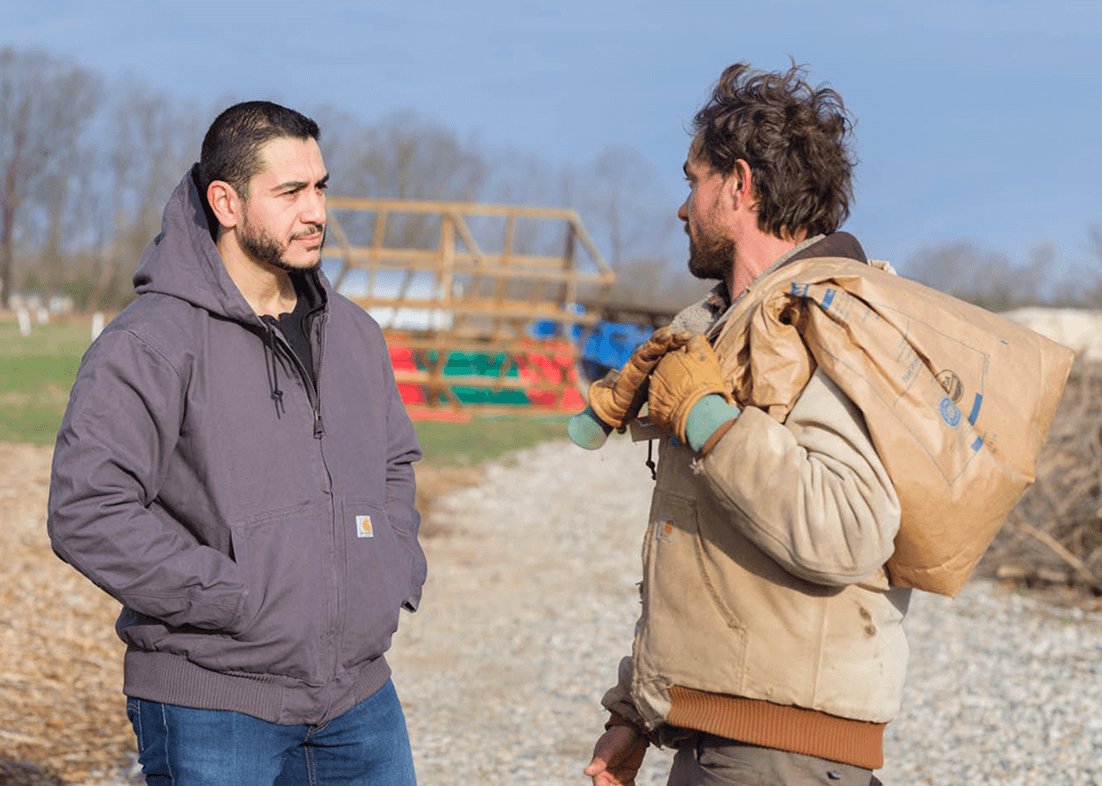
Abdul El-Sayed makes history as first Muslim elected to the US Senate
A physician and son of an Egyptian immigrant has taken Michigan's open Senate seat after the most expensive race in the state's history, and he did it while running openly against the Iran war and unconditional US military aid to Israel. His victory matters well beyond Detroit: it puts a sustained critic of Washington's Middle East policy into the chamber that ratifies treaties, confirms ambassadors and votes on arms sales.
The result
Democrat Abdul El-Sayed defeated Republican former congressman Mike Rogers for the seat vacated by the retiring Democratic senator Gary Peters. The Associated Press called the race at 2:27 a.m. on Wednesday with 85% of the vote counted. NBC's tally put El-Sayed on 51.9% against 46.1% for Rogers, with independent Lydia Christensen at 1%.
El-Sayed declared victory before a crowd in downtown Detroit shortly before 2 a.m. "Michigan, we did it," he told supporters. He also mocked Vice President JD Vance, an Ohio native who campaigned hard against him, with the line "Michigan 1, Ohio 0".
The seat stays in Democratic hands. Michigan has not sent a Republican to the Senate since 1994, but Donald Trump carried the state in 2024, which made this one of the few open Democratic seats in Trump territory and a central target in the battle for the chamber.
Key facts
- Born: 31 October 1984, Michigan; raised in metro Detroit by his Egyptian-born father, an engineer, and his American stepmother
- Education: University of Michigan; Rhodes Scholar and doctorate at Oxford; MD from Columbia University
- Career: Detroit health director 2015–2017 (appointed at 30); Wayne County health director 2023–2025; podcast host and author
- Politics: lost the 2018 Democratic primary for governor to Gretchen Whitmer; won the 2026 Senate primary on 4 August with 48.5%
- General election: 51.9% to 46.1% over Mike Rogers; total spending above $243 million, a Michigan record
Who is Abdul El-Sayed?
El-Sayed is a public-health physician and epidemiologist, not a career politician. He has never held elected office. In 2015, Detroit mayor Mike Duggan appointed him to rebuild the city's health department, which had been privatised during Detroit's bankruptcy. At 30, he was the youngest health officer of any major US city.
He left that post in 2017 to run for governor and finished second to Whitmer in the 2018 primary, with about 30% of the vote. He later hosted the Crooked Media podcast America Dissected, then returned to public service as director of Wayne County's health, human and veterans services department, which serves 1.8 million people. He resigned in 2025 to run for the Senate.
His platform sits on the progressive wing of the Democratic Party: universal health care, cancelling medical debt, higher taxes on billionaire wealth and getting outside money out of elections. Bernie Sanders backed him early; Alexandria Ocasio-Cortez joined his final swing through the Upper Peninsula and Detroit. Not every claim held up. Bridge Michigan found that the county had paid off about $57.4 million in medical debt for some 83,200 people, far below the $700 million for 300,000 residents that El-Sayed had cited.
How he won
The road ran through a hard primary. After state senator Mallory McMorrow withdrew in July, El-Sayed narrowly beat Representative Haley Stevens on 4 August. Stevens then broke with her party and endorsed Rogers.
In the general election, Rogers, a former FBI agent and House Intelligence Committee chairman who narrowly lost a Senate bid in 2024, and his allies outspent El-Sayed's side by roughly three to two, according to the Detroit News. El-Sayed answered with a grassroots campaign and a simple frame: Rogers as a Washington insider tied to Trump's tariffs and Trump's war with Iran. Polls through October showed a race within the margin of error; in the final days several had him ahead by double digits.
A campaign fought over his faith
The race turned bitter over El-Sayed's religion. Rogers alleged, without evidence, links to the Muslim Brotherhood and suggested during the first debate that El-Sayed might have relatives on a terrorism watch list. Trump went further, calling him a "jihadist" and, at a rally in Port Huron, comparing him to the 11 September hijackers. Some in that crowd shouted "deport" at a candidate born in Michigan.
El-Sayed denied any Brotherhood tie, publicly denounced the organisation, and compared his position to John F. Kennedy's when Kennedy's Catholicism was questioned in 1960. Many Michigan Democrats and local religious leaders condemned the attacks as anti-Muslim. The result suggests the strategy did not move enough voters in a state where economic pressure dominated: in one Scripps poll, 43% of likely voters said they were worse off than a year earlier.
The foreign-policy file: Israel and the Iran war
For readers in the Eastern Mediterranean, this is the part that counts. El-Sayed made US Middle East policy a core campaign issue, not a side topic. He called the US-Israeli war on Iran illegal and unjustifiable, called for an end to unconditional military aid to Israel, and accused Israel of genocide in Gaza. In the closing stretch he went further, arguing that Israel is not a US ally because it pushed Washington into a war with Iran. In the October debate he refused to say Iran was a greater threat than Israel.
He also opposes a nuclear-armed Iran, but argues it should be prevented through diplomacy. And he declined at a town hall to express solidarity with anti-regime Iranian protesters, a point his critics used repeatedly.
These positions cost him support among parts of Michigan's Jewish community and drew fire from pro-Israel groups. But the electorate was not hostile to them: a poll reported by Israel National News found 55% of Michigan voters in favour of halting military aid to Israel. The war with Iran, through fuel prices and the disruption in the Strait of Hormuz, turned a foreign-policy argument into a household-cost argument.
What changes in Washington
One senator does not set US foreign policy. But the Senate is where foreign policy gets votes: arms-sale resolutions of disapproval, war-powers resolutions, ambassadorial confirmations and the foreign aid budget. El-Sayed will arrive as a vote, and a voice, against continued war with Iran and against blank-cheque military aid to Israel.
He also lands in a changed chamber. Bloomberg, citing Decision Desk HQ projections, reported that Michigan adds to a widening Democratic margin after wins in Maine, South Carolina, Ohio and Iowa. Final arithmetic is still being counted. If Democrats take control, committee agendas change, and with them the space for hearings on the Iran war and on US policy toward Israel.
Inside his own party, the win is a strong argument for the progressive wing: a candidate who did not soften his positions on Gaza or Iran carried a state Trump won two years ago. Expect that argument to shape the 2028 primaries.
The Levant Files | Editorial Assessment
El-Sayed's election is historic on its own terms: the first Muslim in the US Senate, from a state with one of America's largest Arab communities. Its strategic weight lies elsewhere. For the first time, a candidate ran a statewide battleground race on an explicit rejection of the Iran war and of unconditional aid to Israel, absorbed a campaign of religious attacks led by the president himself, and won by around six points.
For Ankara, Tehran, Cairo and the Gulf capitals, the signal is not that Washington's Middle East policy will change tomorrow. It will not. The signal is that the domestic consensus that sustained that policy is now contested inside one of the two governing parties, and that the contest has a seat in the Senate. For Israel, the Michigan result is a warning that the cost of the Iran war is being counted by American voters. Regional governments that plan around a permanent US commitment should start pricing in that domestic shift.
Editorial note: Results are based on Associated Press, NBC News and Decision Desk HQ projections as of the morning of 4 November 2026 and may be updated as counting concludes. Polling data are cited from Scripps/Marist and Israel National News reporting during the campaign.
The Levant Files · Real News. Deeper Analysis.