Pakistan's security forces used drones and helicopters to wrest control of a southwestern town from separatist insurgents after a three-day battle, police said on Wednesday, as the death toll from the weekend's violence rose to 58.
Saturday's wave of coordinated attacks by the separatist Baloch Liberation Army brought Pakistan's largest province to a near standstill as security forces exchanged fire with insurgents in more than a dozen locations, with officials reporting 197 militants killed in the ensuing operations.
"I thought the roof and walls of my house were going to blow up," said Robina Ali, a housewife living near the main administrative building in the fortified provincial capital of Quetta, where a powerful morning blast rocked the area.
Fighters of the BLA, the region's strongest insurgent group, stormed schools, banks, markets and security installations across Balochistan in one of their largest operations ever, killing more than 22 security officials and 36 civilians.
Police officials gave details of the situation on condition of anonymity as they were not authorized to speak to the media.
Three-Day Siege in Nushki
In the desert town of Nushki, home to approximately 50,000 residents, the insurgents seized control of the police station and other security installations, triggering a tense three-day standoff that tested the limits of Pakistan's security apparatus.
Police said seven officers were killed in the fighting before they regained control of the town late on Monday, while operations against the BLA continue elsewhere in the province.
"More troops were sent to Nushki," said one security official. "Helicopters and drones were used against the militants."
Pakistan's interior ministry did not immediately respond to a Reuters request for comment.
Timeline of Violence
Over the weekend and into Monday, Balochistan witnessed one of the largest separatist operations in years, with BLA units hitting military, police and civilian targets almost simultaneously across several districts including Quetta, Gwadar, Mastung and Nushki.
Security officials said the weekend attacks began at 4 a.m. on Saturday with suicide blasts in Nushki and the fishing port of Pasni, followed by gun and grenade attacks in 11 additional locations, including the provincial capital of Quetta.
The main attack phase spanned roughly 40 hours, during which militants used gun assaults, suicide bombings and roadblocks to paralyze movement in key urban centers and along major highways. By Sunday and into Monday, the focus shifted to clearance operations as the army and paramilitary forces pursued surviving cells, reporting continued skirmishes and raids on suspected hideouts.
The insurgents seized at least six district administration offices during the siege and had advanced at one point to within 1 kilometer (3,300 feet) of the provincial chief minister's office in Quetta, the police officials said.
Targets and Aftermath
The attacks and subsequent clashes were spread across multiple districts, with officials and local media naming Quetta, Gwadar, Mastung, Nushki and other towns in southwestern Balochistan as the main theaters of conflict.
Targets included Frontier Corps and army positions, police stations, a high-security prison, government offices, schools, bank branches and other civilian infrastructure. Militants also briefly blocked major roads and approaches into city centers.
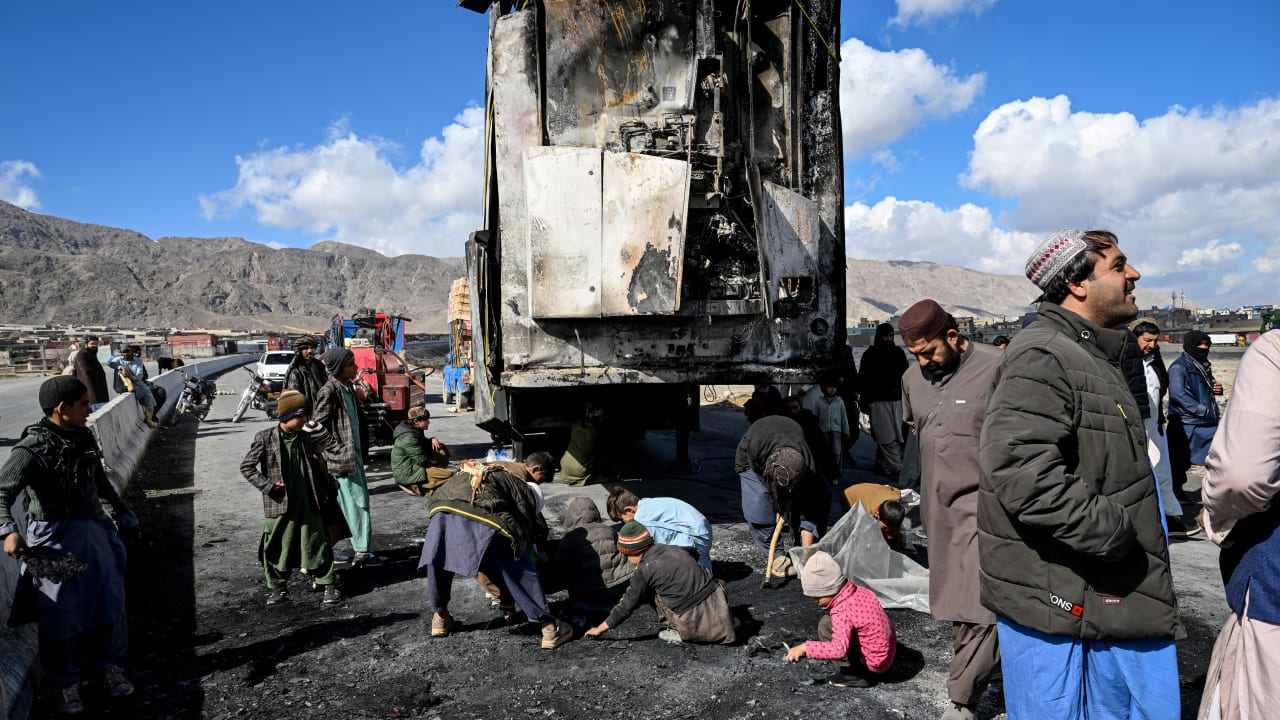
In Quetta, images from the aftermath show burnt-out vehicles at police facilities, bullet-damaged buildings and cordoned streets, underlining the intensity of the urban fighting.
Competing Casualty Claims
Official Pakistani sources now cite approximately 17 security personnel and 31 civilians killed in the coordinated attacks, putting the overall death toll close to 50 on the state side. However, including deaths from subsequent operations, the toll has risen to 58.
The military and provincial authorities say their response and follow-on operations over roughly three days have killed between 145 and 177 BLA militants, with some reports from officials speaking of "almost 200" insurgents eliminated as pursuit operations continued.
The BLA, which has urged people of the province to support the movement, said on Tuesday it had killed 280 soldiers during its Operation "Herof" (Black Storm), but gave no evidence. The group's statements sharply contest government figures, claiming to have killed up to 200 security personnel and taken prisoners, while admitting far fewer of their own fighters killed. Independent verification of either side's numbers remains unavailable.
A Province Under Siege
Pakistan's largest and poorest province, mineral-rich Balochistan borders Iran and Afghanistan and is home to Beijing's investment in the Gwadar deepwater port and other strategic projects under the China-Pakistan Economic Corridor.
The region has grappled with a decades-long insurgency led by ethnic Baloch separatists seeking greater autonomy and a larger share of its natural resources. The BLA, a banned separatist organization designated as a terrorist group by Pakistan and several other states, has publicly claimed responsibility for the coordinated assaults, framing them as retaliation for earlier security-force operations and killings of its members.
The operation was notable for its level of coordination, the use of multiple suicide bombers, simultaneous attacks on more than a dozen sites, and the involvement of at least two women attackers whose images the group released in its propaganda output.
Pakistani officials, including the Balochistan chief minister and military spokespeople, describe the events as a major terrorism incident backed from abroad and justify the scale of their counter-offensive as necessary to restore control and deter further large-scale raids.
Emergency Measures in Effect
In response to the clashes, authorities in Balochistan have imposed sweeping emergency measures, including bans on public gatherings, restrictions on traffic, and limitations on face coverings in public spaces, alongside heightened checkpoints and patrols in affected districts.
Commercial life in parts of Quetta and other urban centers has been severely disrupted, with shops closed and movement curtailed as security forces conduct door-to-door searches and consolidate positions around key installations.
As of the last official updates, manhunts and clearance operations are still reported to be ongoing in parts of the province, and authorities warn of the potential for further attacks or attempted reprisals by surviving militant cells.
Photo: The Jerusalem Post