Gaza Peace Council, A New Era of Financialized Diplomacy, Says Pro-Government Turkish Think Tank ORSAM
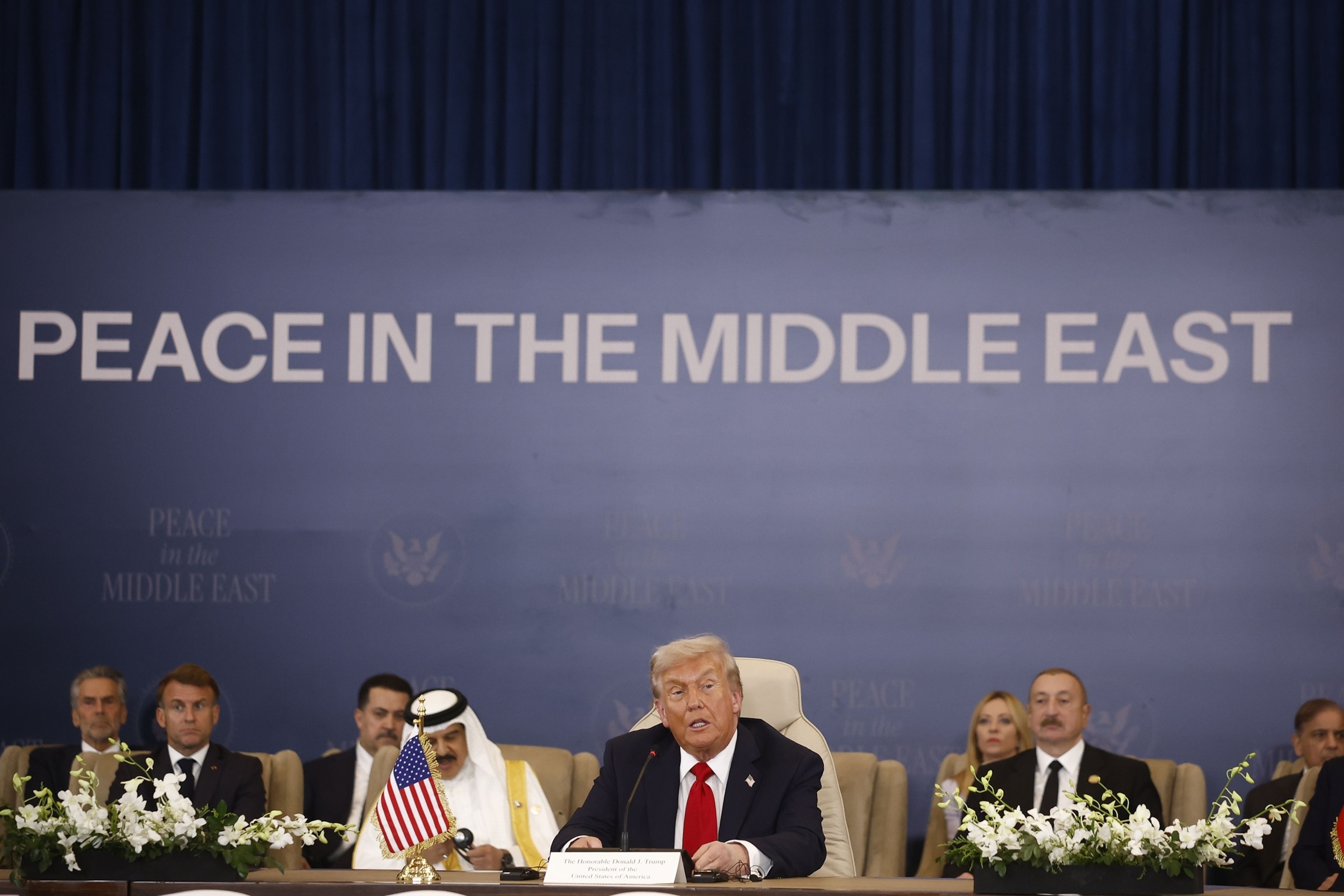
A recent report from the Ankara-based Center for Middle Eastern Studies (ORSAM), a pro-government Turkish think tank, sheds light on the newly established Gaza Peace Council, an initiative spearheaded by former U.S. President Donald Trump, from Ankara's perspective.The report, titled "Gaza Peace Council Between Post-UN Order Imaginaries and Financialized Diplomacy," analyzes the council's structure, key players, and the implications of its unconventional approach to regional conflict resolution.
The ORSAM report highlights the Gaza Peace Council as a radical model aiming to transform the future of the region into a “shareholder-based” governance model, bypassing traditional United Nations (UN) structures. The council, formally announced on January 16, 2026, with an official invitation extended to Turkish President Recep Tayyip Erdoğan, signifies a pivotal moment where a “transactional diplomacy” approach, championed by Trump, has materialized in the region.
According to ORSAM, Turkey’s invitation to the council, alongside Qatar, while notably excluding Israeli Prime Minister Benjamin Netanyahu from the initial formation process, is a significant diplomatic maneuver. This move, as interpreted by ORSAM, suggests a weakening of Israel’s traditional veto power over U.S. foreign policy in the region under the Trump doctrine. It also positions Turkey as a crucial stakeholder in Gaza’s security and reconstruction, not merely an aid provider.
The report further details the council’s three-tiered structure, which merges traditional diplomatic hierarchy with a corporate-style management model. At its apex is a high council, personally chaired by Donald Trump, responsible for strategic decisions and global financial mobilization for peace. Membership in this top tier operates on a “shareholder governance” principle, requiring a minimum cash contribution of $1 billion for a permanent seat, granting “permanent stakeholder” status and political veto power—a “pay-to-play” mechanism.
ORSAM emphasizes that this structural architecture suggests the council’s mandate extends beyond Gaza, potentially serving as a foundational institutional experiment for a post-UN world order. The executive board, comprising eleven members, reflects Trump’s pursuit of operational efficiency and financial leverage. Notable members include Turkish Foreign Minister Hakan Fidan, Qatari Minister of Strategic Affairs Ali al-Sawadi, Egyptian Intelligence Chief Hassan Rashad, and UAE Minister of State for International Cooperation Reem Al Hashimy. Also on the board are figures like Jared Kushner, Marc Rowan (CEO of Apollo Global Management), and Tony Blair, who are seen as representing the council’s true intent: transforming Gaza into a “technology haven” and a “free trade zone” driven by financial interests.
Turkey’s role, as highlighted by ORSAM, is to act as a balancing force against the council becoming a “neo-colonial management apparatus.” Ankara advocates for investments in Gaza’s port, energy infrastructure, and digital networks to serve regional integration rather than becoming a site for “neo-colonial plunder.” The presence of Turkey and Qatar on the executive board is viewed as a significant safeguard against the council becoming a unilateral “Israeli security mechanism.”
The report concludes by noting that the 2026 Davos World Economic Forum served as the global launchpad for the Gaza Peace Council, signaling a shift where diplomacy and international politics are increasingly shaped by financial power and operational control held by “shareholders” rather than traditional diplomats. ORSAM’s analysis underscores the profound implications of this new model for regional dynamics and global governance.
Photo: ABC