MORE IMPORTANT AS EVER: A Volcano Ready to Erupt. Shia Massacre in Islamabad Sparks Diplomatic-Military Crisis as Regional War Looms
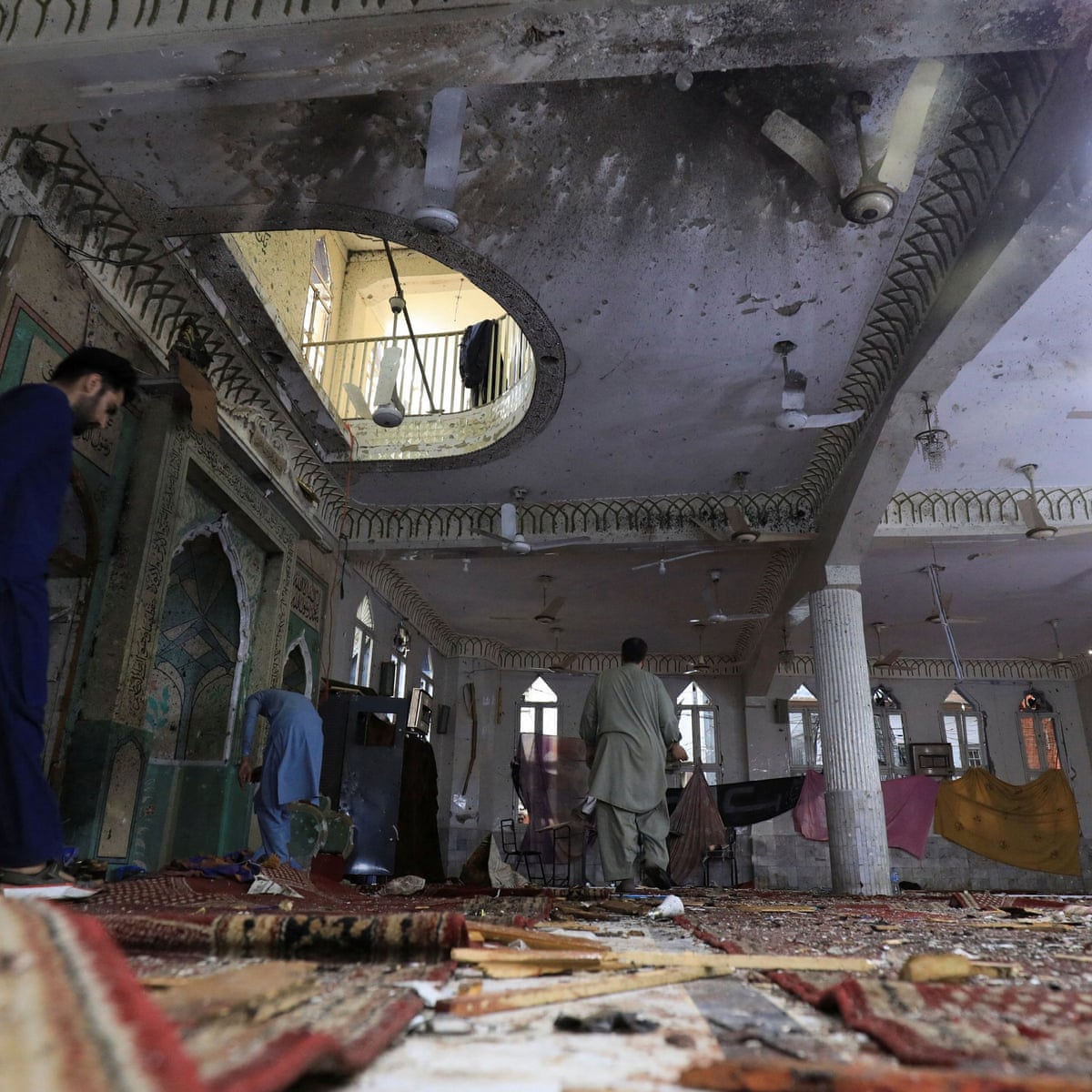
The explosion tore through Friday prayers like a thunderclap from hell. At 1:23 p.m. on February 6, 2026, as hundreds of worshippers knelt in prostration at the Khadija Tul Kubra mosque on Islamabad’s bleeding southeastern edge, a suicide bomber—having already gunned down volunteer guards at the gate—detonated his lethal cargo. The blast shredded the prayer hall, transforming a sanctuary of devotion into an abattoir of severed limbs and shattered glass. Thirty-one souls perished instantly; another 170 staggered into the daylight with wounds that would claim more lives in the hours to come.
But this was not merely another grim entry in Pakistan’s long chronicle of terror. Within minutes of the carnage, the bombing metastasized into something far more volatile: a diplomatic and military volcano now threatening to erupt across the Afghan-Pakistan frontier with what officials privately warn are “immense regional dimensions.”
The Attack: Blood at the Gates
The sequence was as calculated as it was savage. The attacker, armed and vest-laden, approached the Shia imambargah during the weekly congregation when the mosque teemed with over 400 faithful. Challenged by volunteer security—an unfortunate necessity for Pakistan’s perpetually endangered Shia minority—the bomber opened fire before breaching the entrance. The detonation, captured in horrifying snippets on mobile phones, collapsed structural columns and hurled bodies into the courtyard. Blood pooled between scattered shoes and prayer rugs; the emergency bleat of ambulance sirens merged with the wails of the bereaved.
Islamabad, long cocooned in a false sense of security while the northwest burned, had suffered its deadliest attack since the 2008 Marriott bombing. The capital’s state-of-emergency protocols—hospitals flooded, checkpoints militarized, blood banks emptied—signaled a terrifying new reality: the militants had returned to the heart of the state.
The Claim vs. The Accusation: A Region on the Brink
Within hours, the Islamic State’s Pakistan Province (ISPP)—the lethally efficient offshoot of IS-Khorasan—claimed the massacre via its Amaq propaganda channels. The group released a photograph of the alleged martyr, rifle in hand, and issued a statement dripping with sectarian venom, framing the slaughter as holy war against “infidel” Shias. For Pakistan’s Shia community—already bearing the disproportionate brunt of decades of sectarian butchery—the claim was horrifyingly familiar.
But Islamabad’s official narrative erupted like a secondary bomb. Defence Minister Khawaja Asif and Interior Minister Mohsin Naqvi took to the airwaves not to mourn, but to accuse. The bomber, they declared, was a Pakistani national who had shuttled repeatedly across the porous Durand Line into Afghanistan. The operation, they insisted, was orchestrated by “India-backed proxies” operating with impunity from Afghan soil—a “proven” collusion between New Delhi and Kabul’s Taliban rulers.
Kabul’s response was immediate and furious. The Taliban government, already ensnared in a cold war with Islamabad over cross-border militant sanctuaries, condemned the bombing while vehemently denying Pakistani “fabrications.” New Delhi followed suit, rejecting the allegations as “baseless propaganda.” The diplomatic wires between the capitals—already frayed by years of mutual recrimination over the Tehreek-e-Taliban Pakistan (TTP) and ISKP—snapped taut with the tension of impending crisis.
The Military Volcano: Crosshairs on the Border
Behind the diplomatic theater, military machinery is grinding into motion. Pakistani security sources, speaking on condition of anonymity, confirm that “hot pursuit” operations into Afghan territory—long threatened but rarely acknowledged—are now “actively under consideration.” The argument within Rawalpindi’s command centers has shifted from *whether* to strike, to *where* and *when*.
The logic is stark: ISPP and its parent organization ISKP operate as a hydra across the Durand Line, with Pakistani intelligence asserting that Afghan safe havens provide the oxygen for these attacks. The Islamabad bombing represents a catastrophic intelligence failure—militants penetrating the capital’s outer defenses to strike at a soft sectarian target—creating irresistible pressure for retaliation.
Yet any cross-border strike risks detonating the regional powder keg. The Taliban, already humiliated by Pakistani accusations of harboring enemies, have warned that violations of Afghan sovereignty will meet “decisive resistance.” Iranian interests lurk in the shadows; Shia-majority Iran, already enraged by anti-Shia atrocities region-wide, watches Islamabad’s response with predatory interest. Meanwhile, India’s alleged role—however vociferously denied—inject a nuclear dimension into the paranoia, with Islamabad’s establishment seeing New Delhi’s hand in every shadow.
The Sectarian Tinderbox
Beneath the geopolitical tremors lies a deeper, more ancient hatred. The Khadija Tul Kubra mosque was not a random target. It was a deliberate strike at Pakistan’s Shia minority—10 to 15 percent of the population, yet victim to the majority of sectarian violence. ISPP’s ideological commitment to exterminating Shias (whom they deride as “Rafida”) transforms this attack from terrorism into religious cleansing.
The massacre comes amid a fevered atmosphere of Sunni-Shia polarization across South Asia. In Pakistan’s parliament, legislation enforcing Sunni orthodoxy has already alienated Shia clergy; on the streets, hardline groups like Tehreek-e-Labbaik Pakistan have normalized sectarian incitement. By striking at the heart of the capital, ISPP seeks not merely body counts, but civilizational fracture—hoping to ignite retaliatory violence that would justify further bloodshed and collapse the state’s fragile sectarian balance.
The Coming Storm
As thousands mourned the 32 victims in mass funerals on February 7, the regional implications darkened. The bombing has shattered the illusion that Islamabad could remain insulated while Balochistan burned and Khyber Pakhtunkhwa bled. It has exposed the Durand Line not as a border, but as a fault line—one that increasingly separates not two nations, but two conflicting visions of security, sovereignty, and survival.
With Pakistani officials promising “unprecedented” responses, with Afghan factions mobilizing, with Indian and Iranian interests converging on the chaos, the February 6 mosque bombing threatens to be the spark that transforms a bilateral crisis into a regional conflagration. The volcano, long dormant but never extinct, has begun to smoke. The question haunting South Asia’s capitals is no longer if it will erupt—but who will be consumed when the lava flows.
The blood spilled in Tarlai Kalan has already dried. The diplomatic and military crisis it ignited is only beginning to burn.
Photo: The Guardian