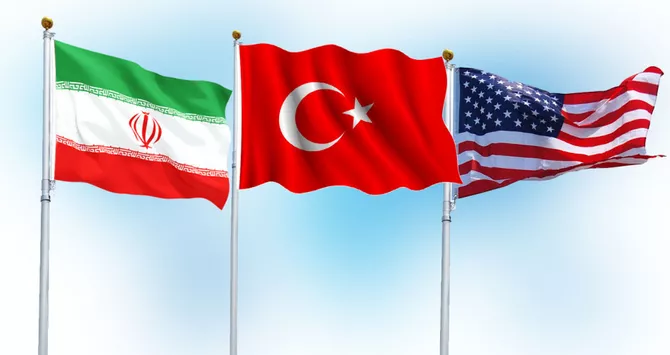
Ankara's Strategic Diplomacy Positions NATO Ally as Bridge Between Washington and Tehran
As tensions between the United States and Iran reach a critical juncture, Turkey has emerged as the indispensable intermediary, with Ankara set to host what could become the most significant diplomatic breakthrough in US-Iran relations in decades.
Turkey's Pivotal Position
Turkey's unique geopolitical standing—as a NATO member maintaining robust diplomatic ties with both Washington and Tehran—has positioned Ankara as the only viable neutral ground for direct negotiations. Iranian Foreign Ministry spokesman Esmaeil Baghaei confirmed Sunday that nuclear talks between Iran and the United States will "probably be held in Turkey in the next few days."
The selection of Turkey as the negotiation venue is far from coincidental. Ankara has spent years cultivating its role as a regional power broker, maintaining economic partnerships with Iran despite Western sanctions while simultaneously preserving its strategic alliance with the United States.
"Turkey represents the rare intersection of trust from both parties," said Dr. Selin Nasi, a foreign policy analyst at Istanbul's Kadir Has University. "Neither Tehran nor Washington would accept a venue that appeared to favor the other side."
Shuttle Diplomacy Bears Fruit
The diplomatic breakthrough announced Monday—when Iranian President Masoud Pezeshkian formally ordered the initiation of nuclear negotiations—followed days of intensive shuttle diplomacy in which Turkish officials reportedly played a central coordinating role.
The proposed talks would bring together Iranian Foreign Minister Abbas Araghchi and U.S. special envoy Steve Witkoff on Turkish soil, marking the first high-level direct engagement between the two adversaries since negotiations collapsed years ago.
Turkish Foreign Ministry sources, speaking on condition of anonymity, indicated that Ankara has been facilitating back-channel communications between Tehran and Washington for several weeks, helping to establish the parameters that made Monday's announcement possible.
Balancing Act Amid Military Tensions
Turkey's mediation efforts come against a backdrop of extraordinary military tension. The United States maintains what President Trump has called a "massive armada" near Iranian waters, including the USS Abraham Lincoln carrier strike group. Meanwhile, Iran has bolstered its defensive capabilities with approximately 1,000 new drones and warned of "rapid retaliation" against any military action.
Ankara's ability to maintain dialogue with both sides while these military preparations continue underscores Turkey's exceptional diplomatic leverage. Turkish President Recep Tayyip Erdoğan has long advocated for diplomatic solutions to regional conflicts, and the potential Iran-US talks represent a significant validation of this approach.
Stakes for Regional Stability
The implications of successful Turkish mediation extend far beyond bilateral US-Iran relations. Supreme Leader Ayatollah Khamenei warned Sunday that any American military action would trigger a regional war rather than a contained strike—a scenario that would directly threaten Turkey's southern border and economic interests.
For Ankara, facilitating a peaceful resolution serves multiple strategic objectives: preventing a destabilizing regional conflict, demonstrating Turkey's indispensability to Western security architecture, and preserving valuable economic ties with Iran.
Framework Taking Shape
Both sides have signaled conditional willingness to negotiate. President Trump stated Sunday, "Hopefully we'll make a deal," while Foreign Minister Araghchi told CNN that Iran "fully agrees" with Trump's position against nuclear weapons, adding that "in return, we anticipate the lifting of sanctions."
Iranian Foreign Ministry officials confirmed they are reviewing "the details and general outlines of the potential initiation of negotiations," with hopes to finalize the framework within days—a timeline that places Turkey at the center of an accelerating diplomatic process.
Critical Days Ahead
As the international community watches anxiously, Turkey's role as honest broker will face its most significant test. The success or failure of the anticipated talks in Turkey could determine whether the current crisis resolves through diplomacy or escalates into the regional conflagration that Khamenei has warned of.
For now, all eyes turn to Ankara, where Turkish diplomats are working to transform a fragile opening into a durable framework for peace.