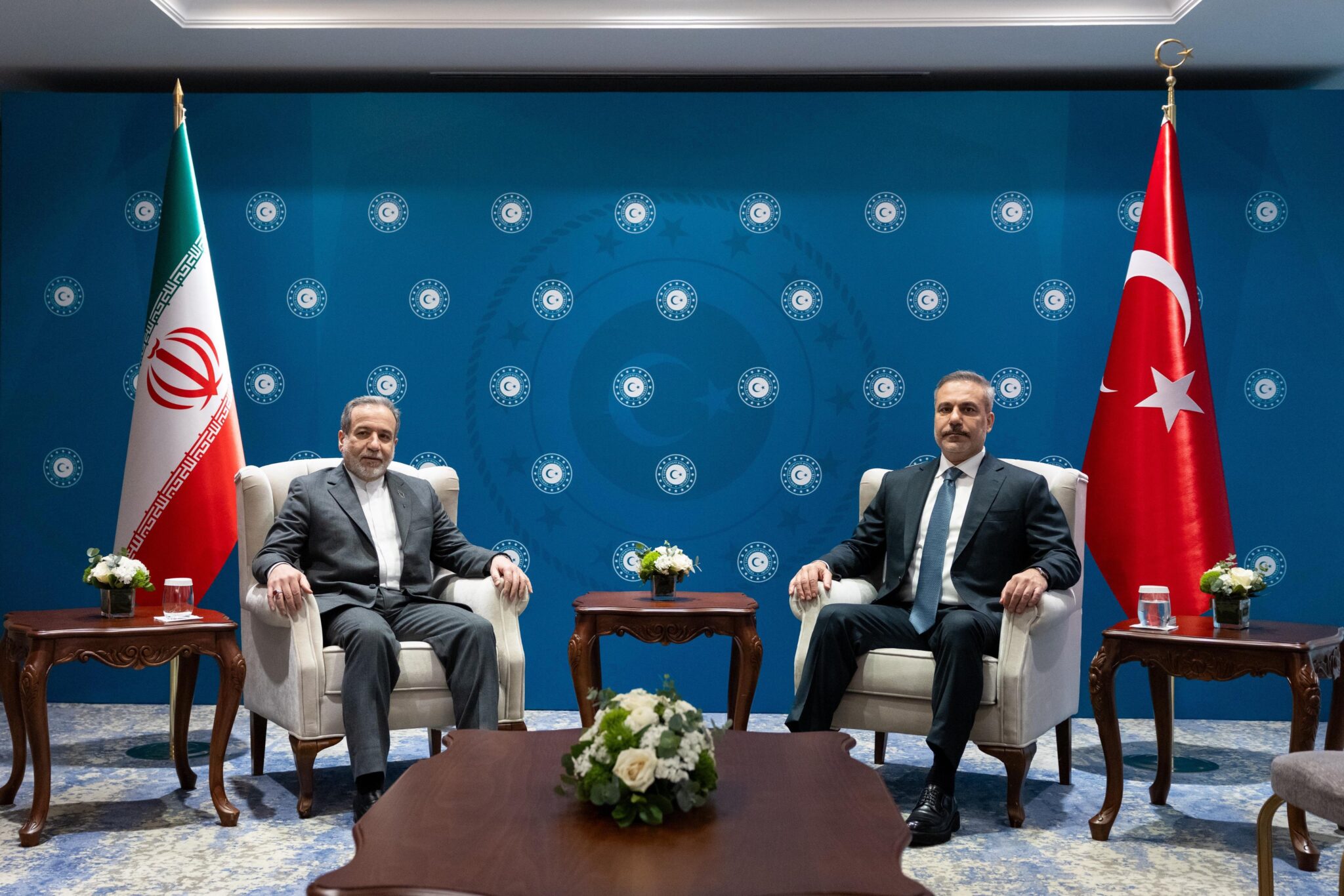
As tensions escalate in the Middle East, the possibility of a limited US military intervention in Iran is being more openly discussed in Washington. This debate covers a wide spectrum, from “surgical strikes” on nuclear facilities to targeting regional proxy networks. It is not surprising that Turkey is once again being mentioned as a potential mediator in this picture. However, according to Alpaslan Özerdem for YetkinReport, the main question is this: How will Turkey manage the Israel factor while trying to conduct a mediation process between the US and Iran?This is because today, the most challenging actor in this equation is not Iran, but Israel.
The Unseen Divergence Between Washington and Tel Aviv
Although the US and Israel are often perceived as a single strategic bloc, this harmony is not as seamless as it seems when it comes to Iran. Washington’s main priority is to limit Iran’s nuclear capabilities and keep regional escalation under control. Therefore, the US administration prefers to complement limited but effective military pressure with negotiations, without being dragged into a large-scale war.
On the Israeli side, the picture is different. Prime Minister Netanyahu, due to upcoming elections and internal political pressures, advocates a much more comprehensive military attrition strategy that does not just deter Iran. This approach goes beyond nuclear facilities and also targets Iran’s regional military capacity and proxy networks. This difference points to a serious strategic tension, if not an open crack, between the US and Israel.
It is precisely at this point that Washington’s main concern emerges: that Israel’s unilateral and uncontrolled moves will drag the US into an unwanted regional war.
Turkey-Israel Relations: A Break or a Condition?
For Turkey, the issue is whether the political break with Israel is absolute. The recent emphasis by Foreign Minister Hakan Fidan that the “break is not structural, but conditional” is therefore important. This statement says much more than a call for normalization. While Ankara implies that it can redefine the course of its relations with Israel depending on the humanitarian situation in Gaza, it also gives a clear message to Washington: Turkey wants to be an actor that is taken into account, not excluded, in regional crisis management.
This approach points not to a public rapprochement, but to a quiet and case-by-case area of contact. Effective mediation today progresses not through high-profile summits, but through risk management conducted behind closed doors.
Mediation is Not About Convincing Israel
It is necessary to correct a critical misunderstanding here. Turkey’s possible mediation role is not to “convince” Israel on the Iran issue. The main function is to be able to convey to Washington the political and strategic costs of Israel’s military reflexes and to show how these costs may conflict with the broader interests of the US. This is exactly what Ankara has done in the past in the contexts of Syria and the Black Sea: translating military moves into political consequences and buying time to delay escalation.
It is clear that Turkey-Israel relations are the most fragile link in terms of mediation today. Ankara is not a “trusted” actor in the eyes of Israel, but rather a contact channel that “cannot be completely ignored” at this stage. However, even this is important in an equation where regional tensions are rapidly escalating. For Israel, although Turkey is not a preferred interlocutor, it is not an actor that can be completely sidelined.
A Face-Saving Framework for Iran
In contrast, the truly decisive dimension of successful mediation lies on the Iranian side. For Tehran to be able to take a step back, it needs a framework in which it can present this not as a surrender, but as a strategic choice that protects its resistance and sovereignty. Otherwise, military pressure, instead of encouraging negotiation, triggers internal consolidation and a tougher challenge.
The historical experience that external military interventions generally strengthen the regime in Iranian society rather than weakening it is a critical warning at this point. As Minister Fidan also pointed out, attacks, especially from Israeli sources, suppress political differences in Iran and strengthen the “besieged country” reflex. Therefore, the goal of mediation should not be to corner Iran, but to open up a narrative space that will make a controlled withdrawal possible on the nuclear file and regional tension headings.
Turkey’s ability to speak directly with Iran and to read Tehran’s red lines and internal political sensitivities is a decisive advantage in this respect. Mediation here serves not as an activity of “producing an agreement,” but as a balance management function that will delay a larger conflict and provide maneuvering space for the parties. This is the main issue in the Middle East today: not ideal solutions, but intermediate paths that can postpone worse scenarios.
A Difficult but Indispensable Role
Turkey’s test is not to be an actor that “produces” peace, but to keep the diplomatic space open that will make war manageable. This involves high political risks, and the possibility of failure is always there. But in today’s fragmented international order, mediation is not a risk-free activity anyway.
If diplomacy is completely disabled, what will fill the void is not stability, but uncontrolled escalation. Therefore, the choice before Turkey is clear: to take on a difficult role in uncertainty or to bear the consequences of decisions made by others. History generally takes seriously those who choose the former.
Photo: The source