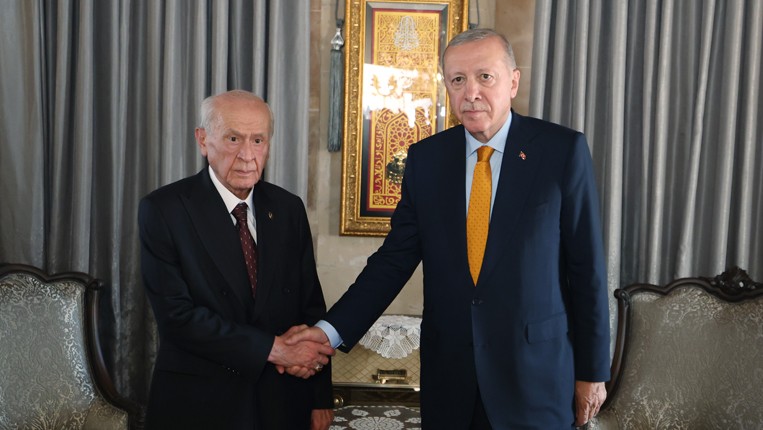
A carefully staged photograph of President Recep Tayyip Erdoğan and his nationalist ally, Devlet Bahçeli, in Ahlat last week, intended to project unity, has done little to quell growing speculation about deep-seated friction within Turkey's ruling People's Alliance. While the two leaders presented a united front, a series of escalating political and judicial crises, including a high-profile industrial espionage case, is testing the foundations of their partnership.
According to a detailed analysis published on Monday, the alliance is not on the verge of collapse but is navigating its most significant challenges to date. In a piece for Yetkin Report, veteran journalist Murat Yetkin argues that while the bond forged by mutual interest will likely hold, the strained expressions in the Ahlat photo betray a reality that is far from rosy. Yetkin identifies two core issues that have unexpectedly surfaced: a political-judicial firestorm and a connected economic scandal.
The first significant point of contention ignited on August 11th when MHP leader Bahçeli issued a public call for the "swift" conclusion of legal cases, particularly those involving municipalities. This was widely interpreted as a direct message concerning the ongoing detention of Istanbul's popular mayor, Ekrem İmamoğlu. The response from the judiciary was swift and defiant. On August 15th, prosecutors in Istanbul arrested several individuals, including Selahattin Yılmaz—a figure Bahçeli had previously defended as a "fellow idealist"—in a move seen as a warning against political interference in judicial matters. The crisis deepened with the defection of CHP Mayor Özlem Çerçioğlu to the ruling AK Party, a move allegedly coerced by threats of imprisonment, according to her former party's claims.
Adding fuel to the fire is a second, overlapping crisis involving allegations of industrial and military espionage. İsmet Sayhan, a former executive at the state-owned arms manufacturer MKE, has been accused of leaking military technology to a private company. Sayhan, who has tried to leverage a past photograph with Bahçeli to claim he is being framed, was also arrested despite his MHP connections. These arrests of figures with ties to the MHP have been interpreted as a power play within the state apparatus, further complicating the alliance's internal dynamics.
While Bahçeli has publicly blamed the opposition CHP for fabricating rumors of a rift, the MHP's messaging appears to carry a more nuanced, double-edged warning for its senior partner. A recent editorial in Türkgün, a newspaper closely aligned with the MHP, initially called for İmamoğlu to face justice if guilty of corruption. However, the author, Yıldıray Çiçek, added a crucial sentence: "The same principle must apply to any similar situation, regardless of the party." Analysts suggest that this was not aimed at the opposition, but was a coded message to the AKP, implicitly referencing figures like the newly recruited Çerçioğlu, who herself had faced corruption allegations before switching parties. The message is clear: the MHP expects the fight against corruption to be applied consistently, even within the alliance's own expanded ranks.
Photo: The source, Yetkin Report