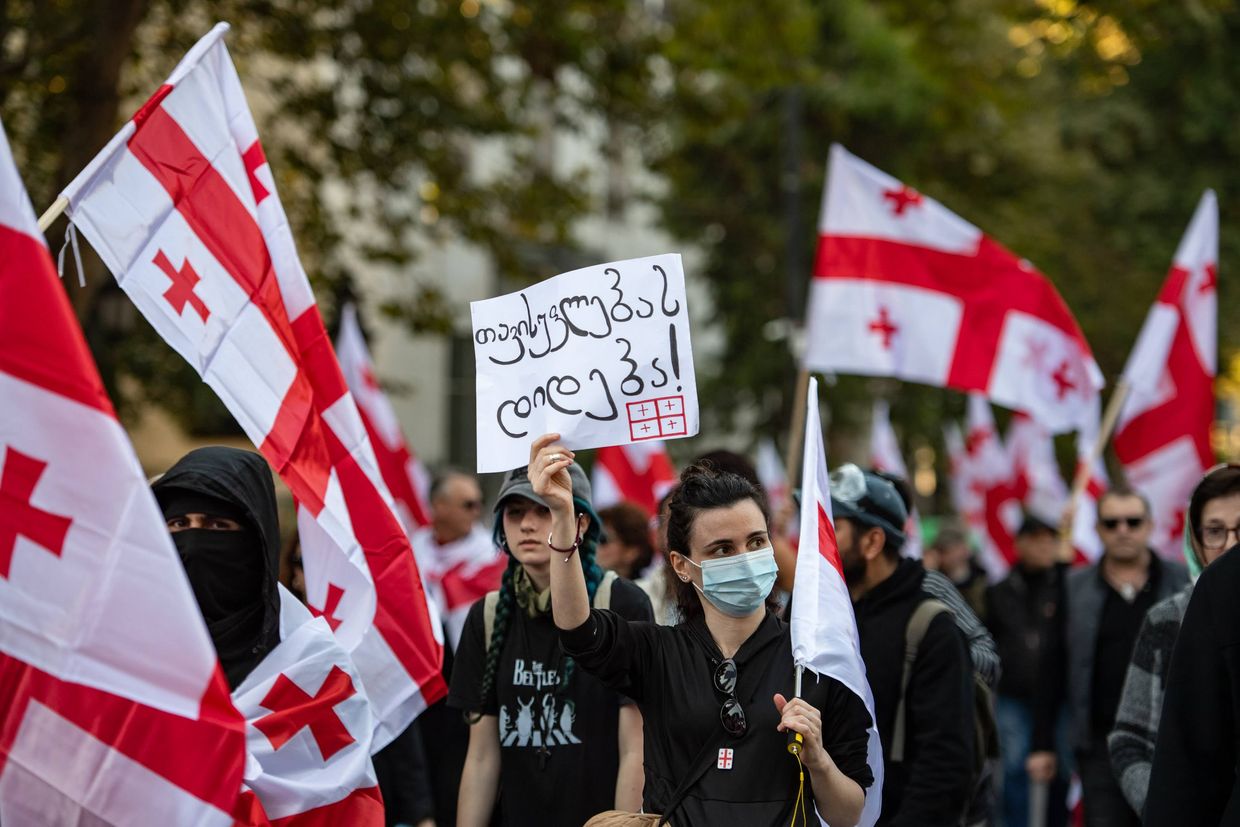
Georgia's anti-government protest movement continues to grapple with the aftermath of a failed "peaceful revolution" on October 4, as activists face intensified state repression while debating the future direction of their year-long resistance against the ruling Georgian Dream party.
According to reporting by Mikheil Gvadzabia for OC Media, the events of October 4 and subsequent days have sparked intense debates within Georgia's anti-government movement, which has been holding daily protests since November 28, 2024, after Georgian Dream suspended the country's EU membership bid following disputed parliamentary elections.
The October 4 demonstration, which drew tens of thousands to central Tbilisi, was billed as a decisive moment that would end Georgian Dream's 13-year rule in a single day. Opposition figures had promoted the date throughout summer 2025, promising a "peaceful revolution" without revealing concrete plans. However, the rally quickly descended into chaos when organizers declared that power belonged to the people and called for a march on the presidential palace.
A small group breached the palace fence before being pushed back by riot police, sparking sporadic clashes. The crowd fragmented, frustration spread, and the rally ultimately fizzled out. All five named organizers were detained that night and now face up to nine years in prison on serious criminal charges.
"I left completely shattered. It was a terrible feeling and I still can't get over it," 70-year-old demonstrator Maka Javashvili told OC Media, expressing widespread disappointment over the chaotic and ultimately futile demonstration.
The failure has ignited fierce debate within the movement. Some activists accuse the organizers of irresponsibility and lacking a real plan, while conspiracy theories suggest state security services may have deliberately weakened the palace fence to create a pretext for mass arrests. Opposition television station Pirveli analyzed footage that appeared to support this theory.
"You can't play with the fate of a protest," said Gota Chanturia, an activist involved in daily demonstrations, criticizing the organizers for attempting to steer the movement without consulting other protest groups or understanding its dynamics.
Within days of October 4, over 40 more protesters were detained across Georgia, adding to dozens already arrested in earlier waves. The government quickly seized on the presidential palace incident to brand the movement as violent and foreign-orchestrated, though sociologist Iago Kachkachishvili argues that authorities still struggle to marginalize the protests beyond their own voter base.
Despite setbacks, the movement shows resilience. On October 8, the 315th day of protests, demonstrators returned to Rustaveli Avenue chanting, "We are here, we are fighting, we have not been defeated."
The role of established opposition parties remains contentious. While the United National Movement had several members involved in organizing October 4, most parties maintain limited involvement beyond individual participation. Georgian Dream has openly threatened to ban major opposition parties through the Constitutional Court, accusing them of anti-state activities.
As the protest movement approaches its first anniversary, demonstrators face new challenges. Parliament recently rushed through anti-protest amendments making blocking Rustaveli Avenue punishable by imprisonment rather than fines. Many activists already face crushing financial penalties—Chanturia alone has accumulated 76 fines totaling $140,000.
"The opposition-minded public won't stop without active protest. This resistance hasn't broken," Kachkachishvili noted, though the path forward remains uncertain as Georgia's democratic crisis deepens.
Photo: The source