TLF Special. Turbulence in Ankara’s Corridors. What Lies Behind Bahçeli’s Call for Cyprus “Annexation”?
By Dr. Nikolaos Stelgias
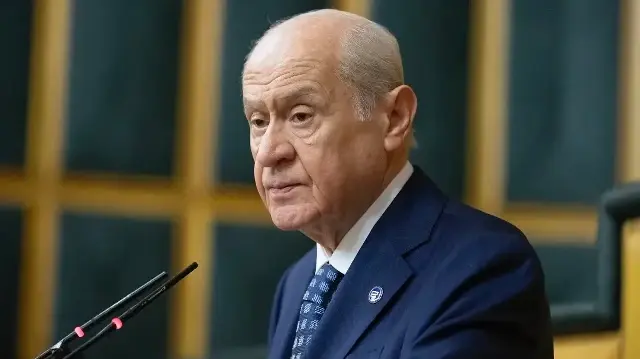
A political tremor has shaken Ankara following Nationalist Movement Party (MHP) leader Devlet Bahçeli’s call for the internationally unrecognized, breakaway entity, the Turkish Republic of Northern Cyprus (TRNC) —recognized only by Turkey—to formally merge with the Republic of Turkey. His remarks, delivered during his party’s parliamentary group meeting, have caused ripples through both Cypriot and Ankara’s political and diplomatic circles, laying bare the capital’s deep strategic divides and the quiet contest over Turkey’s national security doctrine.
A Defiant Stand in Parliament
In his parliamentary speech, Bahçeli left little room for ambiguity. He urged the TRNC Parliament to convene urgently, reject the results of the recent presidential election, and vote in favor of joining Turkey. “Cyprus is our national cause—there is no going back. Cyprus is Turkish; it is the homeland of the Turk. The federation proposal has no validity,” he declared, slamming the door shut on renewed reunification talks.
His fiery statement came just after Tufan Erhürman, a pro-federation candidate from the Republican Turkish Party, won the TRNC presidential election with 62.8 percent of the vote amid a record-low 62.8 percent turnout. Incumbent Ersin Tatar, a staunch proponent of the two-state solution favored by Ankara since 2017, garnered only 35.77 percent.
Hawks in Ankara Alarmed by the Election Outcome
Analysts were quick to note the timing. Speaking anonymously to The Levant Files, a senior Ankara insider dismissed any notion that Bahçeli’s words were spontaneous: “A politician as experienced as Mr. Bahçeli doesn’t speak by accident. This was a deliberate move—more than a message to his base; it was a sharp warning to certain circles within the government and the state bureaucracy.”
Ankara’s “hawkish” circles—comprising both civilian and military figures—are said to be deeply unsettled by Erhürman’s victory. They fear that his presidency may revive United Nations-brokered reunification talks on the island and undermine Turkey’s post-2017 two-state policy, which treats the TRNC as a separate sovereign entity. To these factions, returning to a federative framework represents a perilous deviation from national priorities.
Economic Pressures and the Diplomacy Camp
Others within the Turkish establishment, however, see the situation differently. With a deepening economic crisis and mounting inflation, pragmatic voices in Ankara advocate normalizing relations with the West, viewing Erhürman’s win as a potential opening to restart diplomatic engagement through the Cyprus issue. They argue that a return to negotiations could ease international tensions and bring much-needed financial relief.
Turkey’s hawks fiercely reject this line of thinking. They view it as an attempt to dilute the hardline national security consensus forged after the failed 2016 coup. This same faction also pushes for sustained military readiness in northern Syria, insisting on preemptive action to curb Kurdish autonomy efforts. According to one senior official, their logic is stark: “If we can dismantle the organization through Öcalan and secure the new Constitution, good. If not, we move forward—starting from northern Syria.”
Bahçeli’s Message: Red Lines Redrawn
Against this backdrop, Bahçeli’s annexation call emerges as far more than symbolic rhetoric. It functions as a strategic signal—a way for the nationalist-conservative bloc to remind the government of its “red lines” and constrain any tilt toward compromise, whether on Cyprus, Syria, or broader Western engagement.
Ultimately, the flare-up over Cyprus reveals a profound strategic divergence shaping Turkish policymaking. On one side stand those who view economic pragmatism and Western normalization as the route out of crisis; on the other, the ultranationalist-security establishment, for whom sovereignty and territorial integrity override all else.
By putting annexation on the table, Bahçeli amplified the hawkish faction’s voice, warning Ankara’s leadership against softening its stance. The coming months will test which camp gains the upper hand—and, with it, the direction of Turkey’s foreign policy into the 2030s.
Photo: Yeni Şafak