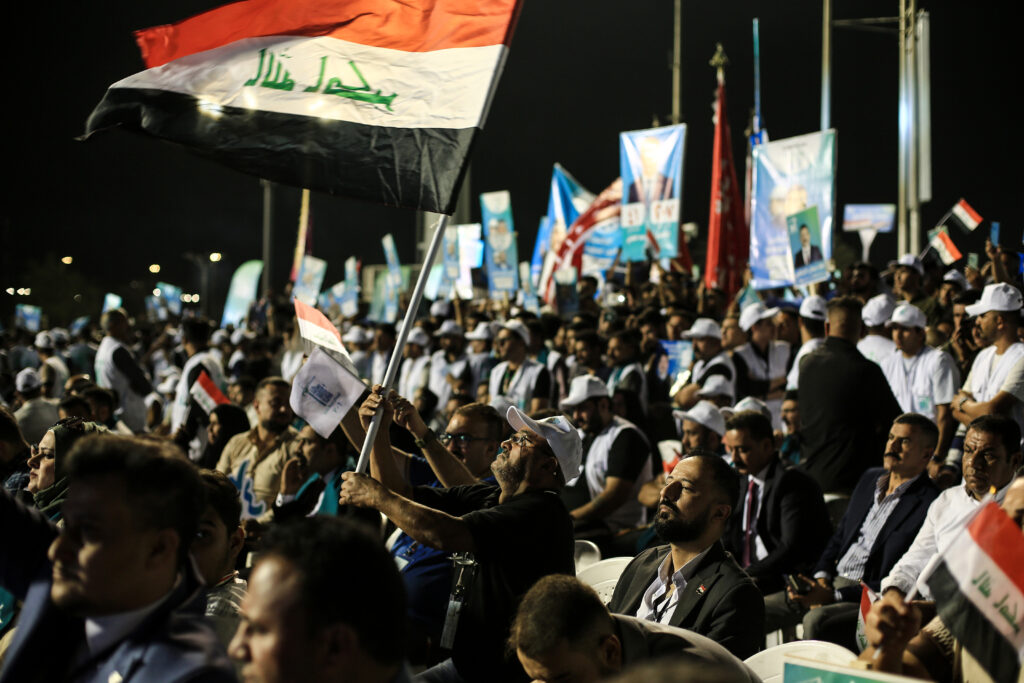
Iraq’s 2025 parliamentary election has concluded, delivering a complex and precarious mandate. The results show a surprising electoral success for incumbent Prime Minister Mohammed Shia al-Sudani’s bloc, yet simultaneously consolidate the power of the traditional, deeply entrenched political elite. This outcome sets the stage for a protracted and contentious government formation process, which will determine the country's trajectory and its delicate balance of regional and international relations. The election, marked by a higher-than-anticipated turnout in Sunni and Kurdish areas, was less a referendum on policy and more a recalibration of power among established factions, with significant implications for Iraq's fragile stability.
The initial results confirmed the political landscape remains dominated by powerful, established parties, a trend reinforced by the 2023 election law amendments, as noted by the Atlantic Council and Chatham House. While Prime Minister Sudani’s Reconstruction and Development bloc performed exceptionally well, securing a significant number of seats, his victory was not the landslide needed to guarantee a second term, according to the Atlantic Council. The post-election environment is now defined by the strength of the Iran-backed Coordination Framework (CF), which, despite Sudani’s success, controls a plurality of seats and is poised to assert its will in upcoming negotiations, a key observation from The Washington Institute. This dynamic, where a popular incumbent must contend with a powerful, opposing bloc, underscores the deep-seated challenges in Iraq’s political system, often criticized for its reliance on clientelism, patronage, and the sectarian muhasasa system of power-sharing, a point highlighted by Chatham House.
The complex government formation process is the next critical phase, a period that can notoriously stretch for months, or even a year, due to Iraq’s specific constitutional provisions and informal political peculiarities, as detailed by The Washington Institute. The process is less about a straightforward constitutional procedure and more a game of "nothing's decided until everything is," where ministerial slots and key positions are negotiated in a laborious process of horse-trading. The Washington Institute notes that Sudani faces a major hurdle: key components of the Iran-backed CF, including the State of Law Coalition and the Al-Sadiqoun Bloc, are adamantly opposed to his return, creating a powerful obstacle to his coalition-building efforts, a point echoed by the Atlantic Council. This opposition is significant, as the CF includes U.S.-designated terrorist organizations and holds substantial leverage in the new parliament.
The election also highlighted the pervasive role of money and patronage in securing votes. Analysts at Chatham House noted the 2025 election was characterized by vast spending, with some dubbing it "the billionaires' election." Votes are often won through patronage networks, financial incentives, and the strategic deployment of state resources. Prime Minister Sudani, for instance, drew criticism for swelling the government payroll with nearly a million new jobs and issuing "thank-you" letters to state employees just before the vote, a move seen as leveraging executive authority for electoral gain. Furthermore, the election was marred by reports of a black market for biometric voter cards, with votes being purchased for around $100 each, cementing the perception of clientelism and corruption among many Iraqis.
Despite the domestic political turmoil, Sudani’s first term saw notable improvements in Iraq’s regional and international standing. The Washington Institute reports that he successfully balanced the demands of his Iran-backed coalition with efforts to improve ties with Washington and Arab neighbors. His administration stabilized the security situation, cajoled Shia terrorist militias into ending attacks on U.S. personnel, and promoted energy independence. This stability encouraged American companies like ExxonMobil and Chevron to re-engage with Iraqi projects. However, the post-election power struggle threatens to unravel these gains. If the Iran-friendly CF successfully asserts its dominance in the new government, it could tilt Baghdad back toward Tehran, potentially reverting the relationship with the United States to a more confrontational stance.
The results also solidified the political dominance of the Kurdistan Democratic Party (KDP) in the Kurdistan region, giving them significant influence in the federal government formation in Baghdad. The Atlantic Council notes that the KDP is now among the top three blocs in terms of seats at the federal level, and its leverage will be crucial in the negotiations for the Iraqi presidency, a post traditionally held by its rival, the Patriotic Union of Kurdistan (PUK).
In conclusion, the 2025 election has not delivered a clear path forward but a complex web of political alliances and rivalries. The coming months will test Iraq’s fragile stability, as traditional parties vie for control over state resources and the premiership. The outcome of coalition negotiations will determine whether Iraq continues on its path of cautious regional engagement and domestic development under a second Sudani term, or if the country’s political center of gravity shifts decisively back toward the Iran-aligned factions, with profound implications for its future.
Related Sources:
Iraq’s Election: Outcomes and Next Steps | The Washington Institute
https://www.washingtoninstitute.org/policy-analysis/iraqs-election-outcomes-and-next-steps
Experts react: How will Iraq’s parliamentary election shape the country’s politics? - Atlantic Council
https://www.atlanticcouncil.org/blogs/new-atlanticist/experts-react-how-will-iraqs-parliamentary-election-shape-the-countrys-politics/
Iraq elections 2025: How votes are won and what the results could mean for Iraq’s fragile stability | Chatham House – International Affairs Think Tank
https://www.chathamhouse.org/2025/10/iraq-elections-2025-how-votes-are-won-and-what-results-could-mean-iraqs-fragile-stability
Photo: Atlantic Council