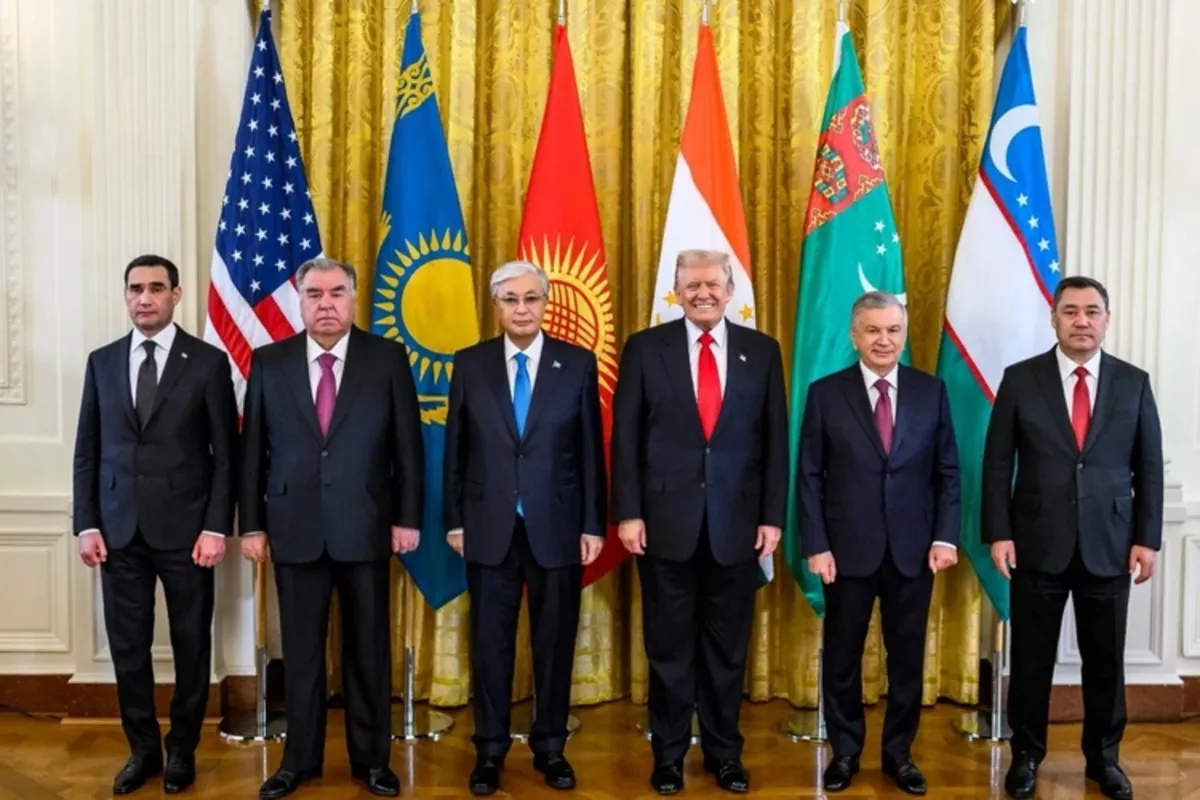
On November 6, President Donald Trump hosted the first-ever C5+1 summit in Washington, D.C., where leaders from five Central Asian nations convened for unprecedented high-level talks. The gathering yielded a major diplomatic breakthrough as Kazakhstan announced its accession to the Abraham Accords, becoming the first Muslim-majority country to join the normalization pact since its inception and the first new member during Trump's second term.
The summit marked a milestone in U.S.-Central Asia relations, representing the inaugural collective visit by the presidents of Kazakhstan, Kyrgyz Republic, Tajikistan, Turkmenistan, and Uzbekistan to the American capital. Discussions centered on expanding economic and trade partnerships across energy, technology, and infrastructure sectors, with both sides seeking to deepen cooperation in an increasingly competitive geopolitical landscape. The meeting underscored Washington's renewed commitment to the region's strategically vital position sandwiched between Russia and China.
Securing critical mineral supply chains emerged as a top priority. The U.S. signed a memorandum of understanding with Kazakhstan to access the region's abundant deposits of uranium, copper, and lithium—resources essential for reducing American dependence on Russian and Chinese suppliers. Leaders also endorsed the Trans-Caspian International Transport Route, known as the Middle Corridor, which bypasses Russia to create resilient, sanctions-proof trade links between Europe and Asia. Additionally, the nations agreed to advance artificial intelligence development, enhance cybersecurity cooperation, and accelerate digital transformation throughout Central Asia.
The summit produced concrete commercial outcomes, including Kazakhstan's agreement to purchase over 300 U.S.-made locomotives valued at $4.2 billion. This deal exemplified the tangible benefits of strengthened bilateral ties and signaled Kazakhstan's commitment to modernizing its infrastructure while deepening economic integration with Western partners. The procurement is expected to modernize Kazakhstan's freight rail network and enhance connectivity along the Middle Corridor.
President Trump announced Kazakhstan's entry into the Abraham Accords during the summit proceedings. Kazakhstan's Ministry of Foreign Affairs swiftly confirmed the decision, framing it as aligned with the nation's balanced, peace-oriented foreign policy and in its national best interests. While Kazakhstan has maintained formal diplomatic relations with Israel since 1992, making the move largely symbolic, officials emphasized its strategic value in attracting substantial increased investment, advanced technology, and enhanced security cooperation.
Analysts view the accession as a calculated geopolitical maneuver by Kazakhstan to position itself as a bridge between the Muslim world and the West while carefully balancing relationships with major powers. The decision reflects Astana's strategy to diversify its international partnerships amid growing competition between Russia, China, and the United States. By joining the Accords, Kazakhstan aims to secure favorable attention from Washington and strengthen its credentials as a regional leader promoting interfaith dialogue and economic pragmatism over ideological alignment.
The announcement may trigger a domino effect across the region. Diplomatic sources indicate that Azerbaijan and Uzbekistan are engaged in preliminary discussions about potentially joining the normalization agreement. The development aligns with the Trump administration's broader strategy of expanding the Abraham Accords' reach and countering Iranian influence in Central Asia. Kazakhstan's Foreign Ministry reaffirmed that its participation would not alter its commitment to advocating for a just, comprehensive resolution to the Middle East conflict based on the "two states for two peoples" principle.
The historic C5+1 summit and Kazakhstan's Abraham Accords membership represent a pivotal moment in Central Asian geopolitics. As the region emerges as a critical arena for great power competition, these developments signal a deepening strategic partnership between Washington and Central Asian capitals, with Kazakhstan leading the charge toward greater integration with Western economic and diplomatic frameworks on the global stage.
Photo: Caspian Post