Iran is increasingly turning to digital tools to silence dissent just as senior insiders warn that the Islamic Republic faces its gravest crisis since 1979, beset by deepening economic hardship and public disillusionment.
According to an investigation by Iran International titled “Disable the SIM, disable the citizen: Iran's new, silent crackdown,” authorities have begun quietly cutting off mobile phone lines and pressuring citizens to shut down social‑media accounts, targeting especially women who appear unveiled or users who share critical content.
Those affected say their SIM cards are disabled without warning, instantly locking them out of banking, online purchases, government e‑services and even judicial notifications that are tied to their registered mobile numbers. The measure allows security agencies to impose real‑world punishment while avoiding the visibility and political cost of arrests.
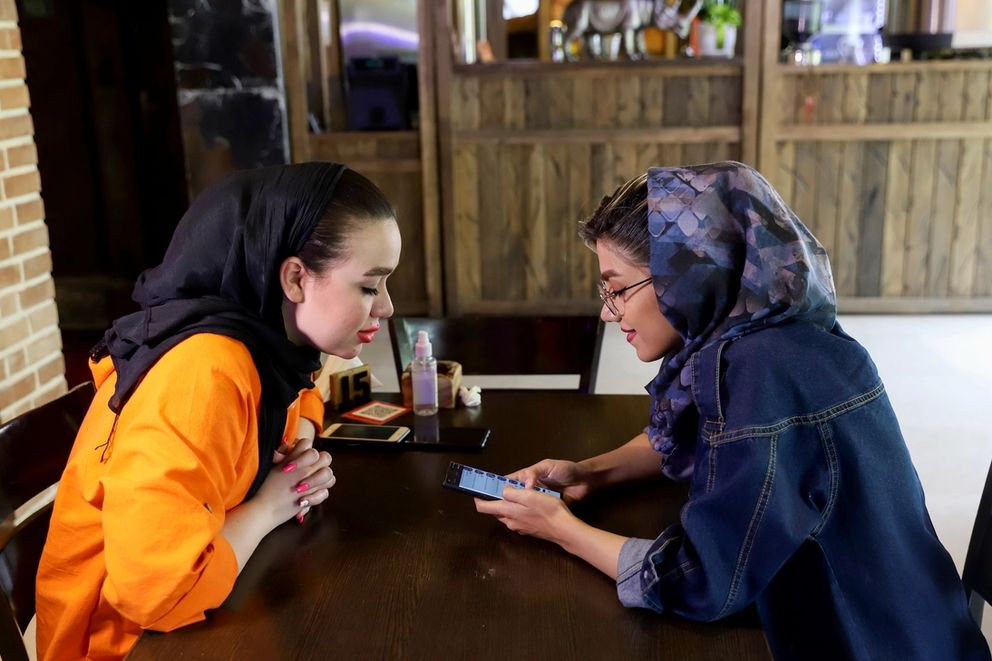
Among the most prominent cases is script supervisor Donya Rad, who became an early symbol of the “Woman, Life, Freedom” protests after posting a 2022 photograph of herself unveiled in a Tehran teahouse. After she recently shared a picture wearing shorts on a Tehran street, officials labeled her case “special measures” and her SIM was cut for weeks, leaving her dependent on relatives for routine transactions. Other journalists and activists, such as former political prisoner Parisa Salehi and podcaster Elaheh Khosravi, report similar blocks and warnings that they must delete posts, sign pledges, or publish pro‑government content to have their numbers restored.
Digital‑rights advocates say the practice now extends beyond hijab enforcement. Following the brief war between Iran and Israel earlier this year, dozens of citizens critical of Tehran’s conduct say their mobile lines were suddenly disabled to stifle independent reporting and dissent. Cybersecurity instructor Saeed Sozangar has condemned the move as a distortion of Iran’s e‑government system, arguing that digital infrastructure meant to deliver services has become “a tool of control in the hands of a reckless state.”
Legal experts quoted in Iranian media insist the practice has no basis in law, noting that only courts can impose penalties and only if expressly authorized by statute. They describe the SIM cut‑offs as “silent, invisible penalties” that bypass due process and even violate constitutional protections.
The silent crackdown unfolds against a backdrop of mounting economic and political strain that, according to former reformist president Mohammad Khatami, has left most Iranians focused on survival rather than governance. “Eighty percent of the Iranian people are not political in a certain sense,” Khatami recently said, arguing that many now care less about who rules than about “security and a clearer outlook for the future.”
He likened the Islamic Republic to a once‑sturdy tree that had weathered storms for decades but is now threatened by unprecedented internal and external pressures that could one day cause it to “wither and collapse.”
Iran’s parliament research arm estimates that more than one‑third of the population lives in poverty, while economists warn inflation could exceed 60% by March 2026. A survey by Tehran‑based Rouydad24 reported 92% dissatisfaction with the country’s direction, and a separate 2024 poll by the Netherlands‑based GAMAAN institute found that only about 20% of Iranians want the current system to remain, with a majority favoring regime change or a major political transformation.
As Tehran leans on low‑visibility digital repression to keep critics in check, surveys suggest that popular patience with the system itself is rapidly eroding.
Photo: Iran International