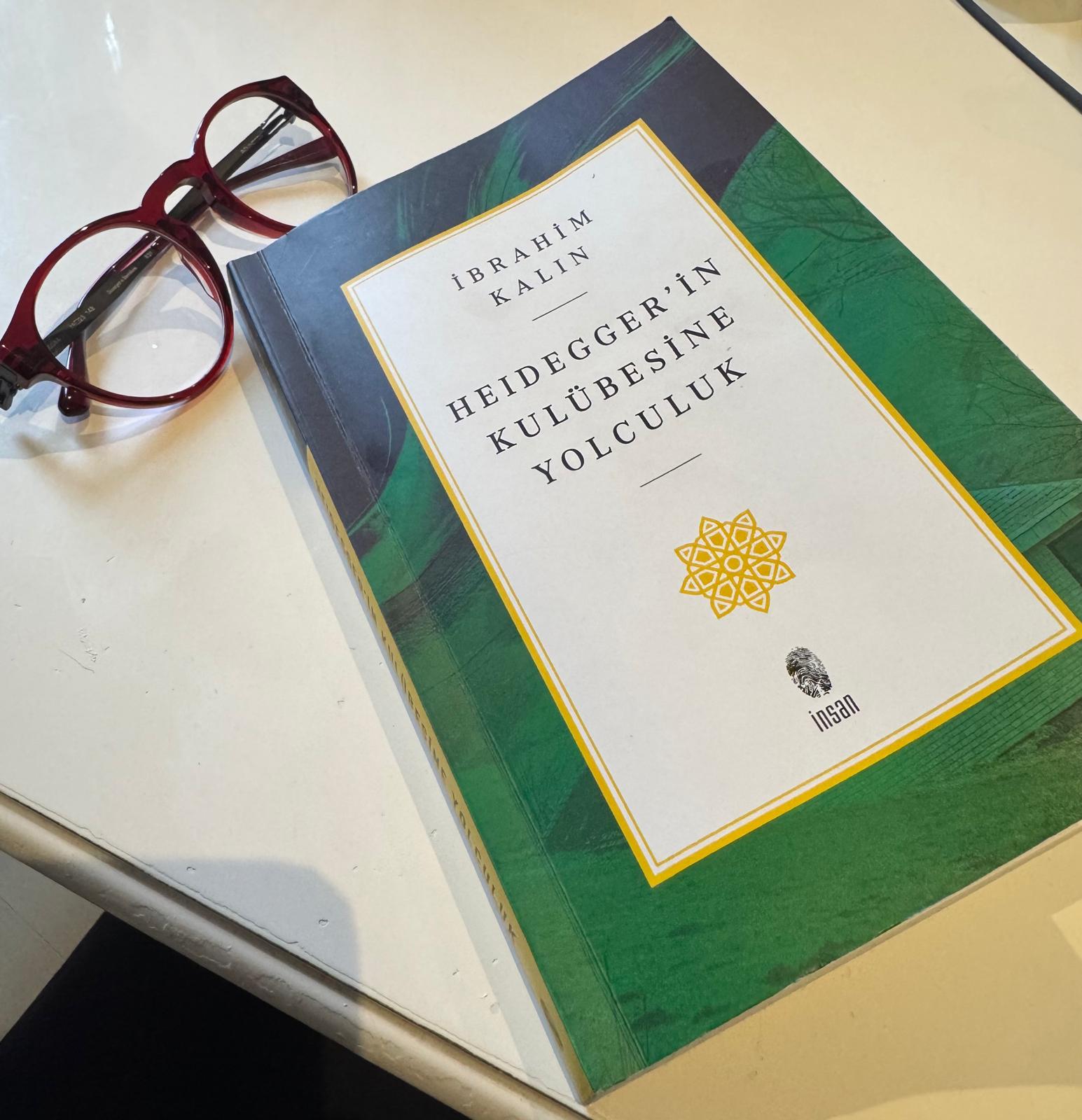
İbrahim Kalın, the head of Turkey's National Intelligence Organization (MİT), has once again drawn attention to his unique intellectual profile with the release of his second book in a year, "Heidegger’in Kulübesine Yolculuk" (A Journey to Heidegger's Hut). The book, which follows his earlier work "İslam, Aydınlanma ve Gelecek" (Islam, Enlightenment, and the Future), delves into the complex philosophical legacy of Martin Heidegger, prompting a national conversation about the intersection of high-level statecraft and deep philosophical inquiry.
According to Ertuğrul Özkök's analysis, published in the T24 news site, the new book is centered on Kalın's visit to the famed 42-square-meter hut of the German philosopher Martin Heidegger on October 20, 2019, accompanied by Heidegger's grandson. The visit, and the subsequent reflections on Heidegger's concepts of "being" and the "language of the village," form the core of the work. According to a review by Ertuğrul Özkök, the book's most emotional section describes the MİT chief's moments of contemplation while pulling his 33-bead prayer beads in front of the hut. The book has been noted for its more relaxed and unburdened narrative style compared to his previous, more cautious work. The review, originally published by T24, also highlights a promotional video Kalın shared on his personal Instagram account, which used artificial intelligence to create a fictional dialogue between himself and Heidegger.
Kalın, often described as one of the world's most intellectual intelligence chiefs, uses the journey to Heidegger's rural retreat to explore profound questions about existence, freedom, and the modern world. He examines the philosopher's preference for the "language of the village" over the "refined" language of academia, suggesting that while philosophy may not be done in the village, "thinking" certainly is. This perspective allows Kalın to distance himself from the academic establishment and engage with the fundamental questions of "being" through a more grounded lens.
A central theme in the book, and one that has sparked significant commentary, is Kalın's critique of the modern human condition. He quotes a powerful line from his book: "The world does not become more livable when people become gods." This statement is part of a broader argument against the secular pursuit of a "heaven on earth" and the dangers of the "man who thinks he is God," which he sees as a core problem of Western civilization. The reviewer, however, poses a challenging question: does this critique not apply even more acutely to the Middle East, a region that has not yet fully reckoned with the concept of the "man who thinks he is God," unlike the West's confrontation with figures like the Nazi-era Führer, whom Heidegger briefly served as a university rector?
The book also touches upon the dark chapter in Heidegger's past—his acceptance of the rectorship at Freiburg University under the Nazi regime in 1933. Kalın's work navigates this controversial history, particularly in light of Heidegger's later statement that "Only a god can save us." Kalın interprets this "god" not as a religious creator, but as a "sacred principle of Being." However, the complexity of his explanation of freedom, which he says is not taken away by this "god" but is rather invited by it, is noted as being so intricate that it risks becoming an "overly complicated concept."
Finally, the book contains a subtle, yet significant, reference to Hannah Arendt, Heidegger's former student and lover who was forced to flee Germany because she was Jewish. The parenthetical mention of Arendt, a thinker who popularized the concept of the "banality of evil," is seen by the reviewer as a coded message, suggesting that Kalın may have recently revisited her work in light of contemporary events. Kalın concludes his book by urging readers to "start building our own hut," a call for individual contemplation and self-reflection. The ultimate question posed by the book, and left unanswered for the reader, is: "Which god will save us?" The reviewer's own conclusion is stark: "The men of the Middle East who think they are God will not save us." The book is published by İnsan Yayınları.
Photo: The source