
Turkish authorities have located the wreckage of a private jet carrying Libya's Chief of General Staff, General Muhammed Ali Al-Haddad, and his delegation following a crash in the Haymana district south of Ankara on Tuesday evening.
Interior Minister Ali Yerlikaya confirmed that the wreckage of the Dassault Falcon 50 business jet was found by gendarmerie forces approximately 2 kilometers south of Kesikkavak village in Haymana. "The wreckage of the aircraft that took off from Ankara Esenboğa Airport bound for Tripoli has been reached by our Gendarmerie in Kesikkavak Village of Haymana district," Yerlikaya stated.
The Flight and Final Moments
Approximately 20 minutes into the flight, the crew detected an electrical system malfunction and requested an emergency landing over the Karapınar Aktepe area. The aircraft then attempted to return to Esenboğa Airport, but radar contact was lost at 8:52 p.m. during the return approach.
Residents in the Haymana area reported hearing an explosion shortly after contact was lost. According to reports, the jet caught fire upon impact with the ground. Gendarmerie and search-and-rescue teams were immediately dispatched to the scene.
Those Aboard
Authorities now confirm that eight people were aboard the aircraft—five passengers and three crew members, correcting earlier reports of five total occupants.
According to Egyptian newspaper El Vasat, citing a source from Libya's Armed Forces High Command office, the passengers included:
General Muhammed Ali Al-Haddad — Chief of General Staff of Libya
Lieutenant General El-Fatouri Gharbil — Army Chief of Staff
Brigadier General Mahmud El-Fadavi — Head of the Military Production Authority
Mohammed El-Asavi — Advisor to the Chief of General Staff
Mohammed Mahjoub — Official photographer for the Chief of General Staff
The identities of the three crew members have not yet been released.
Challenging Recovery Conditions
Haymana Mayor Levent Koç described the crash site as located in a remote rural area encompassing six to seven villages. He noted that the location is inaccessible by road, with recovery efforts further complicated by heavy rainfall and dense fog.
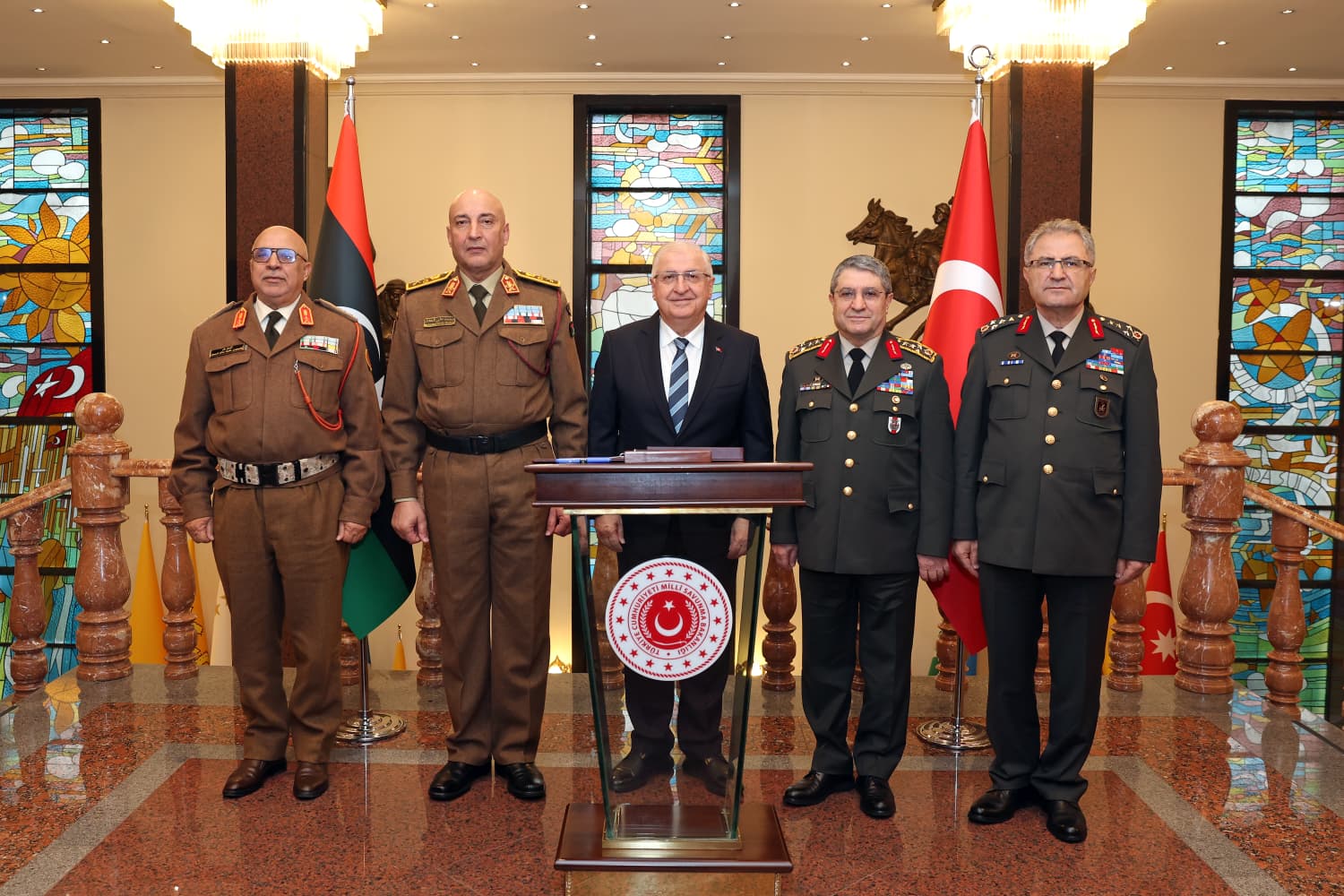
General Al-Haddad had been in Turkey as the official guest of Turkish Chief of General Staff General Selçuk Bayraktaroğlu. Earlier on Tuesday, he was received with full military honors at the Turkish General Staff headquarters. Al-Haddad subsequently met with Defense Minister Yaşar Güler, with General Bayraktaroğlu and Land Forces Commander General Metin Tokel also in attendance.
Significant Timing
The tragedy comes just one day after the Turkish Grand National Assembly approved a presidential motion extending the mandate for Turkish Armed Forces personnel deployed in Libya for an additional two years. Turkey has maintained a military presence in Libya since 2020, supporting the internationally recognized Government of National Accord.
Flights at Esenboğa Airport remain suspended pending investigation. The cause of the electrical malfunction that prompted the emergency has not been determined. Libyan authorities have not yet issued an official statement.
Previous Information
Turkish authorities have confirmed that contact was lost with a private jet shortly after it departed from Ankara's Esenboğa Airport on Tuesday evening, with Libya's Chief of General Staff, General Muhammed Ali Al-Haddad, believed to be among the five passengers on board.
According to Turkish news outlet T24, the Dassault Falcon 50 business jet, bearing tail number 9H-DFJ, took off at 8:10 p.m. local time bound for Tripoli, Libya. Communication with the aircraft was lost approximately 42 minutes later at 8:52 p.m. Reports indicate that an explosion was heard in the vicinity of the airport shortly after contact was lost. Flights at Esenboğa Airport have been suspended pending further investigation.
Turkish Interior Minister Ali Yerlikaya issued an official statement confirming the incident. "This evening at 8:10 p.m., a Falcon 50 business jet with tail number 9H-DFJ took off from Ankara Esenboğa Airport destined for Tripoli. Contact with the aircraft was lost as of 8:52 p.m.," Yerlikaya said.
The minister added that an emergency landing notification was received from the Haymana district, located south of Ankara, but subsequent attempts to re-establish communication with the aircraft proved unsuccessful. "There are five passengers aboard the aircraft, including His Excellency General Muhammed Ali Ahmed Al-Haddad, Chief of General Staff of Libya. The public will be kept informed of developments," Yerlikaya stated.
The aircraft has been identified as belonging to Harmony Jets, a Malta-based aviation company.
General Al-Haddad's presence in Turkey was part of high-level military discussions between the two nations. Earlier on Tuesday, Turkish Defense Minister Yaşar Güler received the Libyan military chief at his office in Ankara. Al-Haddad had also conducted meetings at the Turkish General Staff headquarters during his visit.
The timing of the incident carries particular significance given recent parliamentary developments. Just one day prior, on Monday, the Turkish Grand National Assembly approved a presidential motion extending the mandate for Turkish Armed Forces personnel deployed in Libya for an additional two years. Turkey has maintained a military presence in Libya since 2020, supporting the internationally recognized Government of National Accord against rival factions.
Turkish authorities have launched search and rescue operations in the Haymana area, where the emergency landing notification was reportedly issued. The cause of the communication loss remains unknown, and officials have not yet confirmed whether the aircraft crashed or made an emergency landing.
The incident has prompted heightened security measures at Esenboğa Airport, with all departing and arriving flights temporarily halted as investigators work to determine the circumstances surrounding the disappearance.
Libya's government has not yet issued an official statement regarding the reported incident involving their top military commander. Diplomatic channels between Ankara and Tripoli are expected to be activated as both nations await further information.
This is a developing story, and authorities have pledged to provide updates as more information becomes available.