Iran’s Winter Unrest Deepens: Bazaar Closures and Campus Protests Converge as Government Offers Dialogue
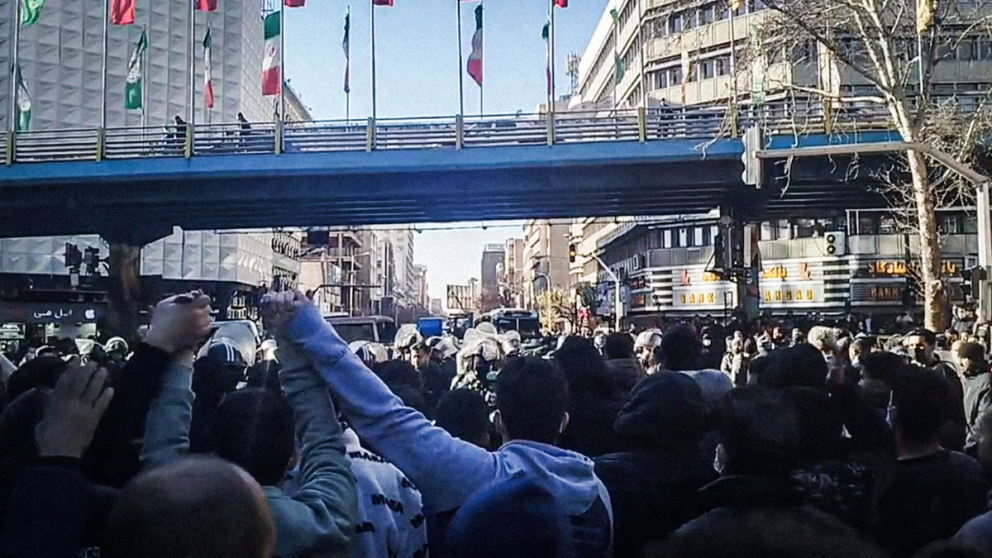
Over the past day, Iran’s latest protest wave expanded from market-centered economic demonstrations into a broader, multi‑front challenge—with university students joining bazaar merchants and shopkeepers, and officials publicly acknowledging “legitimate” grievances while signaling a dialogue mechanism.
Key Developments (last 24 hours)
Campus participation widened: Semi-official outlets reported hundreds of students protesting at multiple universities, including several in Tehran, with additional activity reported in other cities.
Government shifted tone to managed de-escalation: President Masoud Pezeshkian said he instructed the interior minister to listen to protesters’ “legitimate demands” and officials discussed setting up a dialogue mechanism.
Economic stress remained the ignition source: Reporting emphasized the rial’s sharp weakening, high inflation, and uncertainty for traders—conditions that have made normal commerce difficult and encouraged shop closures/strikes.
Security presence stayed heavy: Journalists and outlets described riot police deployments in key Tehran areas and around some universities as the state sought to contain gatherings.
Narrative battle intensified: International and opposition-leaning coverage framed the protests as increasingly political and nationwide, while other reporting cautioned that verification is challenging amid restrictions and that the government has tried to keep the framing economic.
A Concise Timeline of the Last 24 hours
1) Protests broaden from bazaars into universities
What began largely as merchant/trader unrest tied to currency volatility and prices has continued to spill into universities, increasing the movement’s social breadth and symbolic weight. Reuters reporting described protests spreading to universities, with semi-official media citing student demonstrations in Tehran institutions.
Why this matters: Universities have historically served as organizational nodes in Iranian protest cycles, and student participation tends to increase political messaging and sustain momentum beyond purely economic demands. That dynamic was visible in slogans reported by multiple outlets, with chants sometimes referencing Iran’s leadership and the political system.
2) The state offers “dialogue,” while maintaining containment
In the past day, the government’s public messaging emphasized recognition of economic pressure and an intent to channel protests into talks, a notable rhetorical choice given Iran’s history of forceful crackdowns. Reuters quoted the president and a government spokesperson discussing “legitimate demands” and a dialogue mechanism.
At the same time, reports describe security deployments around protest-sensitive locations—suggesting a dual-track approach: offer talks to reduce temperature, but keep coercive capacity visible.
What’s Driving the Unrest Right Now (and Why it Escalated Quickly)
The economic trigger: currency instability + inflation psychology
Multiple reports converge on the same trigger: the rial’s steep decline, inflation, and the resulting paralysis in buying/selling, especially for imported goods. Reuters noted the currency’s deterioration during 2025 and inflation reported in the 40%+ range, while NBC and AP-sourced reporting described the grinding cost-of-living strain and public anxiety about further price spikes.
This kind of shock tends to accelerate unrest because it creates a daily, visible indicator of state failure: when exchange rates swing rapidly, merchants can’t price inventory and households feel their savings evaporate. That “expectations collapse” can turn localized protests into a broader legitimacy crisis—even if the initial complaint is “just” economic.
Bazaar closures have outsized political meaning in Iran’s modern history, and coverage in the past day stressed how shop shutdowns can turn economic protest into a national disruption. Iran International’s analysis argued that conservative merchant confidence has been badly eroded by macro mismanagement and budget priorities, while other outlets reported on repeated closures and trader participation. [iranintl.com], [pbs.org]
Even when numbers in the street fluctuate, commercial shutdowns function like a “vote with shutters”—a signal that core economic constituencies view continued normalcy as more costly than confrontation. [independent.co.uk], [gmanetwork.com]
Campus Front: Why Universities Raise the Stakes
In the last 24 hours, student protests were reported at multiple universities (particularly in Tehran), and accounts described tightened security around some campuses.
Iran International’s live coverage reported arrests and confrontations involving Basij-linked forces and students, including claims of injuries and detentions. Because reporting conditions inside Iran limit independent verification, these details should be treated as credible allegations from a dedicated outlet with sourcing, but not universally confirmable in real time.
Analytical takeaway: Student mobilization adds three things:
Sustained networks (dorms, councils, peer-to-peer organizing)
Symbolic legitimacy (“future generation” narrative)
Rapid politicization of messaging beyond prices to governance and rights
Security Response: Calibrated Pressure, Risk of Rapid Escalation
Across reporting, a consistent picture emerges: visible security deployment, episodic use of force, and efforts to keep protests from consolidating in central nodes. Al Jazeera described tear gas and heavy anti-riot presence in Tehran amid shop closures, while Reuters and AFP-sourced coverage noted police deployments and the state’s attempt to combine firmness with dialogue messaging.
The risk is that tactical violence can become strategic accelerant: if images of campus assaults or street shootings spread, protests can broaden faster than the security apparatus can suppress—especially if economic disruption (strikes/closures) continues.
International Reaction: Condemnation, Pressure—and Geopolitical Overlay
International commentary has also fed into the moment. RFE/RL and Iran International highlighted remarks by U.S. President Donald Trump criticizing Iranian authorities’ treatment of protesters and referencing past incidents of lethal force; those comments circulated widely in coverage.
Meanwhile, Al Jazeera reported Iranian officials warning of harsh responses to potential aggression following renewed U.S. strike threats tied to missile/nuclear issues—an external pressure environment that compounds economic stress and heightens regime threat perception.
Analysis: The regime often frames unrest as externally exploited, while protesters frame external pressure as evidence the state has isolated Iran and worsened livelihoods. In this cycle, both narratives can coexist—but the immediate driver still appears to be domestic economic pain, with geopolitics shaping the government’s risk calculus.
What to Watch in the Next 24–72 Hours
Whether bazaar closures spread or persist—continued shutdowns would deepen economic disruption and encourage “follow-the-shutters” participation.
Whether dialogue becomes real or symbolic—the government’s proposed mechanism lacks clarity on who represents protesters and what concessions are possible.
Escalation on campuses—arrests or violence at universities can quickly broaden protest coalitions.
Currency management measures—any credible stabilization package (or a perceived failure) can change protest intensity fast.
Photo: Iran International