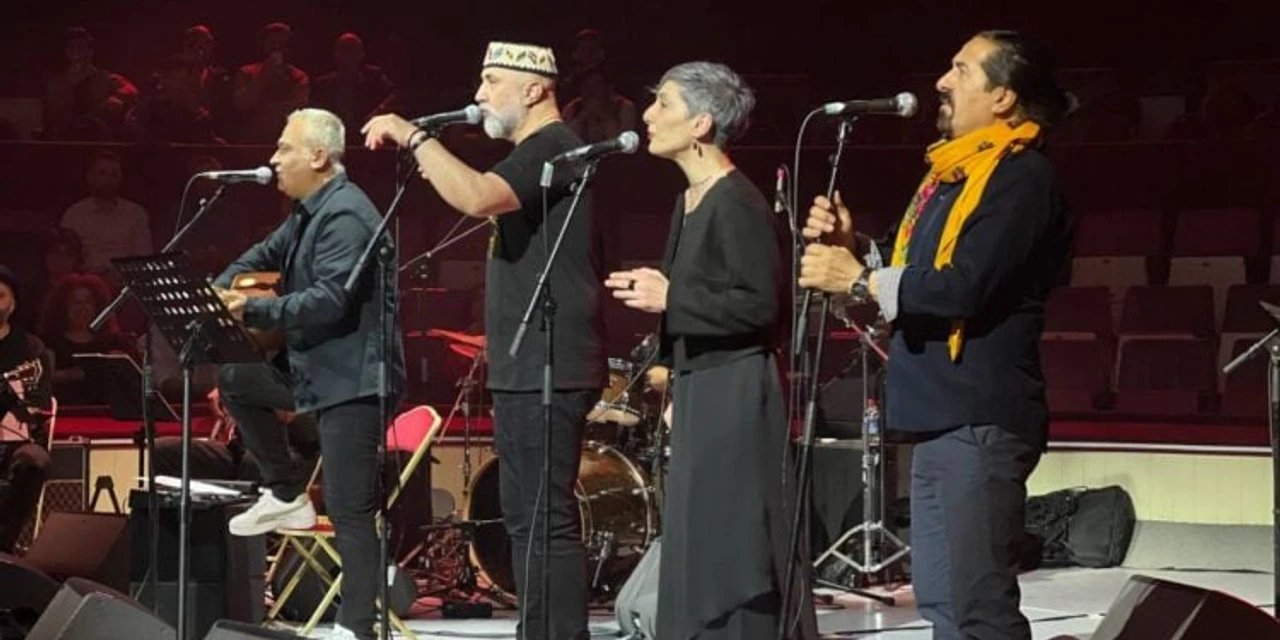
According to the Kısa Dalga news site, the incident occurred on December 20, when Koma Amed was scheduled to perform at the Yahya Kemal Beyatlı Cultural Center in Istanbul. Hours before the event, the District Governorate issued a statement confirming the cancellation, citing only that the request was "not found appropriate" following "necessary evaluations".
The band, which was forced into exile in Germany after a 1994 trial on charges of "terrorist propaganda" related to their Kurdish-language album, announced the cancellation on social media.
In their statement, Koma Amed expressed regret and emphasized their commitment to a political solution: "We are persistent in our belief in peace. We want our songs to contribute to this process. We know that peace will offer a beautiful future to everyone. With this hope, we wish to meet again as soon as possible. We apologize for all the grievances caused".
A Symbolic Setback
The ban is a significant symbolic setback, coming at a time when the Turkish-Kurdish peace process has reached its most advanced stage in years. Koma Amed, founded in Ankara in 1988, is a pioneering group whose music became a vital voice for Kurdish culture during a period when the Kurdish language was heavily suppressed.
Their return to Turkey was heralded as a sign of political thaw, culminating in a celebrated reunion concert in Diyarbakır (Amed) in October 2025—their first performance in the region in 30 years.
The cancellation in Istanbul suggests a deep disconnect between the central government's political overtures and the continued restrictive policies of local administrative bodies.
Peace Process at a Stalemate
The ban occurs against the backdrop of a fragile and non-transparent peace process that has been characterized as "one step forward, one step back".
The current phase of negotiations was triggered by a surprise call from Nationalist Movement Party (MHP) leader Devlet Bahçeli in late 2024, leading to a series of unprecedented developments in 2025:
PKK Disarmament: The Kurdistan Workers' Party (PKK) declared a unilateral ceasefire in March 2025, announced its self-dissolution in May, and symbolically burned weapons in July.
Öcalan Dialogue: A parliamentary commission, including members of the ruling Justice and Development Party (AKP) and MHP, met with imprisoned PKK founder Abdullah Öcalan in November 2025 to discuss a legal framework for the peace process.
Despite these high-level political and military breakthroughs, the process has reached a stalemate. Kurdish political representatives are demanding constitutional amendments to recognize and expand ethnic minority rights, including mother-tongue education, and the release of political prisoners such as former presidential candidate Selahattin Demirtaş.
Ankara, meanwhile, has conditioned further concessions on the full demilitarization of the PKK and the resolution of the status of the Syrian Democratic Forces (SDF) in northern Syria.
The cancellation of Koma Amed's concert underscores the core tension in the current negotiations: while the government engages in dialogue with the political and military wings of the Kurdish movement, the cultural and civilian expressions of Kurdish identity remain subject to administrative suppression. Critics argue that such bans, which are not uncommon for Kurdish cultural events, erode public trust and question the government's commitment to the cultural dimension of a lasting peace.
The incident serves as a potent reminder that a comprehensive resolution to the Kurdish issue requires not only political and military agreements but also a fundamental shift in the state's approach to Kurdish cultural rights and freedom of expression.
Photo: Kısa Dalga