NEW PODCAST FROM TLF. The Somali Paradox. How a Nation of One People Became a State of Many Fragments
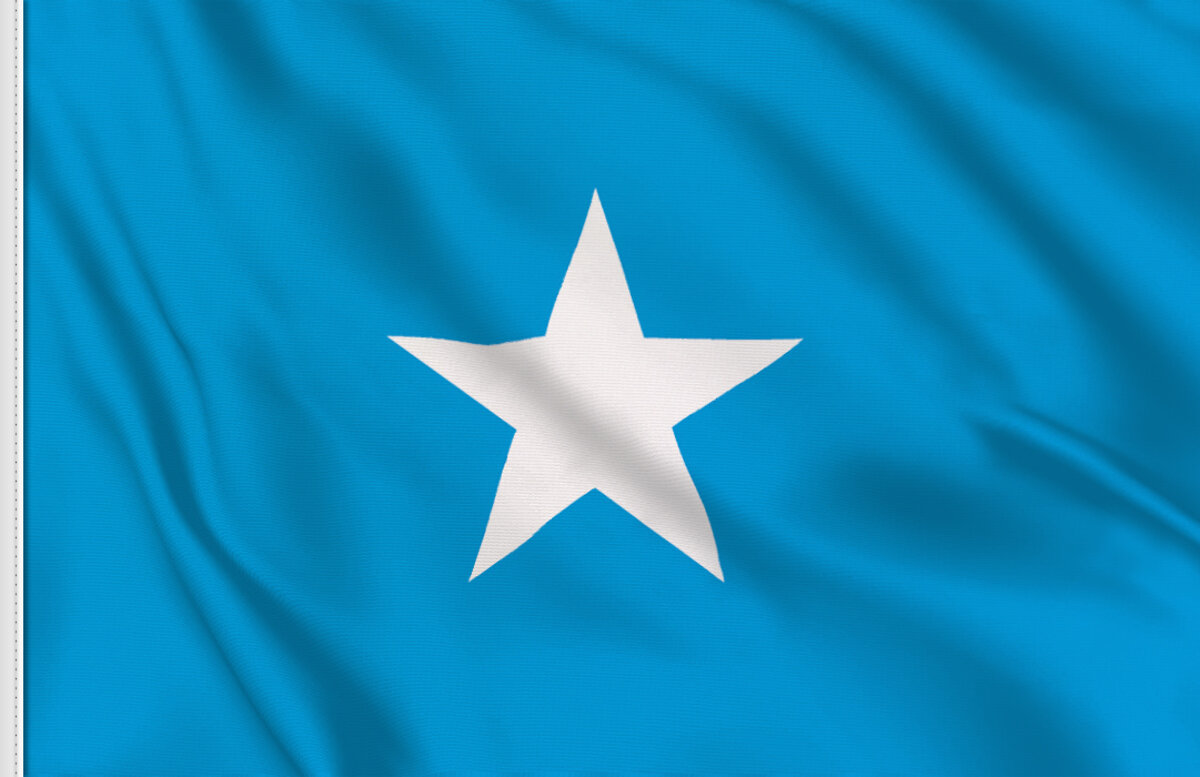
Somalia presents one of the most haunting paradoxes in modern political history. As explored in this Deep Dive, few nations possess such a theoretically strong foundation for unity: a universal language, a shared religion in Sunni Islam, and a deep-seated pastoral heritage where the camel defines both value and law. Yet, this cultural homogeneity has failed to translate into political stability. Instead, the modern history of Somalia traces a tragic arc from the fervent "Pan-Somali" nationalism of the 1960s to the total disintegration of the state in 1991.
This episode dissects the roots of this fracture, beginning with the "colonial convenience" that carved the Somali people into British, Italian, and French territories. We examine how the 1960 unification was doomed by administrative incompatibility and the dominance of the Italian-influenced South over the British-influenced North. The narrative moves through the authoritarian era of Siad Barre, whose contradictory attempt to ban the clan system while manipulating it for power—coupled with the disastrous Ogaden War—bankrupted the nation and destroyed its social fabric.
The analysis culminates in the post-1991 reality, highlighting the stark divergence between regions. While the south descended into a vacuum filled by warlords, Al-Shabaab, and piracy, the breakaway region of Somaliland utilized traditional councils of elders (Guurti) to build a stable, functioning democracy. Ultimately, this summary reveals a story of incredible human resilience—sustained by a massive diaspora economy—while posing a critical question for the 21st century: Can a centralized western-style government ever succeed in a society where the primary unit of trust remains the clan?
Tune in now in your favorite podcast platform!
About Indicative Sources
The historiography of the Somali peninsula in the 20th and 21st centuries is anchored in the enduring friction between indigenous segmentary lineage systems and the exogenous imposition of the Westphalian nation-state. Comprehensive scholarly works, such as those authored by I. M. Lewis, provide the essential analytical framework for understanding how the deep-rooted cultural nationalism of the Somali people first sought modern political expression through the 1960 unification of the former British and Italian territories. However, this ambitious unification project was burdened by severe institutional incompatibilities and northern perceptions of southern marginalisation from its very inception.
The subsequent seizure of power by Major General Mohamed Siad Barre in the bloodless coup of 1969 introduced "Scientific Socialism", an ideology that sought to radically restructure society by merging Marxist precepts with local Islamic tenets. While this "New Era" was initially characterised by successful mass literacy campaigns and significant infrastructure development, the regime eventually devolved into a repressive military dictatorship defined by clan-based favoritism and systemic human rights abuses. The regime's ultimate collapse in 1991, catalyzed by the strategic catastrophe of the Ogaden War and subsequent internal rebellions, plunged the country into a period of protracted statelessness and led to the emergence of resilient sub-national entities such as Somaliland and Puntland.
In the 21st century, the rise of the Islamic Courts Union and its militant successor, Al-Shabaab, represents a hybrid mechanism of power that effectively competes with the fragile Federal Government for legitimacy and territorial control. Contemporary strategic initiatives, including the Centennial Vision 2060 and the National Transformation Plan 2025–2029, represent the most recent efforts by the Somali state to rebuild institutions and foster economic resilience amidst the dual challenges of persistent insurgency and climate fragility.
The following list identifies the some exemplary primary and secondary sources that document these historical transitions, formatted in the Chicago 18th full footnote style.
1. I. M. Lewis, A Modern History of Somalia: Nation and State in the Horn of Africa, rev. ed. (Boulder, CO: Westview Press, 1988).
2. Raphael Chijioke Njoku, The History of Somalia, The Greenwood Histories of the Modern Nations (Santa Barbara, CA: Greenwood, 2013).
3. Faisal Ali, “Understanding Somalia’s Destruction,” New Lines Magazine, May 16, 2024.
4. Mohamed Farah Hersi, State Fragility in Somaliland and Somalia: A Contrast in Peace and State Building (London: International Growth Centre, 2018).
5. Stig Jarle Hansen, Al-Shabaab in Somalia: The History and Ideology of a Militant Islamist Group, rev. ed. (London: Hurst and Company, 2016).
6. Cristina Contreras López, “Somalia and Al-Shabaab’s Insurgency: Analysing Parallel Power Mechanisms in a Fragmented State,” Opinion Paper 50/2025, Instituto Español de Estudios Estratégicos, June 19, 2025.
7. Permanent Mission of the Somali Republic to the United Nations, “Country Facts | Somalia,” UN Member States, accessed May 20, 2024.
8. National Economic Council of Somalia, “CV2060 & Presidential Initiatives,” Federal Government of Somalia, January 2023.
9. Human Rights Watch, “Somalia: Shell-Shocked: Civilians Under Siege in Mogadishu: III. Background,” August 2007.
10. Ministry of Planning, Investment and Economic Development, “Somalia Launches National Transformation Plan (NTP-I 2025-2029),” Federal Government of Somalia, March 17, 2025.
11. Hashim Umar Ali, “The Puntland Model: A Somali State’s Relentless War for Stability and Autonomy,” Small Wars Journal, November 17, 2025.
12. Berouk Mesfin, The Political Development of Somaliland and Its Conflict with Puntland, ISS Paper No. 200 (Pretoria: Institute for Security Studies, 2009).
13. Mollie Zapata, “Somalia: Colonialism to Independence to Dictatorship, 1840-1976,” The Enough Project, January 31, 2012.