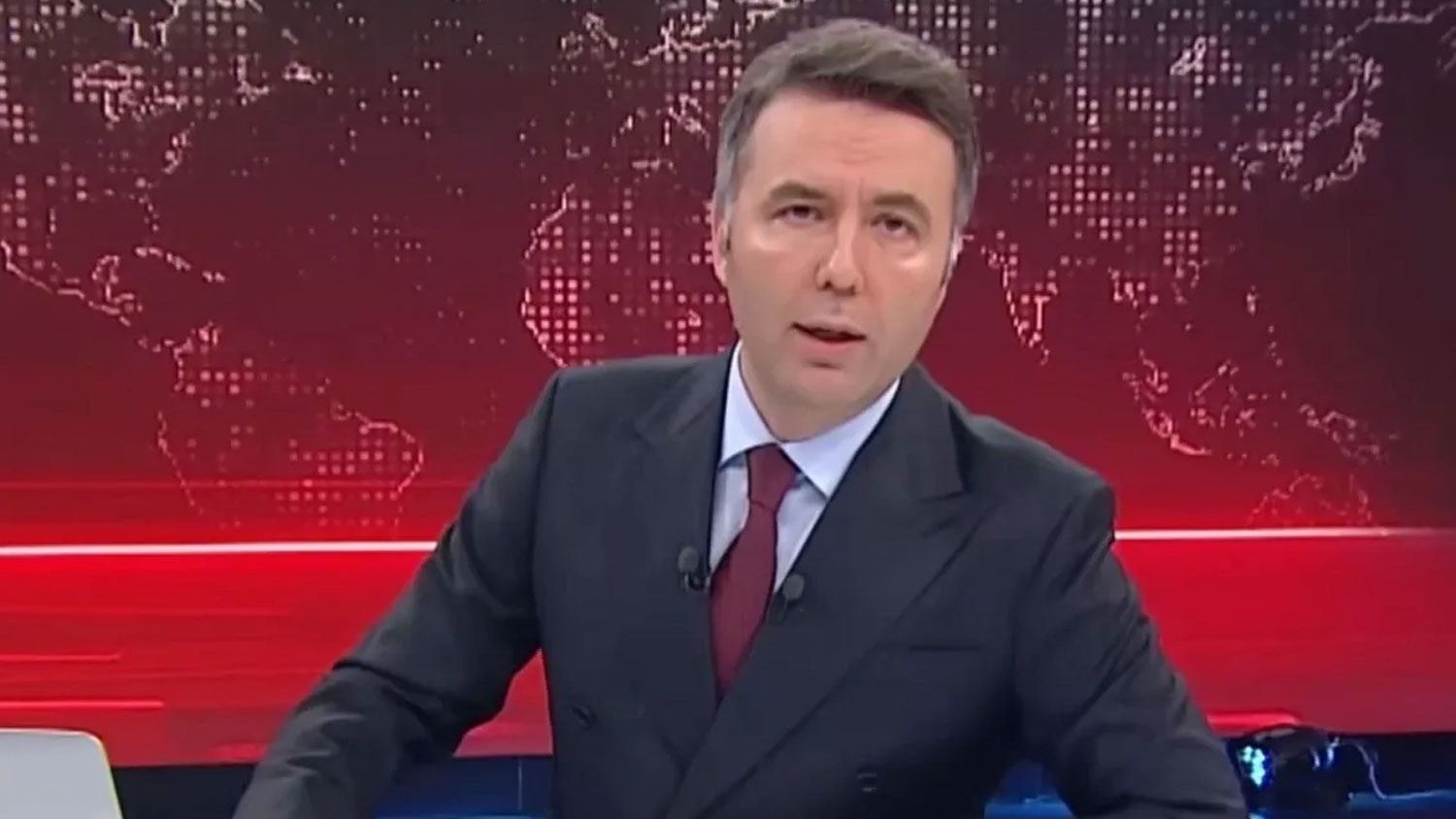
Star Turkish Editor Arrested Amid Drug Allegations


Turkish journalist Mehmet Akif Ersoy, editor-in-chief of Habertürk TV and a prominent figure in pro-government media, was arrested this week on allegations involving drug procurement and an alleged network built around private parties.

In Yetkin Report, columnist Murat Yetkin said the striking element is how quickly pro-government outlets have treated the claims as established fact.

The Istanbul Chief Public Prosecutor’s Office detained Ersoy on the evening of Dec. 9. Detention paperwork cited accusations that women invited to a residence were supplied narcotics and that sexual encounters involving multiple people followed, with prosecutors alleging the meetings were used to obtain “sectoral and material benefits” for Ersoy and his circle. A court remanded him in custody on Dec. 10 on drug-supply charges.

He was arrested alongside Mustafa Manaz, Uğur Tetik and Ebru Gülan, among several suspects taken into custody. The remand decision centered on alleged narcotics procurement rather than the sensational allegations described in the file.

Ersoy denies the allegations. In statements reported from his interrogation, he called them “lies” and argued he was targeted by a “political operation,” saying Turkey’s legal system had reached a troubling point. On Dec. 13 he issued a written statement again rejecting the accusations as defamation based on secret-witness testimony rather than evidence.

The arrest has stirred questions across the political spectrum because Ersoy has been one of the ruling Justice and Development Party’s favored media faces in recent years. Fluent in Arabic, he worked for state broadcaster TRT as a correspondent in Libya, Egypt, Yemen and Palestine, later moving into management. He also served as an adviser on the Middle East and the Islamic world during Mehmet Görmez’s term as head of Turkey’s Directorate of Religious Affairs.

Ersoy joined Habertürk in 2017 and was appointed editor-in-chief in August 2024 by Kenan Tekdağ, then head of the Ciner Media Group. He kept his job after Ciner’s sale to Can Media in December 2024 and after the Savings Deposit Insurance Fund (TMSF) seized the group in September 2025, amid claims that influential allies helped protect his position.

Habertürk and Ersoy became a key platform during the “Terror-Free Turkey” process. Senior AKP figures, including parliament speaker Numan Kurtulmuş, Vice President Cevdet Yılmaz, deputy chair Efkan Ala and party spokesperson Ömer Çelik, delivered major messages on Ersoy’s programs. From the pro-Kurdish DEM Party, Sırrı Süreyya Önder and later Mithat Sancar also chose Habertürk for early mainstream interviews.

The case has also been tied, in social media commentary, to three TV presenters briefly detained on drug allegations on Dec. 5 and to separate online claims of sexual misconduct involving Ersoy. Pro-government daily Sabah has carried detailed reporting on the prosecutor’s narrative, while Ersoy’s denials have drawn less attention.

Yetkin framed two broader questions: whether other politicians, bureaucrats, businesspeople or media executives are involved, and whether Ersoy is being used in an internal power struggle within pro-government circles. Prosecutors have not publicly addressed those claims, and the investigation continues. 

Photo: Yetkin Report

More News

Iran’s Leaderless War Machine: The IRGC’s Autonomous Cells and the Escalation Nobody Controls

In the fog of a war that has already claimed Iran’s supreme leader and its top military brass, a new and perhaps more dangerous threat is emerging from the rubble of Tehran’s shattered command structure: a Revolutionary Guard Corps that, by design, no longer needs orders from above. Sources with direct knowledge of the situation confirm that Iran’s Islamic Revolutionary Guard Corps (IRGC) continues to prosecute strikes across the region not under the direction of the new Supreme Leader Mojtaba Khamenei, but according to pre-programmed autonomous protocols embedded deep within its decentralized “mosaic defense” architecture. The result is a war machine that has become, in the most literal sense, self-propelling — and increasingly difficult for anyone to stop. A New Supreme Leader With Limited Command Mojtaba Khamenei was formally elected Supreme Leader on 8 March 2026, succeeding his father Ayatollah Ali Khamenei, who was killed in the opening wave of the US-Israeli “Operation Epic Fury...

2026 US/Israel–Iran War Risk: Why the Chance of Escalation Is Meaningfully Elevated

As 2025 closes, the US/Israel–Iran confrontation is no longer a low-grade shadow struggle managed mainly through diplomacy and proxy conflicts ; it is an openly articulated deterrence contest in which leaders have publicly tied credibility to “red lines” and rapid retaliation. President Trump has stated that if Iran rebuilds its nuclear capabilities or continues rebuilding missile capacity , the response could be immediate and more severe—language that reduces room for quiet de-escalation once a new incident occurs.  At the same time, Iran has replied with warnings of harsh consequences for any renewed attacks, reinforcing a mutual-threat environment where misperception and political signaling can substitute for verifiable facts.  Against that backdrop, the key analytical point for 2026 is not whether a “full war” is the default outcome; it is that the probability that a limited clash escalates into a broader, sustained conflict is meaningfully elevated because the stabili...

Iran's Headscarf Rules Quietly Loosen — But No Law Has Changed

Bareheaded women appear openly in Tehran cafés and streets, yet activists warn the shift is fragile and the law remains on the books. Images have been circulating on social media of something that would have been almost unimaginable in Iran just a few years ago: women sipping coffee in Tehran cafés, strolling busy city streets, and sitting in restaurants — all without a headscarf. The scenes have ignited global attention and renewed debate over whether the Islamic Republic is quietly retreating from one of its most defining ideological pillars. For decades, wearing the hijab in public has been mandatory for all women in Iran — a rule enshrined in the Islamic Penal Code since 1983 and treated as a cornerstone of the clerical state established after the 1979 revolution. Violations could result in fines, arrest, or worse. Yet in recent weeks and months, enforcement appears to have noticeably slackened, at least in major urban centres. A Visible Shift on the Streets Reporters and residents...