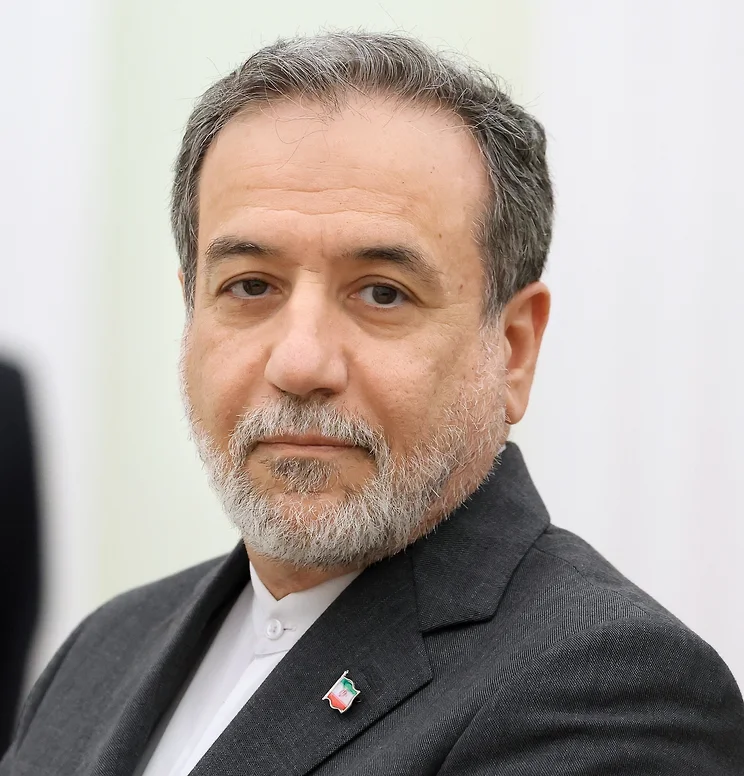
Iranian Foreign Minister Abbas Araghchi will pay a working visit to Moscow on 17 December. On the eve of his arrival in the Russian capital, the head of Iran’s foreign ministry shared in an article for Kommersant his vision of the current level of cooperation between the Islamic Republic of Iran and the Russian Federation in the political, economic, and humanitarian spheres, and the role that sanctions and external pressure on both countries have played in strengthening bilateral relations.
Relations between the Islamic Republic of Iran and the Russian Federation are deeply rooted, multifaceted, and based on a shared understanding of profound changes in the international system. These relations have not been shaped by narrow group interests, but by historical and geopolitical ties and the enduring interests of both states. Over time, and amid complex regional and global developments, they have reached a level of maturity, mutual trust, and strategic foresight that today can be regarded as an example of responsible and resilient partnership in the international arena.
Neighbourhood diplomacy is one of the main pillars of the foreign policy of the Islamic Republic of Iran. This approach has always been emphasized by President Dr. Masoud Pezeshkian and is based on the fundamental principle that security, stability, and sustainable regional development can only be achieved through cooperation among the region’s neighbouring states, without the interference of extra-regional actors. Within this framework, Russia, as an important neighbour in the Eurasian and Caspian regions and an influential power in global processes, occupies a special place in the foreign policy of the Islamic Republic of Iran.
The history of cooperation and the legal framework between Tehran and Moscow go back decades.
These relations entered a new phase at the beginning of the 21st century with the ratification of the Treaty on the Foundations of Relations and Principles of Cooperation between the Islamic Republic of Iran and the Russian Federation. This treaty established the legal and political foundations for long-term cooperation between the two countries on the basis of mutual respect, non-interference in internal affairs, good-neighbourliness, and the safeguarding of common interests. The document became an important starting point for institutionalizing stable, balanced, and reliable relations between the two states.
However, the rapid evolution of regional and global dynamics, the expanding role of Iran and Russia in international relations, and the growing challenges stemming from unilateral measures, political pressure, and unlawful and inhumane sanctions have made it even more necessary to strengthen this cooperative framework. In this historical and strategic context, the Treaty on Comprehensive Strategic Partnership between the Islamic Republic of Iran and the Russian Federation was concluded. It has elevated relations between the two countries to a qualitatively higher level and, as a comprehensive, long-term, and forward-looking “roadmap,” sets clear horizons for cooperation in politics, the economy, security, defence, energy, science and technology, culture, tourism, and investment.
Beyond the strategic and legal dimensions of the partnership, the cultural and civilizational ties between Iran and Russia form a solid and enduring foundation for this relationship. Culture and literature have always served as a common language between the two peoples and have played a fundamental role in relations between Tehran and Moscow.
Iranian literature, with such names as Ferdowsi, Saadi, Hafez, and Rumi, and Russian literature, with such figures as Pushkin, Tolstoy, Dostoevsky, and Chekhov, have together created a shared cultural heritage for the entire world.
This heritage transcends borders, telling of a common language of humanism, morality, meaning, and dignity, and provides a valuable basis for deepening cultural dialogue and strengthening ties between peoples. As the great Saadi said: “Human beings are members of a whole, in creation of one essence and soul.”
This cultural capital is a valuable instrument for expanding cultural diplomacy, academic exchanges, translation of literary works, and people-to-people ties between the two countries.
In the economic sphere, the potential for cooperation between Iran and Russia far exceeds the current level. The expansion of bilateral trade, joint investment, and the use of complementary economic advantages can raise economic relations to the level of the genuinely close political ties between the two states. Cooperation within the framework of the Eurasian Economic Union has enabled a stable linkage of the Iranian economy with regional markets, facilitating trade, reducing structural barriers, and diversifying trade routes. With the shared political will of both countries, this potential can yield tangible and sustainable results.
The Caspian Sea, as one of the key geopolitical links between Iran and Russia, occupies a central place in the diplomacy of good-neighbourliness between the two states.
The Caspian is not only a shared body of water, but also a venue for cooperation in energy, transport, environmental protection, regional security, and the creation of transit corridors. The development of the North–South International Transport Corridor and the strengthening of logistics infrastructure can turn Iran and Russia into two complementary hubs within the Eurasian communications architecture, connecting East and West.
At the political and security level, cooperation and coordination between Tehran and Moscow enjoy a privileged status. As a permanent member of the UN Security Council, Russia plays an important role in countering unilateral actions, the instrumentalization of international institutions, and attempts to impose political will through pressure and sanctions.
The Islamic Republic of Iran and the Russian Federation, reaffirming the principles of the UN Charter, respecting national sovereignty, and opposing unlawful interventions, share the conviction that the international system must return to genuine, fair, and equal multilateral cooperation.
Both Iran and Russia have been the targets of unilateral, extra-legal, and inhumane sanctions that not only violate international law but also trample upon the fundamental rights of states.
This shared experience has provided an important basis for deepening cooperation to mitigate the effects of sanctions, develop independent financial and banking mechanisms, strengthen trade in national currencies, and enhance the economic and technological resilience of both countries.
Active cooperation between Iran and Russia in multilateral organizations and arrangements—particularly BRICS, the Shanghai Cooperation Organisation, and the Eurasian Economic Union—reflects the shared understanding in both capitals of the need to move from a unipolar order to a more just, balanced, and inclusive one. Today, BRICS is not merely an economic structure, but a symbol of the aspiration of emerging powers to reform the unfair structures of global governance, reduce the dominance of unilateral instruments of pressure, and strengthen the role of independent states in international decision-making. Close Iran–Russia cooperation within these frameworks can generate effective synergies in finance, energy, trade, technology, and sustainable development.
Meanwhile, scientific and technological cooperation is one of the main pillars of the strategic partnership between Iran and Russia. Both countries possess significant potential in knowledge-intensive and advanced technologies, including cutting-edge energy, aerospace, peaceful nuclear technology, artificial intelligence, nanotechnology, and medical sciences. The Treaty on Comprehensive Strategic Partnership has provided an appropriate platform for expanding cooperation between universities, research centres, knowledge-based companies, and technology institutes of the two countries—cooperation that can foster scientific and technological independence and reduce vulnerability to external pressure.
Tourism and people-to-people contacts, also identified as a key area in the Treaty on Comprehensive Strategic Partnership, occupy an important place in bilateral relations.
The diverse climate, rich historical and cultural heritage, health and wellness tourism potential, and natural attractions of Iran and Russia have created a favourable basis for expanding tourism exchanges. Easing visa procedures, developing direct flights, expanding cooperation between tourism agencies and the private sector, and designing joint tourism programmes can increase travel between the citizens of the two countries and deepen mutual understanding between their peoples. The Islamic Republic of Iran views tourism as an effective tool for strengthening people’s diplomacy and consolidating robust human ties between Tehran and Moscow.
Today, Iran and Russia, building on their strategic partnership, shared historical experience, and sense of responsibility for the future of the international system, are moving toward the construction of an order in which cooperation replaces hegemony, dialogue replaces pressure, and respect replaces coercion. In this regard, the Treaty on Comprehensive Strategic Partnership is not only a document regulating bilateral relations, but also a framework for the active participation of both countries in shaping a multilateral, just, and balanced order that will benefit states, underpin regional stability, and contribute to global justice.
* This article was first published on 16 December 2025 in Kommersant and has been translated into English by TLF for its readers. The opinions eExpressed in this translated or hosted article do not necessarily reflect the views or editorial positions of TLF.
Photo: Kommersant