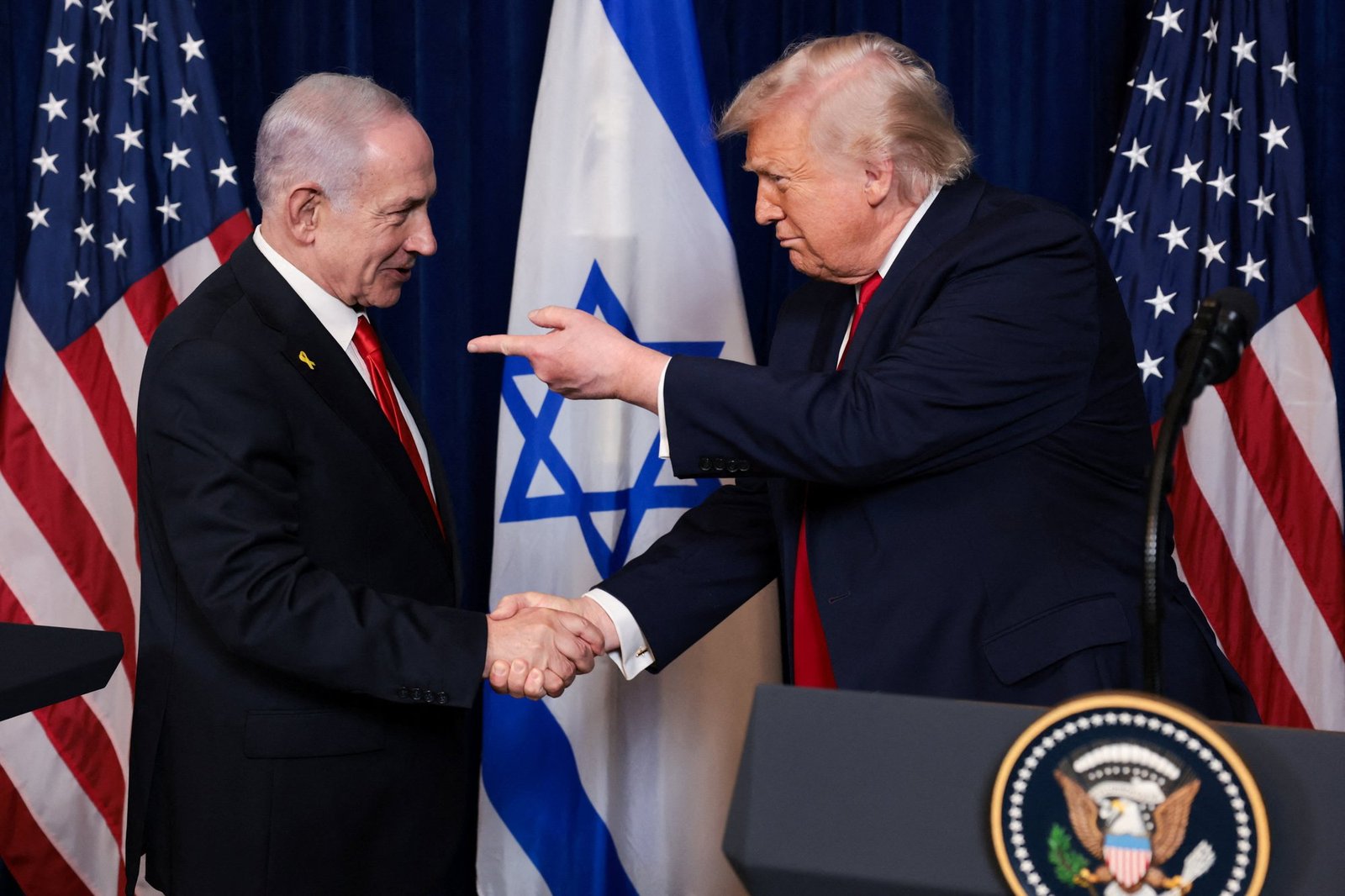
Tensions in the Middle East have reached a critical breaking point as President Donald Trump issued a stark ultimatum to Iran this week, threatening the Islamic Republic with nuclear consequences following Tehran’s declaration of "total war" on the West.
The dramatic escalation comes just days after Iranian President Masoud Pezeshkian issued a chilling statement threatening Britain, Europe, the United States, and Israel with a "decisive response." Intelligence reports cited by Western officials indicate that Tehran has accelerated efforts to rebuild both its conventional military forces and its nuclear capabilities, signaling a departure from previous diplomatic stalemates.
Speaking from his Mar-a-Lago estate alongside Israeli Prime Minister Benjamin Netanyahu, President Trump wasted no time in delivering a counter-threat. In a joint press conference that underscored the ironclad alliance between Washington and Jerusalem, Trump dismissed Iran’s attempts at secrecy, asserting that American intelligence knows "exactly where they're going and what they're doing."
The President’s rhetoric was notably aggressive, referencing the distinct possibility of renewed, overwhelming military force. "I hear Iran is trying to build up again, and if they are, we have to knock them down," Trump told reporters ahead of the briefing. "We'll knock the hell out of them."
Central to the President’s warning was a specific reference to America’s long-range strike capabilities. Alluding to previous military engagements, Trump cited the B-2 Spirit stealth bomber, a primary asset in the US strategic arsenal.
"I’ve been reading that they’re building up weapons and other things," Trump noted. "If they are, they’re not using the sites we obliterated, but possibly different sites. We know exactly where they’re going... and I hope they’re not doing it because we don’t want to waste fuel on a B-2."
In a comment that highlighted both the logistical reach of the US military and his transactional view of warfare, Trump added, "It's a 37-hour trip both ways. I don't want to waste a lot of fuel."
Despite the bellicose language, the President maintained his self-styled image as a peacemaker, leaving the door slightly ajar for diplomacy. He suggested that while the military option remains on the table, negotiating a new "deal" would be "much smarter" for the Iranian regime—though he offered no specifics on what such terms might entail given the current hostilities.
Context: The Recent US Bombings in Iran (July 2025)
President Trump's references to "sites we obliterated" refer to the massive air campaign conducted by US forces earlier this year in July 2025. Following a breakdown in back-channel talks and intelligence revealing an imminent breakout in Iranian weapons-grade uranium enrichment, the Trump administration authorized a series of devastating raids targeting Iran's atomic energy infrastructure.
The July operation utilized heavy strategic bombers, including the B-2 Spirits mentioned by the President in his recent remarks. The strikes successfully collapsed underground centrifuge facilities at Natanz and Fordow, temporarily paralyzing Tehran’s nuclear program. The operation was described by the Pentagon at the time as a "limited but high-intensity" effort to deny Iran nuclear capability. It is the attempted reconstruction of these very facilities that has prompted the "total war" declaration from Tehran and the subsequent nuclear threat from President Trump this December.
Photo: GB News