Whose Drone Was It? Turkey Investigates Black Sea UAV as Theories Span Turkish, NATO, Russia and Ukraine
The incident also briefly disrupted civil aviation in the capital. On the evening of Dec. 15, flights bound for Ankara were diverted to Konya after Esenboğa Airport was temporarily closed to takeoffs and landings around 18:30 and later reopened at roughly 19:50, details reported by Yetkin Report.
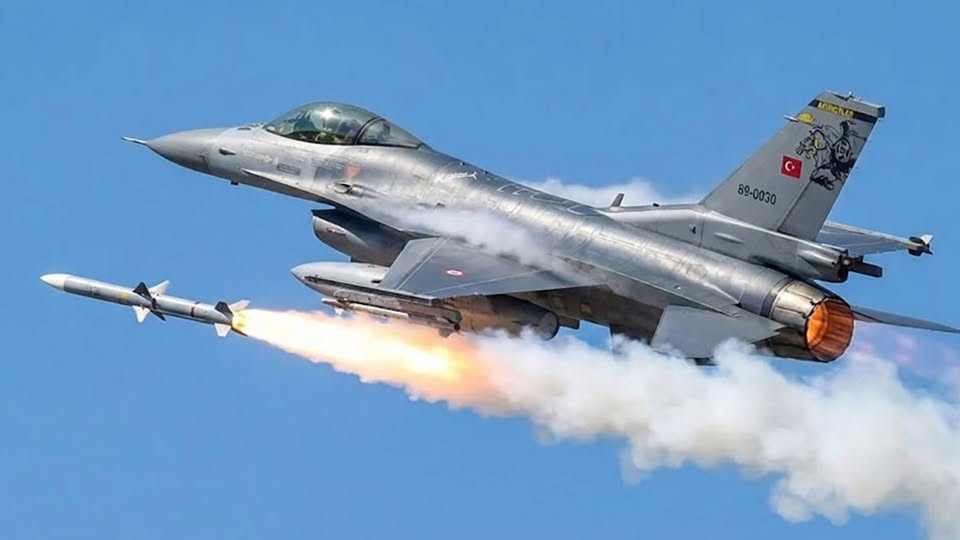
In a statement released after the closure, the Ministry of National Defense (MSB) said an “air track” approaching Turkish airspace from the Black Sea had been detected and taken under monitoring under routine procedures. To ensure airspace security, the MSB said F-16s under NATO and national control were assigned an alarm reaction mission. The ministry added that the track was determined to be a UAV that had gone out of control and was then engaged and brought down “in a safe region outside residential areas” to avoid any negative outcome.
While the official statement described the UAV as “out of control,” it did not specify whether the loss of control resulted from a technical failure or the possibility of a cyber incident. The lack of detail prompted scrutiny about how far the UAV traveled and why it was not intercepted earlier, particularly if it was detected over the Black Sea before reaching inland airspace.
Questions also focused on where, exactly, the UAV came down. Journalist Dicle Canova reported that it entered over Kastamonu and was shot down between Elmadağ and Çankırı, northeast of Ankara. The MSB did not publicly confirm or deny that report, with officials indicating that further information would follow. Separate accounts circulating in Ankara suggested search activity for debris was ongoing.
Opposition politicians seized on claims that the UAV may have fallen near Karacahasan village, close to a ROKETSAN production facility. CHP deputy Namık Tan said such reports raised concerns about how an unidentified UAV could approach areas near strategic defense-industrial assets. CHP defense policy deputy chair Yankı Bağcıoğlu called for greater transparency from the MSB and argued the episode underscores vulnerabilities against low-altitude aerial threats, urging stronger air-defense prioritization on land and at sea.
As of midday Dec. 17, Defense Minister Yaşar Güler had not made a further public statement, and no additional announcement had been issued by the Presidency’s communications directorate. According to information attributed to MSB sources in Yetkin Report, the investigation was continuing, debris had not yet been recovered, and the UAV’s nationality had not been determined—leaving the central question unresolved: whether the incident was an accident involving a domestic platform, a NATO-linked misadventure, or a spillover from the Russia–Ukraine drone war across the Black Sea.
Photo: Yetkin Report