You Will Read This One Only in TLF: ISIS Strikes Back. The Desert Ambush and the Shadow War Intensifying Across Three Nations
The Midnight Crackdown
Sources speaking exclusively to Syria TV confirmed that coalition forces, operating alongside Syrian security personnel, detained at least three individuals in Palmyra during operations that stretched approximately two hours. The joint forces swept through the Al-Wadi and Al-Jumhuriya neighborhoods, districts believed to harbor ISIS sympathizers and sleeper cell operatives.
The operation was preceded by a dramatic show of force: American aircraft dropped illumination flares across Palmyra's night sky, lighting up the desert city in an unmistakable display of military presence. According to the Wall Street Journal, citing a senior U.S. official, Washington dispatched two F-16 fighter jets to conduct overflights above Palmyra — a clear message that the United States would not allow the attack to go unanswered.
Trump Weighs In: "The Response Will Be Strong"
U.S. President Donald Trump addressed the attack publicly, stating that Syrian President Ahmed al-Sharaa is "very angry" about the desert assault and promising that the response would be forceful. The statement underscores the strategic partnership between Washington and the new Syrian leadership in confronting the persistent ISIS threat in the country's vast eastern desert.
What Happened in the Badiya?
The Pentagon confirmed that two American soldiers and a civilian interpreter were killed Saturday when militants launched an armed ambush against U.S. personnel operating in the Palmyra region of Syria's central desert, known locally as the Badiya. Three additional soldiers sustained injuries in the attack.
U.S. Central Command (CENTCOM) provided additional details, confirming that American forces were ambushed by ISIS cells operating in the desert. The ensuing firefight resulted in the fatalities and wounded, representing a significant tactical success for the terrorist organization despite its diminished territorial holdings.
In a revealing statement, Nour al-Din al-Baba, spokesman for Syria's Interior Ministry, disclosed that Syrian internal security command had issued advance warnings to American forces operating in the Badiya region about potential ISIS breaches or attacks. Critically, al-Baba emphasized that coalition forces "did not take the Syrian warnings into account."
Describing the incident in detail, al-Baba explained that the attack occurred at the entrance to a military facility in the Palmyra desert, where an ISIS operative opened fire on personnel. The spokesman was careful to note that the attacker had no command-level connections within Syrian Internal Security and was not serving as an escort to any leadership figures — a clarification apparently aimed at dispelling any suspicion of insider involvement.
The Broader Picture: ISIS Remains a Persistent Threat Across Three Nations
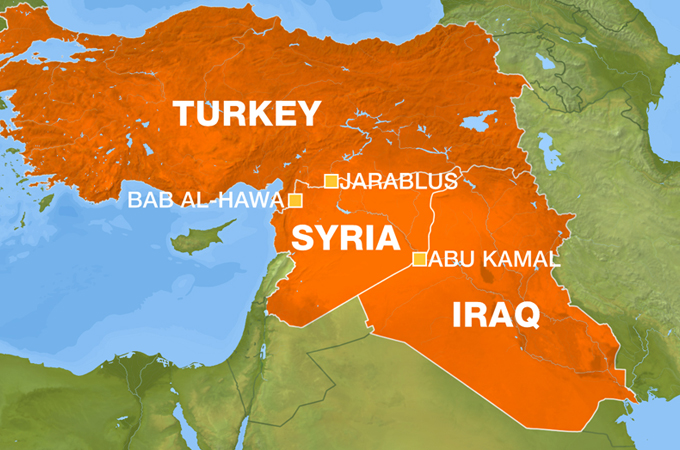
The Palmyra ambush did not occur in isolation. Intelligence assessments and monitoring data from the past 30 days reveal that ISIS has remained active across Syria, Iraq, and Turkey — though the pattern reflects a low-intensity insurgency characterized by small bombings, ambushes, assassinations, and logistics operations rather than the large-scale territorial conquests of the caliphate era.
Syria continues to experience the highest concentration of ISIS activity among the three nations, with attacks geographically dispersed but persistent. Monitoring groups tracking sleeper cell incidents in North and East Syria (NES) documented 21 ISIS attacks in November alone, predominantly concentrated in Deir ez-Zor and Hasakah governorates. These attacks resulted in multiple military fatalities and injuries, though civilian casualties remained relatively limited. Tactics employed include improvised explosive devices (IEDs), targeted shootings, and assassinations of Syrian Democratic Forces (SDF) personnel and local officials.
U.S. Central Command reports more than 22 partnered operations against ISIS in Syria between October 1 and November 6, killing five militants and capturing 19 others. This operational tempo has likely continued into the current period, underscoring the ongoing effort to degrade ISIS capabilities even as the group demonstrates continued lethality.
Iraq presents a picture of residual insurgency rather than active warfare, with ISIS largely confined to rural sanctuaries. Open-source event tracking for 2025 indicates a steady but significantly reduced ISIS presence in Iraq. Sporadic attacks continue alongside frequent airstrikes and security sweeps targeting small cells in areas including the Hamrin and Balkana mountain ranges, Kirkuk, Salah al-Din, and Diyala governorates.
Recent assessments of Iraq's security environment emphasize that ISIS has been reduced to "remnants" status, with Iraqi Security Forces and Popular Mobilization Forces focused on containment operations and periodic raids rather than high-intensity combat. Notably, there are no indications of large-scale mass-casualty ISIS attacks in Iraq during the past 30 days — only low-level incidents and counter-terrorism operations.
Covert Networks Endure and the Turkish Angle
While the caliphate has been territorially defeated, analytical work on post-ISIS Iraq stresses that the organization maintains covert networks capable of conducting IED attacks, assassinations, and intimidation campaigns, albeit on a significantly reduced scale compared to previous years.
Turkey occupies a unique position in the current ISIS threat landscape — experiencing minimal direct attacks while serving as a crucial logistics and transit hub for the organization.
The past period has seen no widely reported mass-casualty ISIS attacks on Turkish soil. However, Turkish territory remains central to ISIS-linked transit and logistics operations. A recent U.S. terrorism case revealed an alleged plot in which two individuals planned to regroup in Diyarbakır and utilize long-established smuggling routes through southeastern Turkey into Syria to join ISIS.
Case materials and expert commentary describe Turkey as a continuing "staging area" and transit corridor for ISIS sympathizers, particularly via southeastern provinces including Diyarbakır, Gaziantep, Kilis, and Şanlıurfa. This pattern echoes the 2013-2017 period when Turkey served as the primary gateway for foreign fighters entering the caliphate, suggesting that facilitation networks persist even in the absence of spectacular attacks within Turkey itself.
Earlier in 2025, Turkish authorities conducted large-scale arrest operations against suspected ISIS members across multiple provinces. There is no indication that this counter-terrorism posture has eased; rather, the environment appears characterized by ongoing surveillance, arrests, and disrupted plots rather than successful overt attacks.
Strategic Implications
The Palmyra attack and the broader pattern of ISIS activity across the region carry several strategic implications:
1. The Badiya Remains Ungovernable: Despite of long military operations, Syria's central desert continues to provide sanctuary for ISIS cells capable of launching lethal attacks against even well-armed coalition forces.
2. Intelligence Coordination Gaps: The Syrian Interior Ministry's revelation that warnings went unheeded suggests potential friction or communication failures between Syrian and American security services — a vulnerability ISIS may exploit.
3. Low-Intensity, High-Persistence: ISIS has adapted to its territorial defeat by adopting a classic insurgent posture: small attacks, targeted assassinations, and patience. This approach requires fewer resources while maintaining operational relevance.
4. Turkey's Dual Role: Ankara's position as both counter-terrorism partner and inadvertent transit corridor for ISIS operatives creates diplomatic and operational complexities that the organization continues to exploit.
5. Coalition Commitment Tested: American casualties inevitably raise domestic political questions about the U.S. presence in Syria, potentially creating pressure for either escalation or withdrawal — both of which carry significant risks.
Some Indicative Open Sources
[1] Institute for the Study of War - Claimed ISIS Attacks Map (November 28 - December 9, 2025)
[2] Rojava Information Center - Sleeper Cell Report, November 2025
[3] Critical Threats Project - Iran Update, December 4, 2025
[4] Nordic Monitor - Foiled ISIS Plot Reveals Turkey's Central Role
[5] Syria Weekly - Data Update, December 2-9, 2025
[6] U.S. Central Command - Press Release on ISIS Degradation Operations
[7] Security Council Report - Syria Monthly Forecast, December 2025
[8] Forbes - Analysis on U.S. Troops Killed in Syria
[9] Timeline of the Islamic State (2025)
[10] Timeline of the Iraqi Insurgency (2025)
[11] PRIF Blog - Daesh/ISIS Threat Assessment 2025
[12] Relief Web - Global Terrorism Index 2025
[13] CSPS George Mason University - Iranian Influence in Post-ISIS Iraq
[14] Relief Web - Turkey Counter-Terrorism Operations
[15] UK Government - Proscribed Terrorist Groups
[16] Al Jazeera - ISIL/ISIS Coverage
*This report was compiled from multiple open-source intelligence feeds, official government statements, and regional monitoring organizations. Casualty figures and incident counts should be considered approximate pending official verification.