Conservative Ettelâ'ât Column Says Iran’s Protests Are About “Unlivable Uncertainty,” Not the Dollar
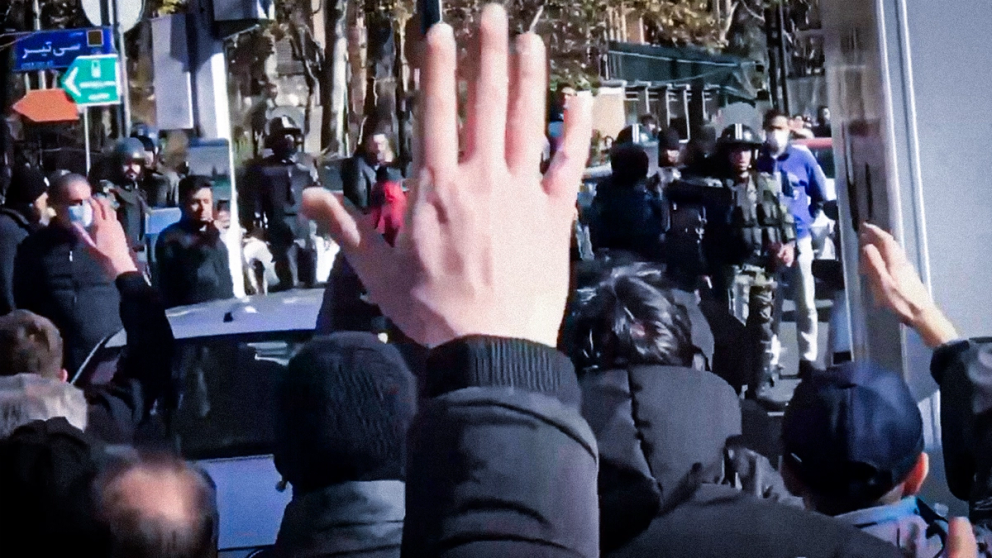
Mostafa Danandeh, writing for Ettelâ'ât Online, frames the protests as an objection not to “a number” but to the cascade of consequences that follow repeated currency depreciation: spiraling rents, vanishing savings, uncertainty around jobs, and shortages or inaccessibility of basic goods such as medicine. In his telling, the public’s frustration has accumulated over years, reinforced by a single repeated inner refrain: “It’s no longer possible to live.”
“The Dollar Is a Thermometer”
Danandeh’s central metaphor is that currency volatility is a measurement tool rather than the illness itself. When the value of the national currency keeps falling, he argues, it is people’s time and labor that are effectively being devalued. Workers are paid, he writes, only to watch the real value of their wages shrink month after month—an experience he characterizes not as a temporary downturn, but as a permanent erosion that steadily pushes society toward an “explosion point.”
This distinction matters, the columnist contends, because focusing only on the exchange rate risks misreading the public mood. The real grievance, he writes, is the day-to-day reality of living with constant unpredictability—where families and shopkeepers cannot forecast whether their rent will double in six months, whether they will find essential medicines, or whether their employment will still exist.
A Slow-Burning “Wear and Tear” Reaching a Breaking Point
In Danandeh’s account, the protests reflect a type of collective exhaustion that builds gradually. He describes a prolonged “wearing down” that happens quietly but relentlessly, until a society reaches a point where it reacts sharply. This is why, he suggests, the current anger should not be dismissed as sudden or irrational: it is the product of years of accumulated pressure.
He also implies that repeated currency shocks translate into a more personal sense of betrayal: people work, budget, and attempt to plan, but find that each month’s efforts buy less security than the month before. The result is a corrosive feeling that the future is shrinking, not expanding—an anxiety that, in his view, is far more politically combustible than any single economic indicator.
“Protest Is a Right—Because No Other Path Remains”
A key part of the column is its argument that protest has become the last remaining language for many citizens. Danandeh writes that public demonstrations look harsh only because other avenues have failed. When voting does not produce change, when dialogue “hits a wall,” and when officials do not even appear to listen, he says, protest becomes the final tool left for people seeking recognition.
He turns the usual question—“Why are people protesting?”—on its head. The more urgent question, he argues, is: What else is left for them to do? Endure? He says endurance has already been tried for years. Cut spending? He suggests households have already squeezed budgets beyond reasonable limits. Trust promises? He claims those promises have “expired.”
Accountability and the Cost of “Wrong Decisions”
Danandeh’s critique extends to governance and accountability. He argues that when policymakers pay no price for incorrect decisions, the costs are pushed onto ordinary people—seen in smaller food baskets, more uncertain futures, and stark choices between forced migration and staying without prospects.
While the column does not provide a detailed policy blueprint, it repeatedly emphasizes that ignoring the protests does not erase the underlying problem; it only enlarges it. He calls for listening to public grievances and taking tangible steps to reduce hardship—steps that would restore hope and demonstrate that officials recognize the lived reality of instability.
“People Aren’t Rebellious—They Want Calm”
Notably, Danandeh rejects the idea that protesters are inherently “rebellious.” His conclusion is that many citizens actually want stability and peace but have become tired and worn out. He warns that collective exhaustion can be more dangerous than overt political slogans, precisely because it reflects a broad-based, crosscutting social fatigue rather than a narrowly ideological campaign.
In effect, his commentary portrays the protests as a plea for predictability: the ability to plan a life, trust that work will be rewarded and believe that tomorrow will not be radically worse than today.
About Ettela'at (Ettelâ'ât)
Ettela'at (Ettelâ'ât) is Iran's oldest and one of its most prominent daily newspapers, known for its conservative political stance and coverage of political, cultural, social, and economic news, often reflecting government policies, and it's considered a newspaper of record in the country. Its "line" or political position generally aligns with the establishment, supporting government policies while also being a key source for understanding Iranian conservative viewpoints, making it a significant, long-running publication.
Photo: Iran International