By Bijan Hamdarsi
What occurred in recent days regarding Venezuela was neither ordinary news nor an event distant from us. After months of pressure, blockade, and psychological warfare, and using a repetitive pretext like drug trafficking, the United States entered the operational phase. In an unprecedented move openly violating international law, it abducted the president of an independent country and his wife using special forces and transferred them to its own soil—without any fear of global public opinion, without any regard for the law, and without feeling any need to be held accountable. This is the same America that has spoken of democracy and human rights for years, yet when its interests are at stake, it bypasses the law and moves governments like chess pieces.
More bitter than the event itself was the reaction seen inside Iran; some wrote of and celebrated "Maduro’s overthrow" with joy and mockery, without understanding what they were applauding. Whatever Maduro may be, he was a strategic ally of the Islamic Republic in the Americas. His removal is not a personal defeat, but the severing of one of Iran’s arms of influence on the other side of the world. Those who are happy about this event today either do not understand politics or pretend not to. In the real world, foreign policy is not a place for love and hate; it is a place for interests. When a country's arm of influence is severed, the result directly impacts the security and power of that same country.
The recent wars and conflicts were not sudden or without background either. What is referred to as the "Twelve-Day War" was not the result of a spur-of-the-moment decision; this path had been designed years ago. From the assassination of Martyr Qasem Soleimani—which effectively began the countdown to direct confrontation with Iran—to the assassination of Martyr Fakhrizadeh, security operations in Lebanon, the elimination of key Resistance figures, successive pressures on Syria, attacks on military and civilian infrastructure, and attempts to weaken the Assad government; all of these were links in a single chain with a specific goal: shortening Iran’s reach outside its borders.
When they could not bring Iran to its knees directly, they went after its allies. One by one. From the Middle East to Latin America. Venezuela was a very crucial point in this map; because of its vast oil reserves, its geographical location, and its political audacity in standing up to Washington. The removal of Maduro carries a clear message: any country that stands beside Iran will, sooner or later, pay the price.
In the meantime, the rejoicing of some inside the country is a sign of a lack of political understanding rather than a sign of protest. They do not understand that celebrating the abduction of a country's president today could justify pressure, sanctions, or even action against Iran’s own interests tomorrow. History has repeatedly shown that great powers strike allies first, then come for the main target. Rejoicing over the weakness of one’s own front is not called protest; it is called being played.
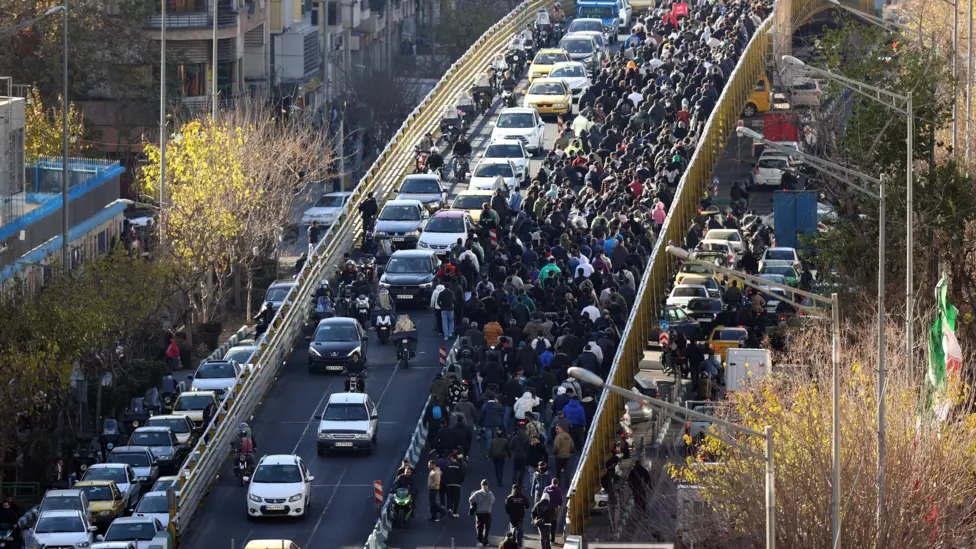
Simultaneous with these external pressures, Iran faces economic volatility and protests internally under the pretext of high prices and livelihood issues. No one denies the economic problems, but the issue is that these very dissatisfactions, when left without proper analysis and guidance, turn into tools for the very same project being executed outside our borders. The enemy wants exactly this image: a country under foreign pressure, with a tired and divided society inside.
The reality is that what happened in Venezuela, what occurred in the region, and what is seen on the streets of Iran are not separate pieces. All of these are parts of a larger game; a game of power, influence, and attrition. If this connection is not seen, if we judge every piece of news separately and emotionally, the loser is determined in advance.
Politics is no place for naivety. History does not joke with those who do not learn from it. Today’s joy over a blow dealt to an ally may end up costing us our own security, independence, and interests tomorrow.
* This article was first published on 6 January 2026 in Etemad and has been translated into English by TLF for its readers. The opinions expressed in this translated or hosted article do not necessarily reflect the views or editorial positions of TLF.
Photo: BBC