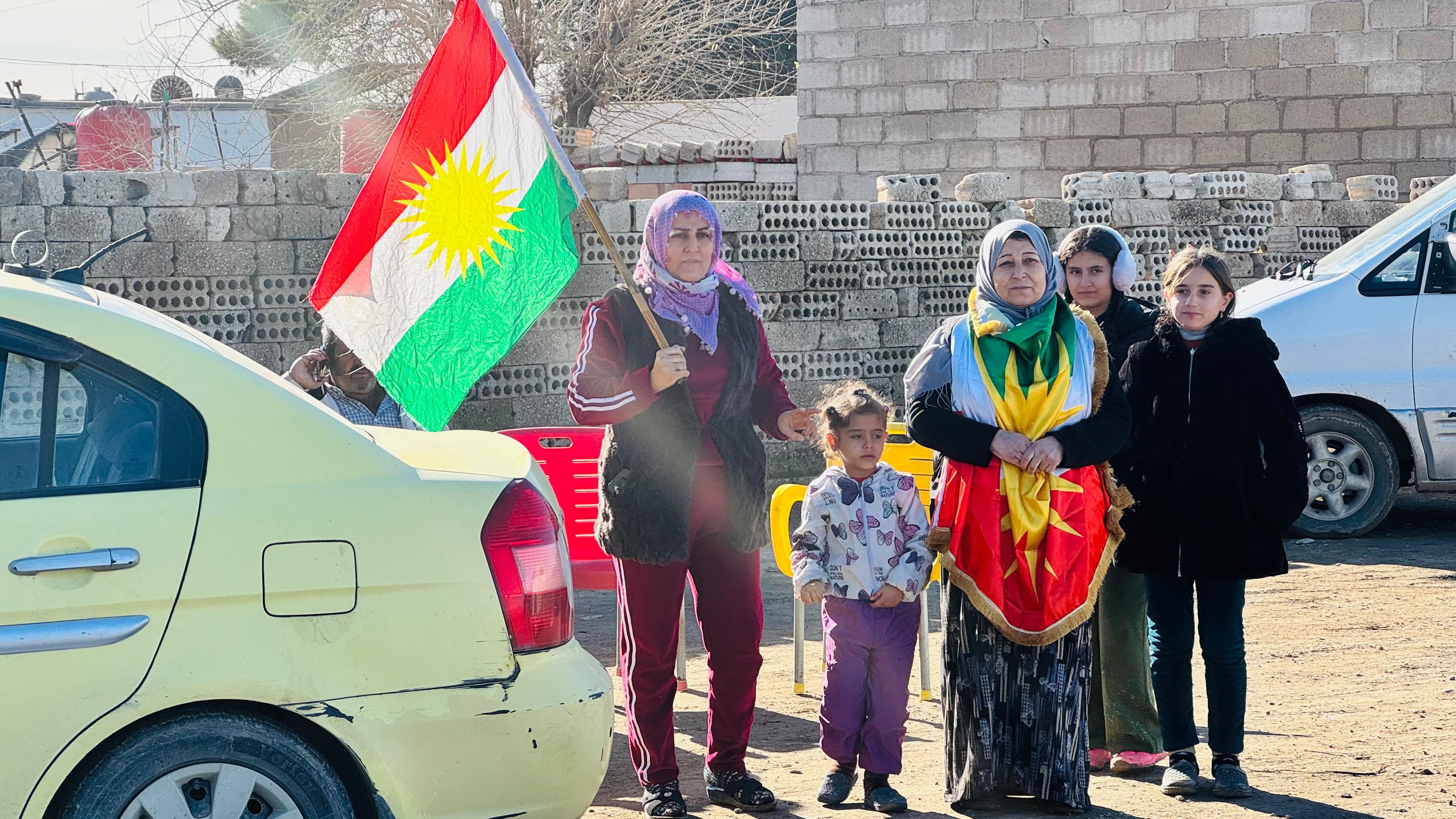
Regional and international diplomacy has intensified in recent days as the fragile ceasefire between the Kurdish-led Syrian Democratic Forces (SDF) and Damascus-linked armed groups continues to hang in the balance. Kurdish leaders warn of escalating threats to key cities in northeast Syria, particularly Kobane, which has faced siege conditions for over a week.
Masoud Barzani on Friday urged all sides to refrain from targeting the Kurdish-majority city, calling it a “symbol of resistance” that must remain untouched. “Kobane is a Kurdish city and must be left untouched,” he said during a press conference in Rome, stressing that any harm to its people would be “unacceptable.” Rudaw reported that Barzani expressed readiness to send Peshmerga forces again to defend the city if conditions allowed, recalling their deployment against ISIS in 2014.
Tensions have soared as Damascus-backed militias push into SDF-controlled territory across northern and eastern Syria, including Aleppo’s Kurdish neighborhoods, Raqqa, Deir ez-Zor, and parts of Hasaka province. Despite a ceasefire deal reached earlier this month—intended to integrate SDF civil and military structures into Syrian state institutions—the truce has been repeatedly violated, prompting fears of renewed displacement, growing instability, and risks of ISIS resurgence.
Western governments have also stepped up diplomatic engagement. US Senator Lindsey Graham said there is a “strong and growing bipartisan consensus” in the Senate to protect the Kurds, highlighting their pivotal role in defeating the Islamic State. He warned that continued attacks by Syrian government forces could trigger “bone-crushing sanctions” and permanently damage relations between Washington and Damascus. Meanwhile, the UK Special Representative for Syria, Ann Snow, described the ceasefire as “a positive but fragile step,” emphasizing the need for inclusive governance and protection of Kurdish rights.
Regional actors are also deeply engaged. Iraqi Prime Minister Mohammed Shia’ al-Sudani and French President Emmanuel Macron held a phone call on Friday focusing on Syria’s deteriorating security and the transfer of Islamic State (ISIS) detainees from SDF-run facilities to Iraq. Both leaders underscored the international community’s responsibility in managing foreign ISIS fighters, stressing that failure to do so could destabilize the region further. Iraq has already begun tightening border controls with Syria in anticipation of potential spillover.
The fate of Kobane remains a particular flashpoint. Once a battlefield that reversed ISIS’s expansion in 2014, it now finds itself isolated amid regional power struggles. Civil society groups in Rojava have warned of an imminent humanitarian crisis as basic services—water, electricity, and internet—remain cut off. “This is not just about politics,” Barzani said. “It’s about protecting our people, our dignity, and the right to live freely in our homeland.”
Photo: Rudaw
As diplomats shuttle between Erbil, Damascus, and Western capitals, the fate of Syria’s Kurds—and the tenuous ceasefire that shields them—has emerged once again as a central test for international engagement in the decade-long conflict.