Iran Erupts: Day 8 of Nationwide Protests Sees At Least 16 Dead as Security Forces Open Fire on Crowds
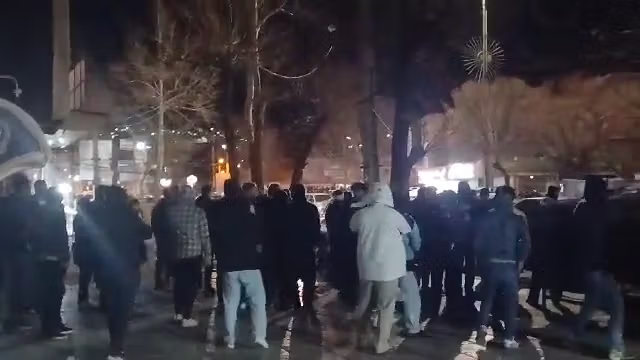
Demonstrations spread to 60 cities across 25 provinces; internet throttled as regime struggles to contain growing unrest
Anti-government protests swept through Iran for an eighth consecutive day on Sunday, with demonstrators taking to the streets in cities across the country despite a brutal crackdown that has left at least 16 protesters dead and hundreds detained, according to independent verification by Iran International.
Protesters Defy Deadly Force
From Tehran's working-class neighborhoods to provincial cities in Fars, Mazandaran, and Ilam provinces, Iranians flooded the streets chanting slogans directly targeting Supreme Leader Ali Khamenei. Videos emerging from the protests show crowds shouting "This year is the year of blood, Seyed Ali will be overthrown" and "Death to the dictator."
The human rights organization Hana reported that in the first seven days of unrest, at least 174 locations across 60 cities in 25 provinces witnessed protests or strikes, with a minimum of 582 people arrested—including a notable increase in the detention of minors under 18 years old.
Bloodshed in Malekshahi
The deadliest confrontation occurred Saturday in Malekshahi, Ilam Province, where security forces opened fire directly on protesters, killing at least four people and wounding approximately 30 others. The victims—Reza Azimzadeh, Fars Aghamohammadi, Mehdi Emamipour, and Latif Karimi—were buried Sunday in a massive funeral procession where mourners chanted "I will kill whoever killed my brother."
According to political prisoner Ahmadreza Haeri, the local IRGC commander personally initiated the shooting by manning a machine gun. Reports indicate security forces subsequently stormed the local hospital.
One of the dead, Latif Karimi, was reportedly a retired IRGC member who had joined the protesters and was shot while attempting to stop the firing on demonstrators.
Regime Deploys Internet Blackouts
As protests intensified, the Iranian government implemented targeted internet shutdowns across the country. Iran International reported a significant drop in messages from inside Iran, with citizens in protest hotspots like Kermanshah, Dezful, Mashhad, Shiraz, and parts of Tehran reporting near-total connectivity loss.
"Even to send a single text message, we had to try for hours," reported one citizen from Asadabad, Hamadan—a city that witnessed intense demonstrations.
Workers and Civil Society Join the Movement
In a significant development, labor unions, retiree associations, and civil society organizations issued a joint statement declaring solidarity with the uprising. The statement emphasized that Iran stands at "one of the most decisive moments in its contemporary history" and called for expanding protests to city centers.
The signatories—including the Council for Organizing Oil Contract Workers' Protests and the Coordination Council of Nurses' Protests—described the current movement as a continuation of the 2022 "Woman, Life, Freedom" uprising.
"We will not rest until the unfinished revolution succeeds," the statement declared.
Bazaars Shut Down Across the Country
Shopkeepers in multiple cities joined the protests by refusing to open their businesses Sunday. Strikes were reported in Tehran's Mowlavi market and Alaedin Passage, as well as in Marvdasht, Neyriz, and Kazeroun.
Security forces responded violently at Tehran's Alaedin Passage, firing tear gas at merchants and clashing with crowds. Videos showed officers smashing shop windows to intimidate business owners into reopening.
Universities Move Online Amid Unrest
Several universities, including the prestigious University of Tehran and Tarbiat Modares University, announced they would hold classes online through the end of the semester. Student protests were documented at 18 universities during the week.
International Response Grows
The Iranian diaspora organized solidarity demonstrations in London, Hamburg, Berlin, Toronto, Washington, and Dublin. In London, protesters chanted "This is the final battle, Pahlavi is coming back"—a reference to Crown Prince Reza Pahlavi, whose return many protesters are demanding.
Israeli Prime Minister Benjamin Netanyahu expressed support for the protesters, stating: "It is very likely that we are standing at a moment when the Iranian nation takes its destiny into its own hands."
France's Foreign Ministry called on Iranian authorities to provide full transparency regarding protester deaths and urged Tehran to respect its international obligations on freedom of expression and assembly.
Athletes Break Silence
The protests drew notable support from Iranian athletes. Alireza Jahanbakhsh, captain of Iran's national football team, posted on Instagram about witnessing "the extremely difficult living conditions and economic pressure imposed on our people."
"A country with so much capital and talent, noble and dignified people... All of this is the result of management weakness, nepotism, and embezzlement that has diminished people's tables and destroyed the dreams of youth," Jahanbakhsh wrote.
Regime Response: Repression and Handouts
The Islamic Republic appears to be employing a dual strategy, combining violent crackdowns with economic palliatives. While security forces deploy lethal force against demonstrators, the government announced four-million-toman vouchers for citizens—a move analysts describe as an attempted bribe to quell unrest.
Meanwhile, a new propaganda billboard appeared in Tehran's Palestine Square threatening American and Israeli soldiers, displaying coffins with the message "Watch your soldiers" in Hebrew and English.
The protests, which began on December 27, mark the most significant challenge to the Islamic Republic since the 2022 uprising. With chants explicitly calling for the downfall of Khamenei and the return of the Pahlavi monarchy, demonstrators are signaling demands that go far beyond economic grievances to fundamental regime change.
The Levant Files' independent verification efforts regarding casualties continue, with some sources reporting death tolls higher than the confirmed 16.
Photo: Iran International