Iranian Newspaper in Exile Urges ‘Historic Correction’ of 1979, Casts Reza Pahlavi as Symbol for Iran’s “Last Battle”
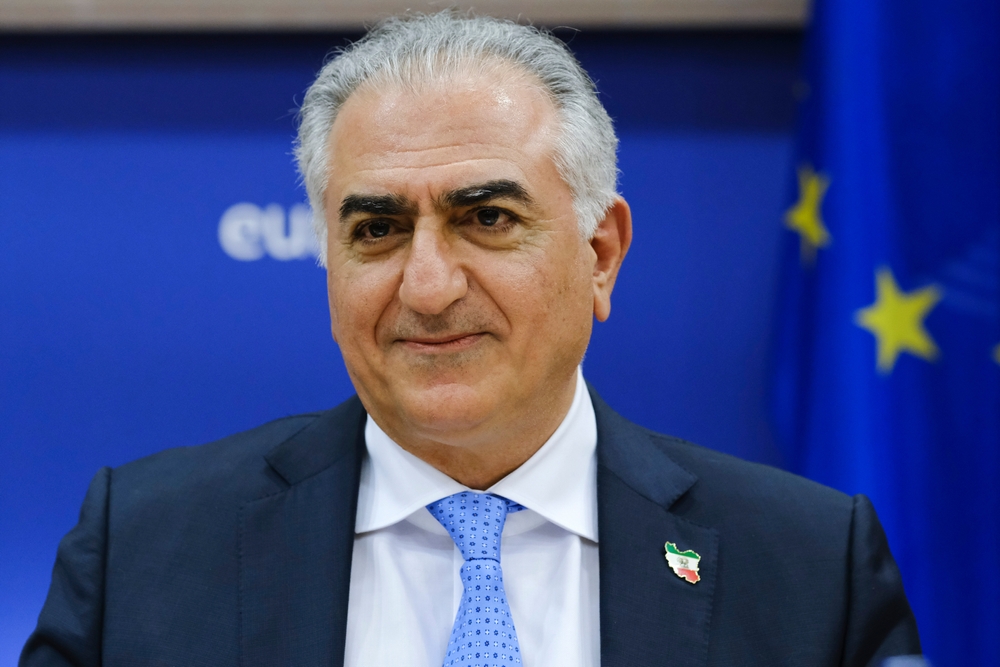
An exiled Iranian newspaper, Kayhan (London), has published a political analysis calling for what it describes as a “historic correction” of the 1979 revolution, arguing that the alliance of “red and black” forces—leftists and clerics—set Iran on a destructive path and that a return to the “Shah” as a unifying national symbol is now central to the country’s opposition movement.
In an article dated Wednesday, Jan. 7, Kayhan (London) frames Iran’s current unrest as a decisive “last battle” against the Islamic Republic, contending that protesters’ chants invoking the Pahlavi era reflect more than nostalgia. The paper argues that Prince Reza Pahlavi should be viewed not merely as a political leader or spokesperson but as the inheritor of a “historical and civilizational” role tied to Iran’s statehood and national identity.
“The figure whom the people call out in their protests… is far beyond ‘lawyer’ and ‘father’ and even simply ‘leader,’” the analysis claims, portraying him as “the heir to the throne… of the nation and the country,” and presenting this role as a vehicle for national cohesion and eventual democratic decision-making.
A Symbolic Role, Not a Final System — Kayhan’s Argument
A central theme of the Kayhan (London) piece is an attempt to reconcile monarchist symbolism with democratic process. The newspaper asserts that accepting a “Shah” role—defined in cultural and historical terms—does not contradict Prince Reza Pahlavi’s stated commitment to letting Iranians choose their future political system through free elections. Rather, it argues, a powerful symbolic figure could help create conditions for such elections by unifying opposition forces and accelerating the collapse of the Islamic Republic.
The article stresses urgency, warning that opposition “opportunities” may narrow as the state represses dissent, fragments the protest movement, and exploits what it portrays as international indecision. It criticizes voices that counsel patience, claiming that “even a day and an hour matter” in a country where, it says, citizens are being arrested, tortured, and killed, while national resources are depleted.
Protests and a Claimed Trigger Event
The analysis situates its argument within a timeline of protests it says began anew in late 2025. It references a memorial gathering in Mashhad for Khosrow Alikordi, described as a lawyer and human rights activist who died under suspicious circumstances, and alleges that demonstrations later spread, including to Tehran’s bazaar and multiple cities, continuing into early January 2026.
While Kayhan (London) presents these events as evidence of a widening challenge to the state, its broader claim is political: that the protest movement risks being diverted unless it consolidates around what it calls the Pahlavi “symbol” and rejects alternative leadership structures it believes would preserve elements of the current system.
Warning of a “Managed Succession” Inside the Islamic Republic
Kayhan (London) also advances a scenario in which reformist or establishment factions inside the Islamic Republic attempt a controlled transition. The article claims that pro-regime actors—described as rooted in Islamist and left-leaning intellectual currents—may seek to replace Supreme Leader Ali Khamenei with a figure from within the security apparatus, modeling a consolidation strategy on Russia under Vladimir Putin.
According to the piece, such a transition would aim to maintain the political and economic dominance of entrenched elites while offering limited accommodation with the West and regional states. It argues that this internal reconfiguration could be paired with nationalist rhetoric—adding “Iran” and “nationalism,” as the article puts it, to the ideological mix—while still threatening democracies and prolonging authoritarian rule.
The “Red and Black Coalition” and a Call to Reverse 1979
In some of its strongest language, the Kayhan (London) article characterizes the 1979 revolution as “reactionary,” arguing it was driven by a “red and black” alliance and resulted not only in the overthrow of a government but in the rupture of Iran’s “history, civilization and culture.” It calls for addressing what it terms the “wrongdoing” of that era and presents a return to the monarchy’s symbolism as a remedy for national fragmentation.
The analysis links this argument to the approach of Jan. 16—the anniversary of Mohammad Reza Shah’s departure from Iran in 1979—suggesting that the date should be remembered not as a closing chapter but as part of a longer struggle over Iran’s identity and political trajectory.
A “Nation as Army” and Non-Military Organization
Another emphasis in the piece is organizational. Kayhan (London) contrasts what it describes as the Pahlavi movement’s focus on “political-scientific projects” with earlier Iranian opposition currents that relied on clandestine armed groups. It claims that Reza Pahlavi and his supporters did not pursue secret military structures because they saw the public—“the Iranian nation”—as the decisive force, and expected “pro-Iranian soldiers” to join the people in a transition.
The paper also portrays Reza Pahlavi as an “umbrella” figure for diverse opposition groups, arguing that no other personality has emerged in nearly five decades with comparable symbolic reach. It contends that attempts by other currents to construct alternative leadership have repeatedly failed, in part because protest slogans continue to elevate the Pahlavi name.
Mission Language: Freedom at Home, Peace Abroad
In presenting a vision for a post–Islamic Republic Iran, Kayhan (London) frames the Pahlavi project as a continuation of what it calls the founding of “Modern Iran” under Reza Shah and the “flourishing” under Mohammad Reza Shah. It lists “freedom, security, and prosperity” domestically and “peace and coexistence” internationally as the movement’s core direction, claiming that public memory of the Pahlavi era fuels current support.
The article culminates in an assertion that the protest movement’s outcome—whether it achieves what it calls “Pahlavi is returning” or is outmaneuvered by regime factions—depends on the combined actions of the “Shah” figure and the nation. “The fate of this ‘last battle’… is in the hands of the ‘Shah’ and the nation,” it concludes, describing the moment as existential for Iran’s future.
What Happens Next
Kayhan (London)’s analysis is explicitly an opinionated intervention in an opposition debate: whether Iran’s protest movement should coalesce around a symbolic monarchic figurehead, focus strictly on republican-democratic structures, or resist any central figure at all. By presenting Reza Pahlavi as both a historical symbol and a facilitator of future elections, the newspaper attempts to bridge these positions—while insisting that time is running out.
As protests continue, the argument over leadership and symbolism is likely to remain a defining fault line in Iran’s opposition politics—one sharpened by fears of state repression, fragmentation, and an internal succession plan that could reshape, rather than replace, the Islamic Republic.
Photo: Ifri