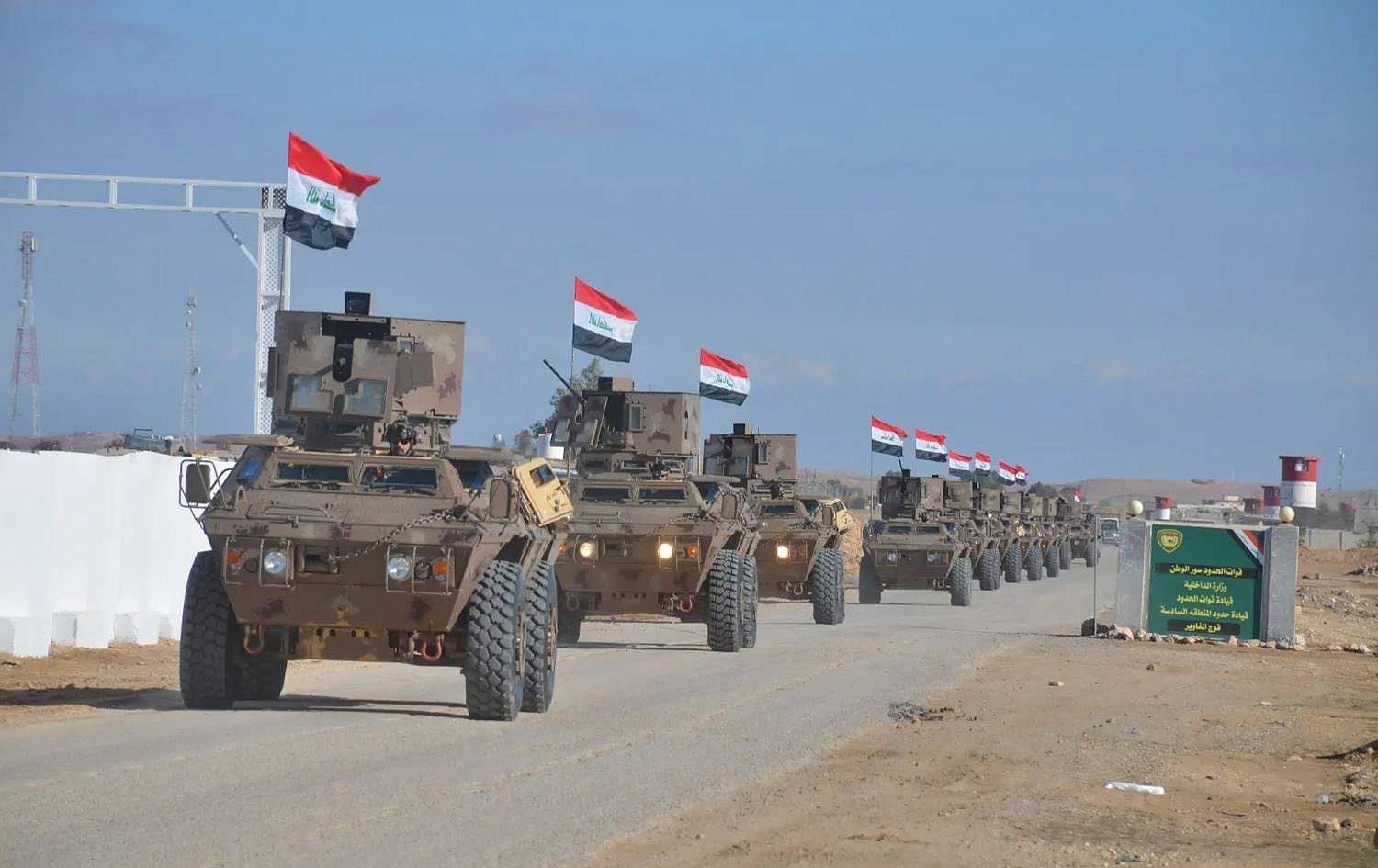
Iraqi defense officials say the country's borders with Syria remain secure, even as fierce fighting across the frontier fuels rising fears of ISIS prison breaks and cross‑border infiltration. The Iraqi army and Kurdistan Region's Peshmerga forces have been placed on high alert along the entire frontier amid escalating clashes between the Syrian Arab Army and Kurdish forces in northeast Syria (Rojava).
Speaking to Rudaw on Monday, Major General Tahsin al-Khafaji, Director of Media and Moral Guidance at Iraq's Ministry of Defense, said federal troops and Peshmerga units are in full readiness "to confront any infiltration," stressing that there is close coordination and information-sharing "in all fields" between the different forces deployed along the border. He underlined that this state of preparedness covers all sectors, whether on stretches overseen by the Kurdistan Region or those under Baghdad's direct authority, insisting that Iraq is ready "to respond" to any scenario that may emerge from the rapidly evolving situation in Syria.
Al-Khafaji emphasized that Iraqi forces possess both the manpower and the hard-won experience needed to counter militant threats along the frontier, noting that units remain engaged in ongoing operations and "are closely monitoring terrorist groups" seeking to exploit instability. He added that Baghdad continues to work with international partners as part of the broader campaign against ISIS, highlighting sustained cooperation on intelligence-sharing and the tracking of suspected militants. The defense official stressed that while developments in Syria are being watched "very closely," Iraqi authorities remain confident that their side of the border "is protected," drawing on years of fighting extremists in some of the country's most challenging terrain.
Concerns in Iraq spiked late Sunday after video footage emerged showing Iraqi security forces deploying toward the Syria–Iraq border in Nineveh province, prompting questions over whether the movements were linked to possible ISIS prisoner escapes. Mohammed Jassim Kakayi, head of the security and defense committee in the Nineveh provincial council, confirmed that the redeployment was directly tied to Syrian battlefield shifts, saying the Syrian army's takeover of areas previously held by the Syrian Democratic Forces (SDF) included zones that contain several prisons holding ISIS members and their families. He said reports suggesting that some detainees may have escaped prompted Baghdad to send additional forces to ensure that, if any of the fugitives are Iraqi nationals, they do not cross back into Iraq.
Officials in northeast Syria have also sounded the alarm over the vulnerability of camps and detention facilities as front lines shift. Sheikhmous Ahmed, who oversees camps for internally displaced people (IDPs) and refugees in Rojava, warned that attacks by Hay'at Tahrir al-Sham (HTS) militants—whom he described as "just like ISIS"—pose a direct threat to both camps and prisons holding ISIS militants. Drawing a clear link between Syrian instability and Iraqi security, Kakayi explained that the reinforcement of the border was a precautionary response to these dangers, even as he stressed that "nothing untoward" had so far occurred on the Iraqi side of the frontier.
Iraq's layered border security architecture has been central to its efforts to prevent a new wave of cross-border infiltration. According to Kakayi, three lines of defense are in place along the Syria frontier: the Border Guard Command forms the first line, the Iraqi Army provides a second, and the Popular Mobilization Forces (PMF) serve as a third strategic reserve. The units seen moving toward the border in the recent footage, he said, were PMF formations dispatched to bolster already-deployed troops. Iraq and the Kurdistan Region together share a roughly 618‑kilometer border with Rojava and Syria, a stretch that has long been a frontline in the fight against ISIS and a critical test of Baghdad's ability to contain the fallout from renewed turmoil next door.
Photo: Rudaw