New Report Warns US Military Strike Could Trigger Iran's Collapse, Regional War, and Humanitarian Catastrophe
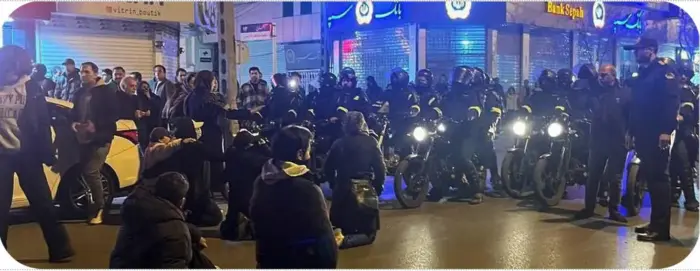
A stark new policy report warns that potential US military intervention in Iran could catastrophically backfire, strengthening the regime's grip on power while pushing the country toward state collapse and triggering a devastating regional conflagration. The analysis comes amid unprecedented nationwide protests and heightened tensions following last year's Iran-Israel conflict.
The report, titled "Iran in Winter 2026: Convergence of Domestic Crises and Foreign Intervention," was authored by Volunteer Activists, a Netherlands-based nonprofit civil society organization. The full report is available on the Volunteer Activists website. According to the organization's mission statement: "Volunteer Activists is a nonprofit civil society organization based in the Netherlands. We envision vibrant, inclusive, and democratic civil societies in Iran and the Levant region that represent all citizens in their efforts to build pluralistic and diverse societies and create accountable governments."
Dual Crisis Confronts Iran
The report identifies two simultaneous crises facing Iran in December 2025 and January 2026. First, a profound legitimacy and governance crisis has triggered widespread protests across the country. Second, Iran's regional and international deterrence has significantly weakened following the "Twelve-Day War" with Israel, creating conditions where the United States is now seriously considering limited military intervention as a policy option.
The protests that began in early January 2026 have rapidly evolved beyond economic grievances into a direct challenge to Iran's political power structure. According to the report, these developments represent a multi-layered structural crisis encompassing chronic economic decline and gradual erosion of the middle class, a political legitimacy crisis marked by steadily declining public trust in state institutions, and generational shifts accompanied by the emergence of new forms of political action outside traditional institutional channels.
The report emphasizes that long-term suppression of basic rights to freedom of association and assembly, granted through the Islamic Republic's constitution, has prevented the formation of stable civil society institutions capable of representing various social groups. As a result, mechanisms for social dialogue to address these crises have effectively been eliminated, leaving street protests as the only available path for social groups to defend their respective interests.
Government Response: Security Patience and Attrition Management
The Iranian government has maintained its dominant strategy of "security patience and attrition management of protests," built on three main pillars. These include systematic communication disruption, particularly internet shutdowns, coercive presence through deployment of loyal security forces, and delegitimization of protesters through state media.
In practice, the government's response has at several key points approximated a model of "maximum suppression," including complete communication blackouts and deployment of rapid response units to reclaim control of streets. While this strategy has succeeded in temporarily dispersing protests, it has failed to address the underlying structural factors, ultimately contributing to the emergence of more persistent nodes of social resistance.
The unresolved crisis, rather than dissipating, recedes into deeper layers of society where accumulated grievances remain primed to erupt in response to external shocks or triggers. In this sense, the current moment holds high potential for reproduction of the present crisis and its re-intensification in the short to medium term.
Five Scenarios Analyzed
The report examines five potential scenarios for US action, each carrying distinct risks and implications.
The first scenario involves symbolic military targets, consisting of limited, low-intensity strikes on IRGC bases, logistics facilities, or missile production infrastructure. To increase symbolic impact, a strike on a government building in Tehran would also be possible, similar to Israel's attack on Evin Prison during the Twelve-Day War last June. The report warns these could backfire by allowing the government to reinforce the "foreign aggression" narrative while demonstrating to protesters that Washington lacks the will or capacity to effect meaningful change.
The second scenario envisions limited military intervention through short but intensive air and cyber strikes targeting air defense systems, drone bases, and command-and-control nodes. The underlying logic is that disrupting these communication and operational centers would reduce the government's ability to rapidly suppress protests. This approach avoids ground force deployment to minimize US casualties while increasing psychological and operational pressure on Iran's power structure.
The third scenario describes uncontrolled escalation, where even limited strikes could provoke Iranian retaliation and expand conflict regionally, shifting national priorities toward security rather than democratic demands. If Washington's goal is either "real change" or "effective destruction of the suppression apparatus," it would likely require a longer, broader campaign with higher military commitments and significant political and regional costs. As such a campaign expands, the risk of a "rally around the flag" effect increases, potentially allowing the government to use such dynamics to consolidate its position if it survives.
The fourth scenario involves targeted leadership elimination, a "decapitation strike" aimed at creating internal rifts and initiating power struggles within the government. The report identifies this as among the highest-risk options due to unpredictable downstream effects, including potential intensified violence, succession crises, weakening of basic order, and regional conflict expansion. Rather than facilitating transition, it could ultimately revive hard power in a new configuration.
The fifth scenario presents an alternative approach of civilian pressure and indirect deterrence, relying on non-military tools such as targeted sanctions and economic containment, human rights pressure, support for free information flow, and cyber tools enabling civilian communication without direct armed intervention. Steps such as expanding access to communication technologies, reducing costs associated with internet shutdowns, and strengthening documentation of human rights violations could make suppression of protests more costly for the government while avoiding reinforcement of the "foreign siege" narrative. The report notes that on January 12, President Donald Trump imposed a 25 percent trade tariff on countries conducting trade with Iran, signaling the beginning of this pressure approach, though the impact remains unclear given that Iran is already one of the world's most economically sanctioned countries.
Potential Impact on Protest Movement
The intersection of foreign intervention and ongoing protest dynamics could produce reactions at three levels.
Regarding government response and re-legitimization of crisis, foreign intervention could provide the government an opportunity to rebuild its weakened social base. Through mobilization of defensive nationalism, protests might be reframed from "justice-seeking demands" to "threats or acts of national treason," thereby expanding the government's freedom of action to intensify suppression under the guise of national security. Signs of this dynamic are already visible, with US and Israeli statements claiming "Mossad agents" are present among protesters being used domestically to legitimize higher levels of violence.
Concerning social response and the tension between nationalism and change, a strategic rift may emerge in society similar to dynamics observed during the Twelve-Day War. Segments of the urban middle class, with clear historical memories of insecurity in post-revolutionary Iran and more recently Syria, Iraq, and Libya, may prefer the stability of "existing order" to the risks of wartime disorder. Conversely, younger generations and exhausted social groups may interpret weakening of state structures as an opportunity to press harder on the government through intensified protests.
On socio-economic impact and subsistence unrest, even a limited strike could cause currency shock and inflation driven by increased uncertainty. Middle-class households would witness further deterioration of assets and economic security, while peripheral urban areas would see intensification of existing subsistence grievances due to instability from security disruptions, generating unrest that may prove difficult to contain.
Significant Risks Identified
The report's strategic assessment identifies substantial internal, economic, and regional risks from military intervention.
Internal risks include strengthening the "foreign threat" narrative and triggering a "rally around the flag" effect, legitimizing broader suppression under the guise of national security and territorial integrity, eroding social cohesion and polarizing the protest movement, increasing miscalculation and radicalizing violence dynamics, and the critical risk of transitioning from "regime change" to "state collapse."
On state collapse, the report delivers a grave warning: "State collapse could lead to fragmentation of territorial authority, emergence of non-state armed actors, increased urban insecurity, and emergence of 'parallel governance nodes.' Even if it weakens the central government, such an outcome would not necessarily lead quickly to democratic transition. Instead, it may create a prolonged human security crisis and open space for multilateral foreign intervention." Another consequence that should not be overlooked is the possibility of widespread displacement, war-related migration, and resulting destabilization in Iran and across the region.
Economic risks encompass currency shocks and panic-driven inflation, expansion of inequality and middle-class erosion through loss of assets and economic security, transformation of economic grievances into subsistence unrest including food and basic goods riots, and reduced state capacity to manage simultaneous economic and security crises. The convergence of security and economic pressures dramatically increases governance costs, with limited state resources diverted toward the security apparatus and away from public services, welfare, infrastructure, and crisis management. This dynamic accelerates state erosion and increases the probability of state collapse scenarios.
Regional risks include retaliatory action and conflict expansion across the region, threats to energy routes and trade disruption, and empowerment of radical and militarized regional actors. In response to a military air strike, Iran could activate asymmetric options by targeting US and allied interests, increasing pressure through proxy groups or aligned networks, and raising security costs for regional actors. Such dynamics increase the risk of miscalculation and retaliatory escalation cycles. Any tension in the Persian Gulf, even short of full-scale conflict, could raise insurance, shipping, and energy costs, with effects rapidly spreading to regional economies and even global markets, transforming the issue from a political crisis into an economic-geopolitical crisis. In wartime or near-wartime environments, moderate and diplomatic actors tend to lose influence while radical, security-oriented, and ideological forces advance, weakening prospects for regional diplomacy, arms control, and crisis management while intensifying long-term securitization.
Key Findings and Recommendations
The report concludes that while limited US military intervention may produce short-term tactical effects, it carries significant internal and regional risks as a strategic pathway. "The sustainability of any political transformation in Iran depends less on external variables and more on organizational capacity, social cohesion, and the internal dynamics of Iranian society," the report states.
"External pressure can only facilitate change when it supports internal autonomy and does not serve as a catalyst for further securitization. Failing this, external intervention will most likely reinforce the status quo in the short term rather than produce meaningful transformation."
For policymakers, the report recommends avoiding premature military action without clear understanding of internal dynamics, avoiding symbolic actions with high strategic costs that risk triggering "rally around the flag" reactions while signaling lack of real will to domestic and international audiences, prioritizing tools that increase the cost of suppression without reinforcing siege narratives such as targeted sanctions against individuals and entities involved in suppression along with restrictions on surveillance technologies and international legal mechanisms, and prioritizing free flow of information and human rights documentation through increased citizen access to communication tools, support for censorship circumvention technologies, and enabling documentation of human rights violations to reduce "impunity for suppression."
For civil society actors, recommendations include strengthening decentralized but sustainable organization through local, sectoral, and issue-based networks that can compensate for lack of centralized leadership and support sustained mobilization, maintaining discursive independence from foreign political projects to prevent legitimacy erosion and reduce security framing, selective use of international pressure as a complement to rather than replacement for domestic capacity, amplifying voices of marginalized and peripheral groups since without genuine representation from Iran's peripheral regions, low-income strata, and discriminated communities sustainable national coalitions are unlikely to form and risks of social fragmentation increase, and strengthening social cohesion through mutual support by creating collective pathways for mutual care during crises and reinforcing social cohesion independent of government agendas or objectives.
For think tanks and advisory institutions, the report urges avoiding the "intervention versus non-intervention" binary and evaluating the spectrum of intermediate options from legal pressure to information and communication tools through cost-benefit assessment, continuous monitoring of internal social dynamics in Iran since sustainable change depends on internal organizational and social capacity meaning analytical work should track indicators of social cohesion, mobilization networks, and public service and governance capacity, and clear distinction between "regime change" and "state collapse" scenarios with analytical frameworks specifying which actions increase the probability of regime change and how transition pathways can be kept separate from collapse or statelessness scenarios.
Photo: The Source