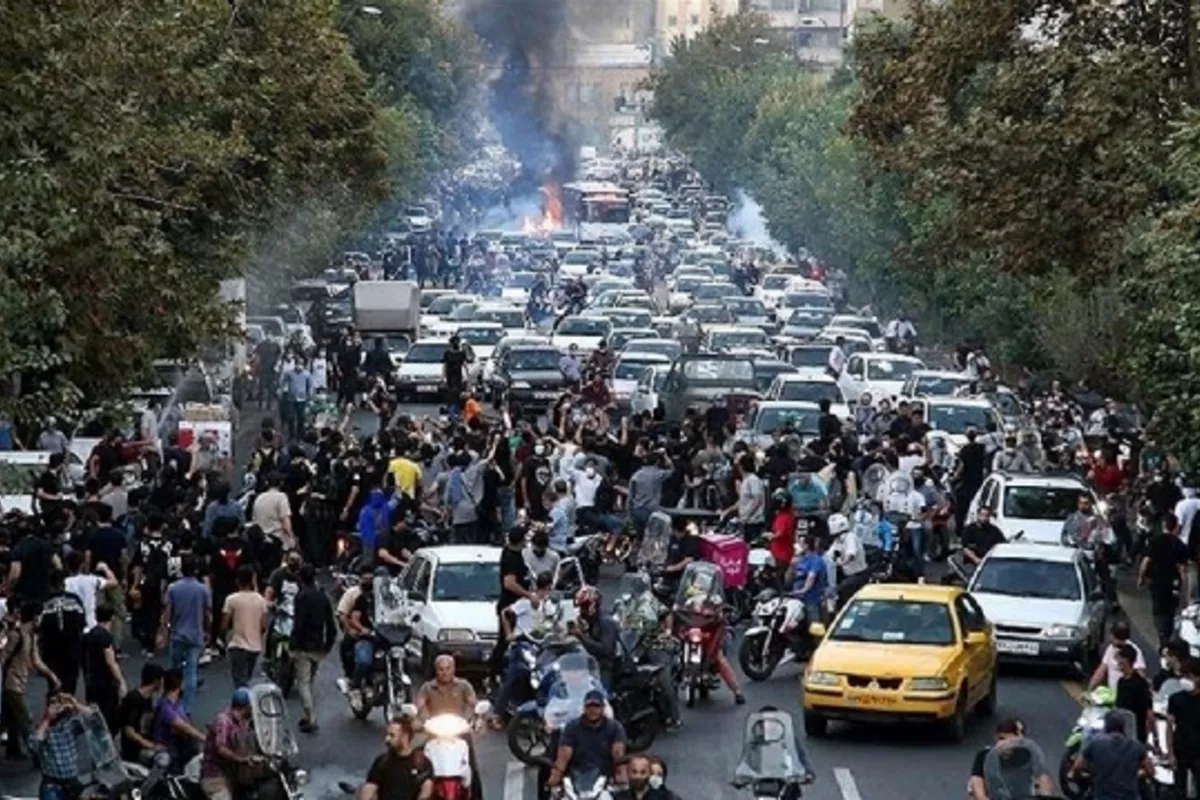
One of the strategic errors of recent years has been the unintended yet costly shift in the territory of protest; a shift that has driven revolutionary forces from the position of critical actors to the position of passive defenders of the status quo, thereby handing the field of protest entirely over to subversives. The result of this error is clear: protest has become synonymous with subversion, and every dissenting voice is interpreted as part of a project to negate the system. This is while revolutionaryism, if reduced to mere defense and stripped of its relationship with protest, turns into a form of ideological conservatism and becomes hollow from within.
Living revolutionaryism must be critical; critical of Arrogance abroad and critical of deviation within. The first level is the protest against the global order of domination, which constructs the identity of the Islamic Revolution. However, the second and more vital level is the protest against the "unworthy elements of the revolution"—against managers and structures that operate in the name of the revolution but contrary to its spirit (through corruption, aristocracy, and inefficiency). History has shown that revolutionary systems are not brought down by external enemies, but by internal freezing and the loss of the capacity for self-criticism.
The bitter and fast-paced events of the last week serve as a test for exiting this passivity. According to the explanation given by the Supreme Leader on 3 January 2026 (13 Dey 1404), the boundary between "logical demand" and "security destruction" is a strategic red line. In this midst, the duty of the revolutionary stratum is not to be a silent spectator or merely a defender, but to take radical leadership of demands before they turn into fuel for riots. The revolutionary of today must shift from the position of defender of the status quo to the leader of reforming the status quo so that the enemy cannot manufacture chaos out of livelihood wounds. Exiting passivity in the face of recent riots depends on a tactical turn: isolating chaos by legitimizing pain! To end the chain of riots, the right to protest must be taken out of the hands of subversives and placed as a powerful supervisory tool in the hands of critical loyalists. This is the same idea that was implemented in the early 2000s with the formation of the Student Justice Movement upon the recommendation of the Leader of the Revolution, though it was not sustained perfectly and fell into the trap of extremes.
We must also be vigilant that security does not become a shield to justify inefficiency and economic disarray. In political philosophy, security is part of a bilateral contract between the sovereignty and the people. People surrender a portion of their freedom or power to the state to receive security and welfare in return. When, in response to criticism of economic performance, the "blessing of security" is constantly spent as currency, this term changes nature in the mind of a society under pressure—from a national value to a tool for preserving the status quo. It is here that the enemy's media operation lures people into the fallacy that destruction is better than the current stagnation—a dangerous moment that paves the way for the "Syria-ization" project of Iran. No valuable concept is infinite; if consumed excessively regarding its social function, it runs out. Values such as nationalism, national security, and concepts related to the rightful Shiite Sharia are like groundwater; excessive and unnecessary extraction leads to the intellectual and belief subsidence of society.
Furthermore, the coincidence of the aggressive US operation in Venezuela and the gangster-style arrest of Maduro with the surge of riots in Iran, alongside Trump's interventionist tweets, transmits an operational signal to the hard cores of destructionism inside the country. This chain indicates that Arrogance today, just as in the autumn of 2022, seeks to instill a sense of "the end" and create an illusion of definitive support for the destroyers, aiming to cast doubt on the system's will to restore stability by linking external pressures to internal chaos.
Therefore, ultimately, safeguarding the realm of reformist protest depends on a decisive, smart, and uncompromising confrontation with armed riots that have made national security their bargaining chip—especially under conditions where only six months have passed since the aggression of the usurping Zionist regime against the country. This confrontation must be precise and pinpoint so that the cost of daring to harm the lives and property of the people becomes unbearable for mercenaries. Any appeasement of those who dream of the Syria-ization of Iran is not political tolerance, but an unforgivable betrayal of the security and justice due to the very people protesting the shrinking of their livelihoods. We must act more advanced and mature on both axes: in dialogue with the righteous voice of protesters, and in confrontation with the seekers of destruction.
* This article was first published on 6 January 2026 in Result and has been translated into English by TLF for its readers. The opinions expressed in this translated or hosted article do not necessarily reflect the views or editorial positions of TLF.
Photo: Caspian Post