UPDATED WITH NEWEST INFORMATION: Protesters and Striking Merchants Rally Across Dozens of Iranian Cities as Unrest Enters 11th Day
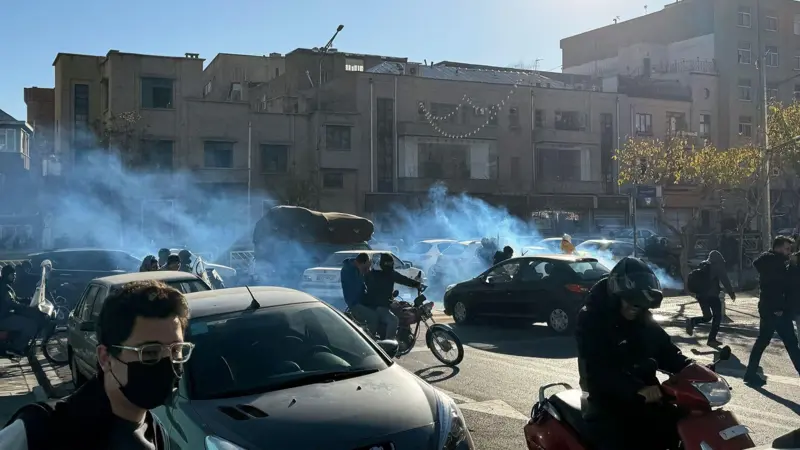
In a rapidly updated live briefing, Iran International reported that citizens and bazaar merchants staged protests and strikes in dozens of cities, including Tehran, Tabriz, Mashhad, Shiraz, Kerman, Bandar Abbas, Rasht, Qom, Karaj, Kermanshah, and others, with footage showing shuttered shops, street demonstrations, and clashes in some areas. Source: Iran International (live updates, Persian service).
Strikes and Street Rallies Expand Nationwide
Wednesday’s actions appeared to combine two pressure points that have historically carried weight in Iran: street mobilization and bazaar closures. Videos described as coming from market districts in Tehran—including the fabric market and other commercial areas—showed crowds chanting and shopkeepers closing storefronts. Similar scenes were reported from provincial markets in cities such as Shiraz, Kerman, Kermanshah, Qazvin, Rasht, Zanjan, and Tabriz, as well as smaller towns, suggesting a widening footprint of economic disruption.
In the southern port city of Bandar Abbas, footage described by the outlet showed a large street turnout and repeated chants of “This is the final battle, Pahlavi will return.” In western Iran, videos from Borujerd showed demonstrators chanting, “Shout, shout, demand your rights,” outside a police station. Elsewhere, videos from Shiraz indicated smoke and fires on streets, with reports of gunfire and confrontations involving security forces.
Reports of Force and Arrests as Internet Disruptions Intensify
Several clips referenced by Iran International indicated security forces using force in some locations. In Shadabad, an area in Tehran, videos were described as showing police firing toward demonstrators; in Fasa, a city in Fars province, young protesters were shown throwing stones as security forces reportedly deployed pellet guns and tear gas. Additional footage from Tehran’s industrial zone of Chahardangeh showed the presence of security personnel as crowds gathered.
At the same time, connectivity constraints became a growing part of the story. The U.S. State Department’s Persian-language account on X characterized internet disruptions as an “overt attempt” by Iranian authorities to suppress information and “choke” protests, saying circumvention tools such as VPNs had also been blocked in some areas. Iran’s communications minister had previously acknowledged that restrictions were being imposed amid the unrest, according to the same stream of reporting.
Iranian officials, however, rejected some allegations related to protest injuries. The country’s health minister was quoted as denying reports that wounded protesters were being removed from hospitals by security entities, saying such incidents “have not happened.”
Opposition Figures and Parties Issue New Calls
Amid the expanding unrest, Reza Pahlavi, the exiled son of Iran’s last monarch, issued messages directed at Iran’s armed and security forces, warning them not to miss what he described as a “last chance” to join the people. In another message, he urged citizens to chant from streets or homes at a set time over Thursday and Friday nights.
Separately, seven Kurdish parties reportedly released a joint call supporting the nationwide protests and urging a general strike in Iran’s Kurdistan region and Kurdish-majority areas on Thursday.
International Reactions: Sweden, Germany, Australia, and U.S. Lawmakers
International responses continued to accumulate. In Sweden, Education Minister Simona Mohamsson posted on X in support of what she called the Iranian people’s demand for freedom and justice, writing that “the mullahs will lose” and expressing solidarity with “Women, Life, Freedom.”
Swedish parliamentarian Morgan Johansson, a former justice minister and foreign policy figure within the Social Democrats, issued a statement backing the protest movement and calling for increased international pressure, including expanded sanctions. He also reiterated his party’s push for the Islamic Revolutionary Guard Corps (IRGC) to be designated as a terrorist organization at the EU level.
In Germany, Bundestag member Norbert Röttgen framed the situation as a choice between “freedom and terror,” condemning violence against protesters and noting reports that even children have been harmed.
Meanwhile, Australia’s government travel advisory service Smart Traveller warned that nationwide protests in Iran were continuing and could escalate without warning, urging Australians in Iran to leave and advising against travel to the country.
In Washington, U.S. Senators Rick Scott and Ted Cruz gave interviews to Iran International expressing support for protesters. Scott said he supported Iranians seeking basic rights and hoped they could achieve their demands; Cruz described Iranians as rising up against a repressive, theocratic, and corrupt system, according to the outlet’s reporting. Another Republican senator, Markwayne Mullin, also voiced support while emphasizing that backing pro-democracy protesters did not mean U.S. military intervention.
Symbolic Moments in Sport and Civil Society
The protest wave also spilled into symbolic arenas. Iran International reported that members of Iran’s under-23 national football team did not sing the Islamic Republic’s anthem before a match against South Korea, a gesture that has become politically charged during periods of unrest. In civil society, a coalition of Iranian visual arts associations issued a statement condemning violence and repression against protesters, describing years of injustice and systemic failures as drivers of public anger.
What Happens Next
With calls for further strikes and nightly chanting, the coming days may test whether the movement can sustain nationwide coordination amid heightened security responses and communications disruptions. For now, Wednesday’s breadth—spanning major cities, regional hubs, and commercial centers—underscored how quickly the unrest has moved beyond localized demonstrations into a rolling challenge that blends street protest with economic stoppages.
Earlier Update
Iran’s nationwide unrest entered its tenth day with what activists and witnesses described as the largest demonstrations yet in parts of Tehran and Ilam, as security forces intensified efforts to disperse crowds and reports of arrests and fatalities continued to mount.
Protests Surge in Tehran’s Historic Bazaar
Large crowds returned to Tehran’s bazaar, the capital’s historic commercial heart, where demonstrators chanted anti-government slogans and security forces responded with tear gas, according to reports and videos shared with the London-based Persian-language outlet Iran International. Unrest also flared in Mashhad, the country’s holy city, underscoring the geographic spread of the movement beyond Tehran.
The bazaar—long seen as both an economic engine and a politically symbolic space—has often served as a bellwether during moments of national crisis. Tuesday’s scenes suggested a growing alignment between street protests and economic pressure, particularly as talk of strikes circulated online and among opposition networks.
Videos Allege Tear Gas Used Inside Tehran’s Sina Hospital
One of the most contentious claims emerging from Tuesday’s clashes was that security forces fired tear gas inside Tehran’s Sina Hospital, based on videos sent to Iran International. The footage, widely circulated on social media, could not be independently verified within the information provided, but it added to rising concern over confrontations spilling into medical facilities.
Separately, the U.S. State Department’s Persian-language account on X condemned what it described as a pattern of attacks on hospitals—citing an earlier incident in Ilam and the reported targeting of a facility in Tehran—calling such actions “barbaric” and urging authorities to stop oppressing Iranians.
Casualties and Arrests: Competing Tallies From Rights Monitors
Human-rights trackers offered grim figures as the unrest stretched into a second week.
The Human Rights Activists News Agency (HRANA) reported that, after nine days of protests, at least 29 people had been killed and more than 1,200 arrested, with demonstrations continuing despite a heavier security presence.
In a later update tied to the tenth day, a rights group cited by Iran International said protests and strikes had spread to 285 locations across 92 cities, reporting 36 killed (including 34 protesters and two security-force members) and more than 2,000 arrests, with four of those killed reportedly under 18.
The differing tallies highlight the difficulty of verifying casualties and detentions amid internet restrictions, limited access for independent monitors, and competing narratives.
Strikes Expected as Kurdish Parties Call for Action
Attention also turned to Iran’s Kurdish regions, where Kurdish merchants were expected to strike following what was described as a long-awaited call by Kurdish parties. The prospect of sustained economic shutdowns—particularly in border provinces where trade is a lifeline—raised the possibility that unrest could shift from periodic protests to more coordinated civil disobedience.
Exiled opposition figure issues first protest call, says he’s ready to lead “transition”
In parallel, Iran International reported that exiled Prince Reza Pahlavi issued his first call for nationwide protests on Thursday and later told Fox News he was ready to “lead this transition” toward what he described as a secular democracy, advocating a national referendum and constitutional assembly.
“I’m impartial as to what the ultimate result will be, so long as it’s a secular democracy,” he said in the interview, according to the report, adding that he was ready to return “as soon as the situation warrants itself.”
Claims of Cross-border Militia Support to Suppress Unrest
An exclusive report from Iran International also alleged that Iranian-backed Iraqi militias had begun recruiting fighters to assist Iranian forces in suppressing protests. The report claimed roughly 800 Iraqi Shiite militiamen had been deployed—primarily from groups including Kataib Hezbollah, Harakat al-Nujaba, Sayyid al-Shuhada, and the Badr Organization—moving عبر border crossings under cover of “pilgrimage trips” to Mashhad before staging at a base near Ahvaz and dispersing to other regions.
These claims, if accurate, would mark a significant escalation in the security response and further internationalize a crisis already drawing intense scrutiny.
International Reactions: Warnings and Symbolic Gestures
International political messaging also intensified. Iran International reported that the U.S. president posed smiling in a cap reading “Make Iran Great Again”, after vowing to respond forcefully if Iranian authorities killed protesters. Separately, U.S. lawmakers and a congressional committee posted statements supporting demonstrators and warning Iranian leaders against violent repression.
Inside Iran, videos shared with Iran International showed symbolic acts—such as a protester renaming a street after the U.S. leader—as well as messages in English appealing for outside support.
Flashpoints beyond Tehran: Ilam, Bandar Abbas, and Reported Shortages
In Ilam, videos highlighted especially large crowds in Abdanan, described by Persian-language reports as among the biggest demonstrations of the past ten days. Footage showed protesters tearing open rice bags in front of a supermarket, a potent image amid anger over economic hardship.
Further south, Iran International said a road was closed during protests in Bandar Abbas after a fire was set in the street. Elsewhere, Persian-language reports described a heavy security presence in cities like Bandar Anzali, alongside complaints of scarce essentials and rapidly rising prices.
What Happens Next
With protests persisting into a tenth day—and strikes increasingly discussed—the coming 48–72 hours may prove decisive. A sustained merchant shutdown in key markets, combined with continued demonstrations across multiple provinces, could increase pressure on the state. At the same time, the reported escalation in crowd-control tactics and the growing number of arrests suggest authorities are preparing for a longer confrontation.
As of the latest reports provided, Iran’s unrest shows no clear sign of abating—only shifting, spreading, and hardening into a national test of endurance.
Photo: BBC