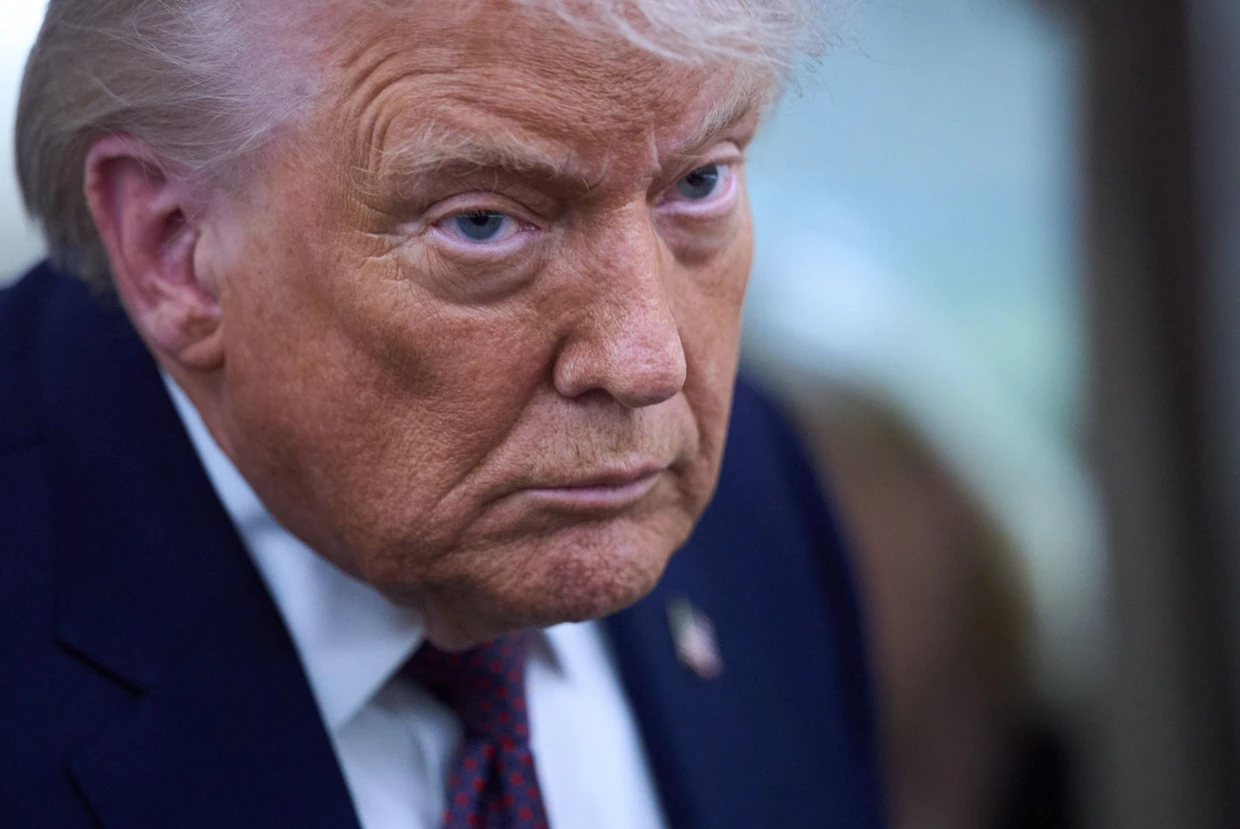
U.S. President Donald Trump has indicated that Iran is interested in a diplomatic resolution to escalating tensions with the United States, even as Washington deploys a massive naval fleet to the region following the violent suppression of protests in the Islamic Republic.
According to the Frankfurter Allgemeine Zeitung (F.A.Z.) and the U.S. news outlet Axios, Trump described the situation with Iran as "in flux," pointing to the significant military presence the U.S. has dispatched to the region. "We have a big armada next to Iran. Bigger than Venezuela," the Republican president stated, referencing the naval forces recently positioned near both countries.
Tehran Reportedly Reaching Out
"They want to make a deal. I know that. They've called several times. They want to talk," Trump added. The aircraft carrier USS Abraham Lincoln, accompanied by a fleet of warships, has arrived in the region, according to U.S. Central Command (CENTCOM), though specific positioning details were not disclosed.
Trump had previously refused to rule out military intervention in Iran following reports of thousands of demonstrators killed during recent mass protests in the country.
Staggering Casualty Reports
The U.S.-based human rights network HRANA has reported 6,126 confirmed deaths in Iran, including 5,777 protesters. The organization says it is investigating an additional 17,091 suspected cases. Furthermore, 11,009 people have reportedly suffered serious injuries, with security forces allegedly detaining 41,880 individuals. These figures cannot currently be independently verified.
It should be stated that in a separate interview with Politico, Trump endorsed regime change in Iran, stating: "It's time to look for new leadership in Iran." This followed remarks by Iran's Supreme Leader Ayatollah Ali Khamenei, who blamed Trump for the protests and labeled him a "criminal," demanding America be held accountable.
Iranian President Massoud Pezeshkian warned that any aggression against Khamenei would be "tantamount to a comprehensive war against the Iranian nation." The U.S. State Department subsequently cautioned Tehran against attacks on American installations, promising a decisive response.
Military Posturing Intensifies
"I would prefer if nothing happened, but we're watching them very closely," Trump said regarding Iran. Tehran responded swiftly. "The armed forces of the Islamic Republic of Iran are monitoring the movements of the enemies," a senior military official told state media, warning that the presence of "foreign forces" in nearby waters transforms them into "easily reachable targets."
Iran's Foreign Ministry spokesman Ismail Baghaei cautioned about regional consequences of escalation: "Insecurity is contagious, and therefore there is a shared concern among countries in the region. We will respond to any form of aggression against Iran with a comprehensive and painful answer, stronger than ever."
According to Axios, Trump has not yet made a decision on how to proceed. Sources familiar with the situation indicate the president will likely hold further consultations this week and receive additional military options from his security advisers.
The Wall Street Journal reported that the USS Abraham Lincoln and its accompanying warships provide Trump with additional offensive and defensive capabilities should he opt for military action. Three destroyers escorting the carrier could launch Tomahawk cruise missiles, according to a defense official cited by the newspaper.
The U.S. has also positioned F-35C and F-18 fighter jets, EA-18 Growler electronic warfare aircraft, two additional destroyers near the Strait of Hormuz, and three combat ships in the Persian Gulf. F-15E fighters have been stationed at a base in Jordan, with air defense systems being relocated to the region to protect American facilities and allies from potential Iranian counterstrikes, the Journal reported, citing flight tracking data and two U.S. officials.
Photo: (F.A.Z.)