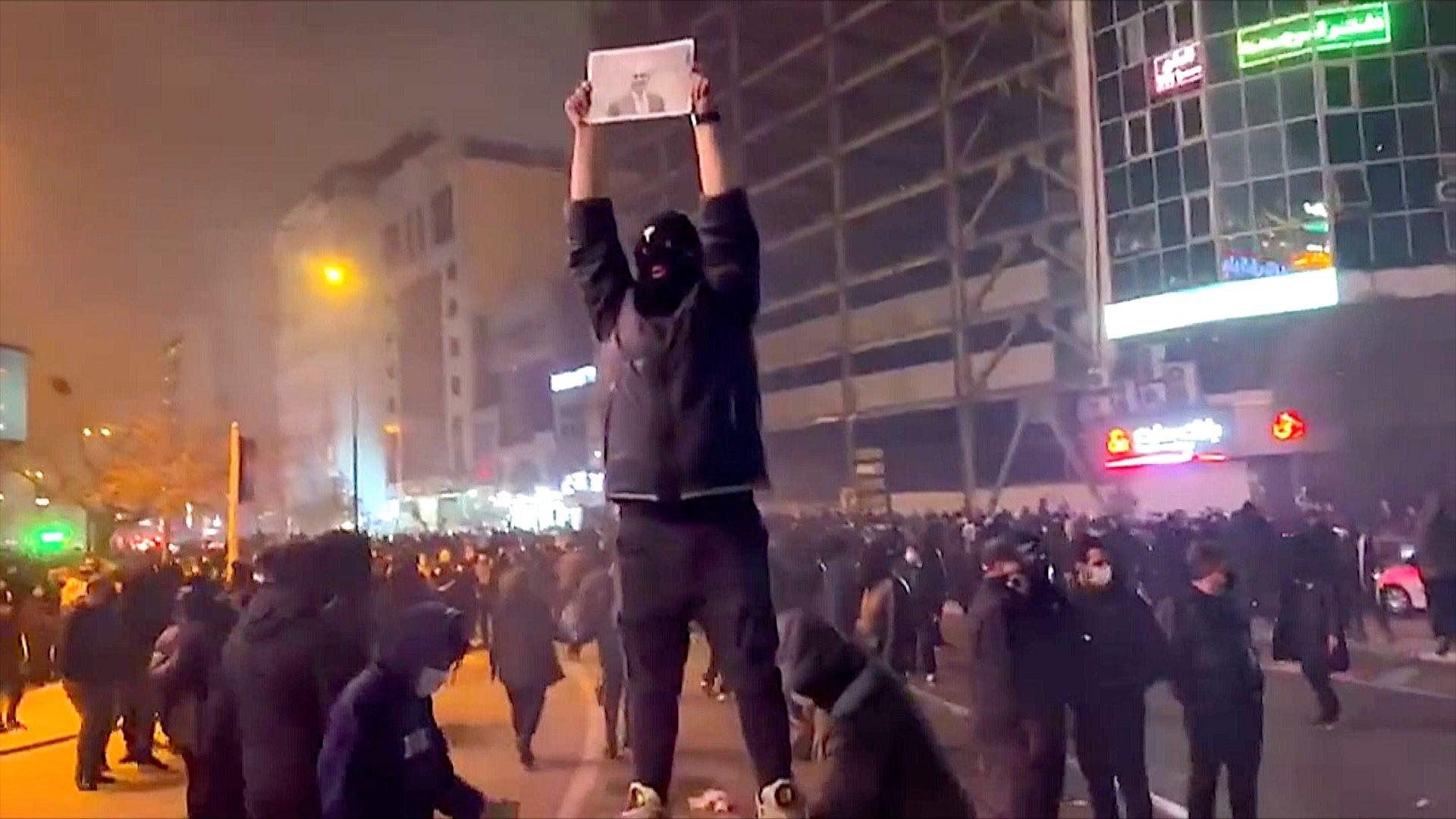
In a recent assessment of Iran’s political mood, Robin Wright, writing for The New Yorker, described how once-symbolic pillars of the Islamic Republic’s revolutionary identity—such as major shrines and state-organized religious gatherings—have shown visible signs of thinning enthusiasm over time, reflecting a widening gap between the state’s founding narrative and the lived reality of younger generations.
The latest protests were sparked by a sharp economic shock: the national currency’s rapid decline, rising prices for basic goods, and an escalating cost of living that many Iranians say has become unbearable. Merchants in Tehran’s Grand Bazaar reportedly shuttered shops in a dramatic signal of dissent as the currency slid further, amplifying public anxiety about savings, wages, and the future. With food inflation especially acute and everyday necessities increasingly out of reach, the unrest has taken on the character of a broad social revolt rather than a single-issue campaign.
This moment also builds on a long arc of recurring uprisings that have repeatedly tested the state’s legitimacy. Major protest waves in the past two decades—over election disputes, economic hardship, and social restrictions—have each left political scars and a deepening sense among many citizens that institutional avenues for change are narrowing. Analysts cited in Wright’s reporting argue that revolutionary ideology is harder to sustain across generations, and that early fervor can fade when daily governance fails to deliver security and opportunity.
At the same time, the state’s own internal cohesion is being closely watched. Iran maintains large security and paramilitary forces capable of suppressing dissent, and the crackdown has been described as ruthless. Yet the durability of any response may depend on morale within those ranks—particularly among conscripts and lower-level personnel who face the same economic pressures as the public and may not share a single ideological outlook. Some observers suggest that history offers a cautionary parallel: regimes can appear stable until the moment mid-level enforcers begin to doubt whether repression will be rewarded—or protected.
Public scenes of mourning have added emotional fuel to the protests. Funerals and burials, including in major cemeteries long associated with wartime “martyrs,” have reportedly become flashpoints where grief merges into defiance. In this atmosphere, the government’s insistence that it can contain unrest through arrests and intimidation risks producing the opposite effect: a widening circle of families directly touched by violence.
For the protest movement, the central challenge remains organization. While demonstrators share a clear rejection of current conditions, they have not yet coalesced around unified leadership or an agreed political endgame. Even so, the scale, geographic reach, and economic intensity of the unrest suggest Iran has entered a volatile period—one in which the state’s capacity to enforce order is colliding with an increasingly broad sense that the status quo is no longer workable.
Source: BBC
Comments
Post a Comment