TLF SPECIAL: Iran Is Entering an Era of Persistent Unrest — And Its Own Officials Are Now Admitting the Worst
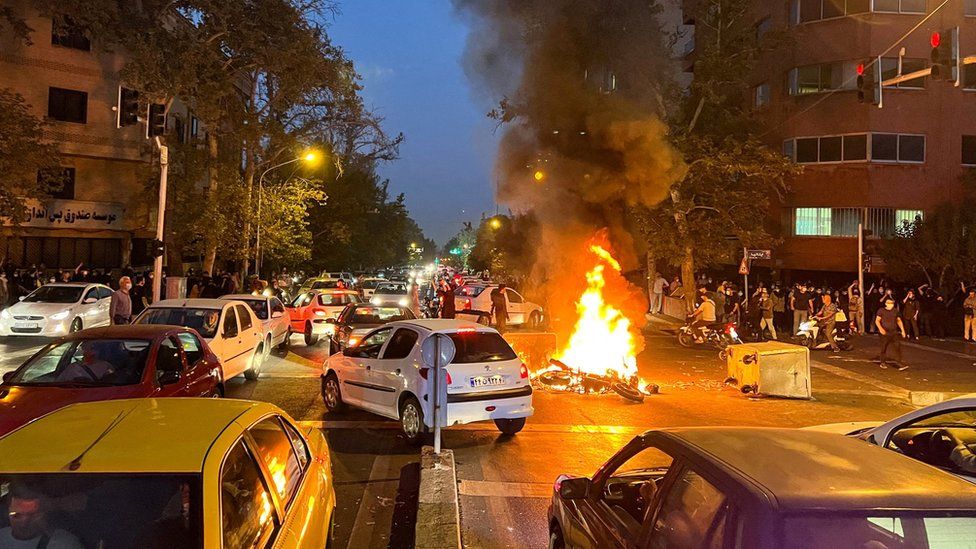
A regime official has confirmed that wounded protesters were executed with coup de grâce shots. The 40th-day mourning ceremonies have reignited street demonstrations. And analysts warn that the structural conditions driving Iran’s revolt show no signs of easing.
In a disclosure that has stunned observers of Iranian politics, a senior regime official publicly acknowledged on February 19 what human rights organizations have alleged for weeks: that security forces executed wounded protesters during the January 2026 uprising. Javad Tajik, the chief executive of the Behesht Zahra Organization — the sprawling cemetery complex that serves as Tehran’s primary burial site — confirmed at a press conference that the so-called “coup de grâce”, the deliberate delivery of a fatal shot to the already-wounded, was widely practiced during the crackdown. The admission, reported today by the National Council of Resistance of Iran, represents one of the most explicit official concessions of state atrocity since the January uprising began.
The revelation arrives at a moment when the regime is struggling to contain a society that has visibly shifted in its demands — from economic grievances rooted in currency collapse and rampant inflation, to open calls for the overthrow of Supreme Leader Ali Khamenei. What began on December 28, 2025, as a protest by shopkeepers in Tehran’s Alaedin Arcade over currency instability has become, in the words of analysts, the largest and most geographically sweeping anti-government uprising in the history of the Islamic Republic.
The 40th Day: Mourning Turns to Defiance
On February 16 and 17, Iran’s traditional Arba’een mourning rituals — marking the fortieth day after a death — were transformed into scenes of open political defiance. Across cemeteries, mosques, and city squares nationwide, ceremonies held in honor of those killed by security forces in January evolved into rallies in which protesters renewed calls to bring down the clerical establishment. Far from being moments of passive grief, these gatherings became, in the assessment of opposition monitors, “operational battlegrounds” where public anger was renewed and consolidated.
In western Iran, a fresh wave of unrest erupted on February 16 following the memorial gatherings. Security forces responded by raiding at least one village and arresting hundreds of people, according to reports reaching human rights monitors outside the country. The Iranian government, which declared that “calm” had been restored as early as January 14, has offered no public comment on the renewed disturbances. Meanwhile, medical students in Tehran staged their own demonstrations in the days preceding the mourning ceremonies, joined in expressions of solidarity by the capital’s retiree community — two groups that observers note are not traditionally associated with street protest.
The Scale of the Killing: A Death Toll Still Being Counted
The precise human cost of the January crackdown remains one of the most contested and closely watched questions in the world. The figures span an enormous and disturbing range, reflecting both the chaos of the violence and the Iranian government’s systematic efforts to suppress information. The US-based Human Rights Activists News Agency (HRANA) had, as of early February, documented 6,964 confirmed deaths, with more than 11,700 additional cases still under review and a total of over 42,500 people detained. Iran Human Rights, a Norway-based organization, has verified at least 3,428 protester deaths and approximately 40,000 arrests as of late January.
The Iranian state’s own Martyrs Foundation has acknowledged 3,117 deaths in what it calls “recent incidents.” Khamenei himself, in a January 27 public address, confirmed that “several thousand” had been killed, attributing responsibility to American and Israeli instigation. Internal estimates from Iran’s Ministry of Health, cited by Encyclopaedia Britannica, placed the figure at no fewer than 30,000 dead within the first 48 hours of the mass crackdown on January 8 and 9 alone — a figure that, if accurate, would make it one of the deadliest episodes of state violence against a civilian population in modern history. Doctors who spoke to Sky News placed their own network’s estimate at between 20,000 and 30,000, and said they believed the true number could be higher.
The gap between official and independent figures is not merely statistical. Human rights organizations have documented a deliberate campaign to suppress accurate casualty reporting: doctors and hospital administrators were threatened by security services and instructed not to treat injured protesters, medical staff were arrested, and bodies were reportedly buried in mass graves or transferred directly to morgues without the families’ knowledge. Amnesty International documented security forces positioned on rooftops firing rifles and birdshot at unarmed individuals’ heads and torsos. X-rays and CT scans obtained by The Guardian from a single hospital showed more than 75 patients with metal pellets lodged in their skulls, faces, and brain tissue.
“This Is Not Over”: Voices from Inside Iran’s Prisons
Even from behind prison walls, the voices of detainees are finding their way out. Shahrokh Daneshvar Kar, a political prisoner currently on death row in Qezel Hesar Prison, issued a statement this week in which he described the January uprising as neither spontaneous nor finished. He warned of ongoing crimes against humanity, secret detentions, and escalating repression, while calling on the international community to act. Parisa Kamali, held in Yazd Prison and facing her own legal limbo after eight months of detention without a final judicial ruling, similarly issued a message on the fortieth day of mourning, affirming her commitment to continued resistance and honoring those killed in January.
Their messages reflect a broader pattern of communication that the regime has struggled to suppress entirely. Despite a comprehensive internet blackout imposed on January 8, reports, footage, and testimonies have continued to leak out through diaspora networks, encrypted messaging, and foreign journalists operating clandestinely. A photojournalist whose apartment was raided by security agents in early February — her equipment confiscated — described the experience to CNN in an interview broadcast on February 12. Human rights groups say several women killed in the crackdown have still not been officially identified.
Analysts: The Conditions for Unrest Are Structural, Not Seasonal
Speaking at an Iran International town hall event in Washington on February 18, senior analysts offered a stark assessment of where Iran stands. Iran is entering a phase of persistent unrest, they concluded — one driven by decentralized “minor triggers” and deepening economic and legitimacy crises that repression alone may no longer be capable of containing. The January uprising, they argued, signals a structural rupture between state and society, not a temporary surge of discontent.
The underlying conditions have been building for years. Iran’s rial has collapsed to historic lows — reaching approximately 1.445 million rials to the dollar by late December 2025. The twelve-day war with Israel in June 2025, followed by US strikes on nuclear facilities at Isfahan, Natanz, and Fordow, severely damaged Iran’s regional posture and economy simultaneously. President Masoud Pezeshkian proposed a 2026 budget that increased security spending by nearly 150 percent while offering wage increases equivalent to only about two-fifths of the inflation rate — a ratio that crystallized, for many Iranians, the government’s priorities. The fall of the Assad regime in Syria eliminated a key Iranian ally, adding to a cascade of strategic setbacks.
What made the January uprising historically distinctive was not merely its size — spreading to more than 400 cities across all 31 provinces, with clashes erupting in over 100 locations in Tehran alone — but who was participating. The protests originated within the traditional merchant class of the grand bazaar, long considered one of the regime’s most reliable social bases. That constituency’s defection, combined with the participation of teachers, students, medical workers, retirees, and ethnic minority communities including Kurds and Baluchis, signals a breadth of opposition that previous waves of protest, including the 2022 Woman, Life, Freedom movement, did not achieve.
The International Response: Sanctions, Condemnation, and a Ship Detained in Denmark
The international reaction has been extensive but, critics argue, insufficient. The European Union designated the Islamic Revolutionary Guard Corps as a terrorist organization in January, a step long demanded by Iranian opposition groups. The UK government announced new sanctions targeting finance, energy, transport, software, and industries linked to Iranian nuclear escalation, and on February 2 formally designated ten individuals and Iran’s Law Enforcement Forces under its sanctions regime. In Denmark, authorities detained a cargo vessel linked to Iran today and opened an inquiry into its registration — a small but symbolically pointed move in a broader campaign of maritime pressure.
The United States, under President Donald Trump, threatened early in the crisis to intervene militarily if Iranian security forces continued killing protesters. Trump warned publicly that Iran would face severe consequences. But as the crackdown proceeded without signs of fracture within the regime’s security apparatus, the US ultimately did not intervene. Indirect nuclear talks between Washington and Tehran have since resumed in Oman, with Iran preparing a written proposal and the United States maintaining a reinforced regional military posture. The simultaneity of those diplomatic overtures with the domestic repression has drawn sharp criticism from Iranian opposition figures and human rights advocates, who argue that engagement sends the wrong message at the wrong moment.
Amnesty International and Human Rights Watch have called on states to open criminal investigations under the principle of universal jurisdiction against those in Iran responsible for the violence. Iran’s Foreign Minister Abbas Araghchi, in a Wall Street Journal opinion piece, insisted that Tehran would not be coerced, while also signaling a degree of openness to diplomatic engagement. On February 11, President Pezeshkian offered a public apology to the nation for the crackdown — a gesture that opposition groups dismissed as meaningless given his administration’s failure to resist or publicly oppose the IRGC’s conduct.
The Judiciary’s Campaign: Mass Trials, Executions, and a Surge in Death Sentences
As street-level unrest simmers, the regime has turned to the judicial system as its primary instrument of deterrence. The chief of the judiciary, Gholamhossein Mohseni Ejei, stated in early January that detained protesters would be excluded from the customary pardons issued on the anniversary of the 1979 revolution. His recorded remarks, broadcast on state television, included the instruction that prosecutors act “with resolve” and show “no leniency or indulgence.” He added: if action is to be taken, it must be taken quickly, because delayed punishment loses its deterrent effect.
The consequences have been rapid and severe. As of early February, human rights organizations reported more than 1,100 executions within a recent three-month period — among the highest quarterly figures in years. At least 58 prisoners were executed within a single week. Some of those executed have been identified as protesters from January, though the regime has disputed specific cases. There are also credible reports, documented by The Independent, of secret executions of detained protesters in Tehran, Isfahan, Shiraz, and Mashhad, with deaths disguised as protest casualties or suicides. Separately, reports have emerged that detainees were injected with unidentified substances while in custody, with some subsequently dying.
What Comes Next
The question now is not whether Iran’s uprising succeeded or failed in any conventional sense — it is what form the next phase of confrontation between the Iranian state and Iranian society will take. The scale of the January violence, now partially admitted by regime officials themselves, has not restored public fear so much as it has deepened public fury. The 40th-day ceremonies demonstrated that the embers remain live. The participation of previously loyal constituencies — bazaari merchants, medical professionals, teachers — suggests that the social coalition driving the unrest is broader and more durable than the regime’s rhetoric of “foreign-backed riots” can absorb.
Analysts speaking this week in Washington concluded that the Islamic Republic now faces a crisis of legitimacy so deep that conventional repression may no longer be sufficient to contain it. The regime knows this too. That, perhaps more than any single development of the past 24 hours, is what makes the situation in Iran, as of February 20, 2026, so historically charged — and so genuinely uncertain.
Sources: Iran International (IranIntl.com) • HRANA • NCRI/PMOI • The Guardian • Al Jazeera • BBC Persian • VOA Persian • Amnesty International • Iran Human Rights (IHRNGO) • UK House of Commons Library
Photo: BBC