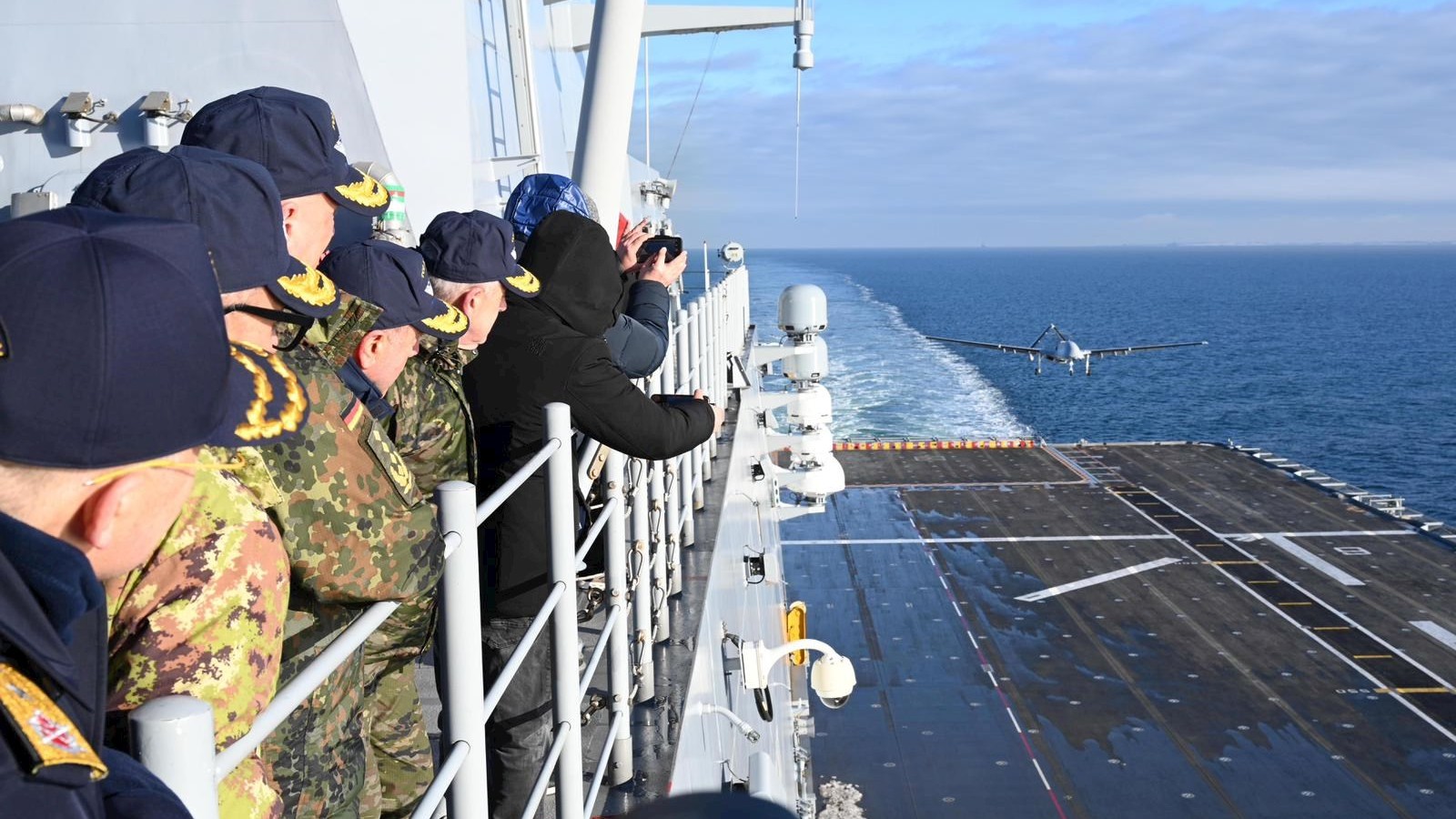
Four years after Russia launched its full-scale invasion of Ukraine on February 24, 2022, the war has fundamentally reshaped Turkey's foreign policy posture and elevated its standing within the NATO alliance. What began as a crisis on Ankara's doorstep has, in retrospect, marked a turning point in how Turkey engages with both its Western allies and its regional neighbors.
According to YetkinReport, one of the most significant early decisions Ankara made was to invoke the 1936 Montreux Convention just days after the invasion began, closing the Turkish Straits to warships and preventing Russia from reinforcing its Black Sea fleet with vessels stationed in the Mediterranean. The move proved strategically decisive, limiting Moscow's naval options in the early and arguably most critical phase of the conflict, and potentially sparing Ukraine from far heavier losses. Paradoxically, at the same time, 103 retired Turkish admirals who had publicly underscored the importance of the Montreux Convention faced prosecution on coup-related charges — only to be fully acquitted by December of that year.
Turkey subsequently positioned itself as an indispensable intermediary, hosting both Russian and Ukrainian delegations while simultaneously facilitating grain exports under sanctions and supplying Kyiv with Bayraktar TB-2 drones that became emblematic of Ukraine's early resistance.
Analysts who gathered recently at a workshop on "Risks and Opportunities for Turkey Amid Global Fractures," organized by the Global Relations Forum in Ankara, identified the Russian invasion as the pivotal moment when Turkish foreign policy shifted away from ideology-driven frameworks toward classical realpolitik — a transition that runs parallel to the doctrine of "strategic autonomy" that Ankara has pursued more assertively since the failed coup attempt of July 2016.
That strategic autonomy has not come without costs. Turkey's acquisition of Russian S-400 missile defense systems led to its exclusion from the F-35 fighter jet program by Washington. Yet Ankara has continued to insist on distinguishing between fulfilling NATO obligations and safeguarding its own national interests — a posture it has also demonstrated in the ongoing US-Iran tensions, with Turkey reportedly declining to open its airspace to American military build-up against Iran.
Far from marginalizing Turkey within NATO, this balancing act appears to have enhanced its value to the alliance. In the largest NATO military exercise of 2026, held in the Baltic Sea, Turkey fielded the single largest national contingent — some 2,000 troops, nearly one-fifth of total participants. Turkish forces demonstrated the capability to rapidly deploy a mechanized brigade reinforced with artillery and commando units thousands of kilometers from home via land, sea, and air. NATO has also formally recognized the TCG Anadolu — Turkey's amphibious assault ship — as the world's first such vessel successfully converted into a drone carrier, integrating the Bayraktar TB-3 unmanned aircraft and the FNSS ZAHA unmanned landing craft. The alliance's 2026 summit is itself scheduled to be held in Ankara on July 7-8, a further signal of Turkey's growing centrality.
As Russia's war against Ukraine enters its fifth year, the conflict increasingly resembles the opening chapter of a broader, low-intensity global confrontation. The erosion of nuclear arms control agreements between Washington and Moscow, combined with US allegations over Iranian nuclear weapons development and emerging Franco-German discussions on a European nuclear deterrent, are collectively pushing the international security environment into increasingly uncharted territory. In this context, Turkey's dual commitment — strengthening its own defense capabilities while actively working to prevent escalation — carries significance that extends well beyond its own borders.
Photo: The source