
Three weeks into the US-Israel-Iran conflict, the diplomatic infrastructure for a ceasefire does not yet exist — while the military logic of escalation remains politically irresistible for both sides. The result is a managed limbo whose costs are cascading across the region.
On the night of 21 March 2026, the twenty-first day of the US-Israel-Iran war, Iranian ballistic missiles struck the southern Israeli cities of Dimona and Arad. More than sixty people were wounded, including a five-year-old girl left in serious condition. Earlier, the Israeli Air Force struck Malek Ashtar University in Tehran — a sanctioned institution assessed to be involved in nuclear weapons component development. The United States, according to multiple reports, had already hit the Natanz uranium enrichment facility the previous hours. On the same morning, Iran fired two missiles at Diego Garcia, the remote Indian Ocean base shared by Washington and London, demonstrating a strike range that — as Israeli military chiefs pointedly noted — puts Berlin, Paris and Rome within theoretical reach.
This is not the trajectory of a war moving toward resolution. It is the trajectory of a conflict expanding its geographic and symbolic register while the political conditions for ending it remain entirely absent.
The Diplomatic Infrastructure Simply Does Not Exist
The most revealing detail to emerge on 21 March came not from the battlefield but from a report on internal US deliberations. According to Axios, Trump's team — including envoys Jared Kushner and Steve Witkoff — has begun preliminary discussions on what peace talks with Iran might look like. The operative word is 'preliminary.' Washington is still trying to answer two foundational questions: who in Iran is the actual decision-maker for negotiations, and which country can serve as the most trusted mediator.
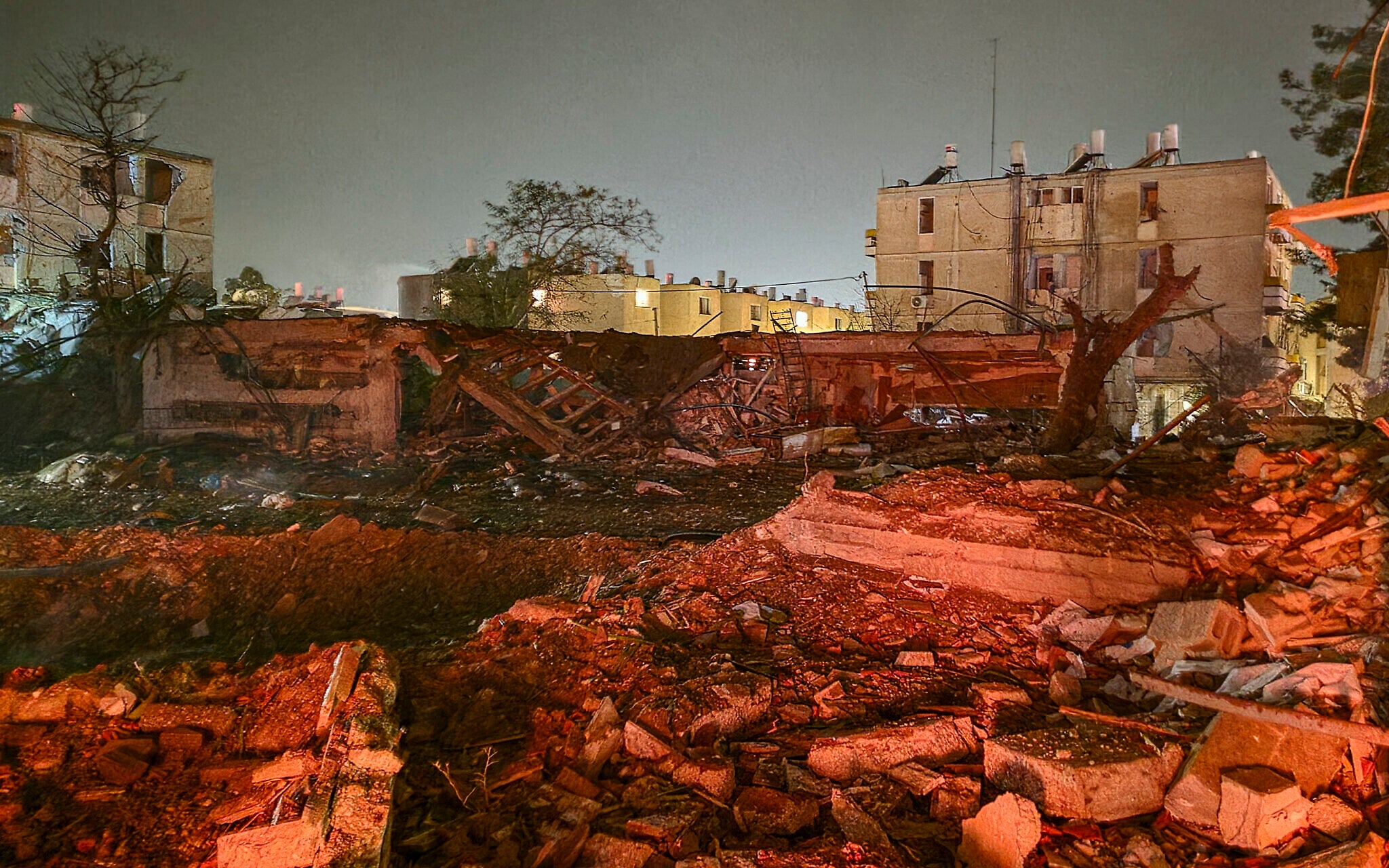
Source: Times of Israel, Iranian missile impact in Dimona, Israel
These are not secondary logistical details. They are the load-bearing walls of any diplomatic process, and the fact that they remain unresolved three weeks into the conflict tells a precise story: there is no ceasefire infrastructure ready to be activated, even if political will on both sides were to materialize overnight. Oman, which mediated the last round of nuclear talks, is distrusted by Washington. Qatar is willing to assist behind the scenes but reluctant to take on the role of principal mediator publicly. Egypt has passed messages. None of these constitute a functioning channel.
Iran's Foreign Minister Abbas Araghchi has meanwhile stated that normalizing the Strait of Hormuz — the chokepoint whose closure has triggered an acute global oil supply crisis — requires a full halt to US and Israeli strikes, with binding guarantees against resumption. The US has dismissed Iran's demand for compensation as a non-starter. The gap between the two sides' opening positions is not a negotiating gap. It is a chasm.
Escalation as Political Constraint
The structural problem deepening this limbo is that the most recent military moves by both sides have been specifically calibrated to raise the political cost of backing down. Iran's declared targeting of Dimona — Israel's most sensitive nuclear site — is not a battlefield necessity. It is a political signal: that Iran will match Israeli strikes on Iranian nuclear infrastructure with strikes on Israeli nuclear infrastructure, creating a symmetry of existential vulnerability that makes any unilateral de-escalation appear catastrophic to domestic audiences.
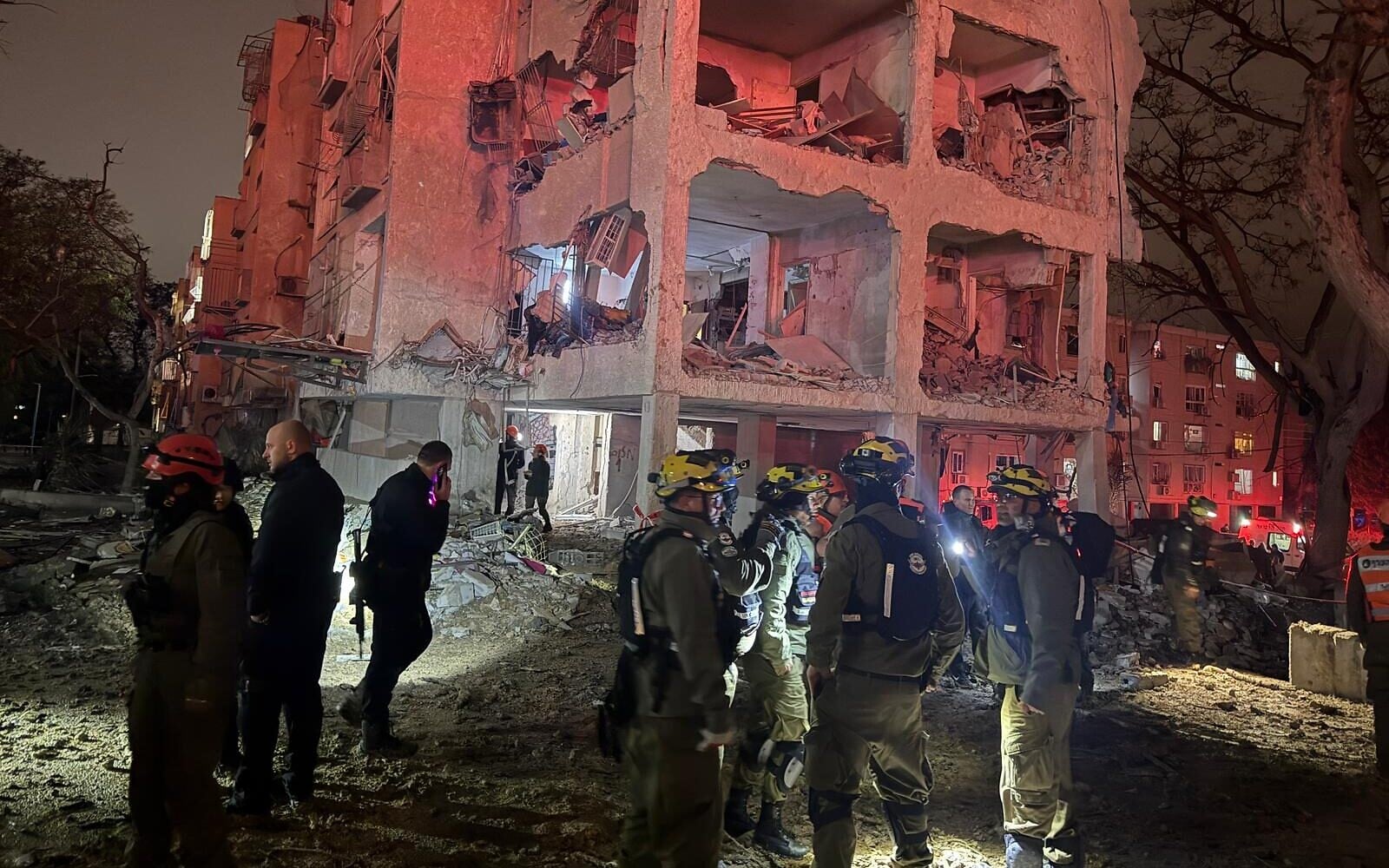
Source: Times of Israel, Iranian missile impact in Arad, Israel
Israel's strike on Malek Ashtar University operates in the same register. By hitting an institution officially linked to nuclear weapons development, Jerusalem is signaling that it retains the initiative in the strategic domain — and simultaneously raising the stakes for any Iranian leader who might be tempted to settle for less than a full restoration of deterrence. Israeli Defense Minister Yisrael Katz announced on Saturday that attacks against Iranian infrastructure will intensify 'in a way that will shift the balance of power' in the coming days. IDF chief of staff statements that the campaign is at its 'halfway' stage reinforce the message: Israel is not at the table.
The result is a dynamic in which both leaderships are actively making it harder for themselves to stop. Each strike that resonates domestically as a success — and each that causes civilian casualties on the other side — narrows the political space available for the leader who moves first toward diplomacy. Trump himself embodied this contradiction on 20 March, ruling out a ceasefire and then within hours saying he was considering 'winding down' the campaign. The US president is simultaneously managing military escalation and probing diplomatic exits, without a coherent framework connecting the two.
A Managed Condition — With Unmanaged Consequences
What emerges from the totality of developments on 21 March is the outline of a 'managed limbo': a condition in which enough de-escalatory signaling exists to prevent the conflict from tipping into direct nuclear brinkmanship or full-scale regional war, but not enough agreement to produce a durable end-state. Saudi Arabia expelling five Iranian diplomats and declaring its right to military action against Tehran. The UAE reporting it intercepted three ballistic missiles and eight drones. Jordan registering 240 missiles and drones crossing its airspace since the conflict began. These are the symptoms of a regional system absorbing enormous stress without a release valve.
For secondary theatres — Cyprus, Lebanon, the Gulf states — this limbo is not an abstraction. Cyprus, as the European Union's easternmost member state and a key node for regional air corridors, emergency evacuations and intelligence flows, sits at the intersection of multiple vectors of spillover risk. Hezbollah's continued rocket fire into northern Israel, confirmed again on 21 March with five wounded, keeps the Lebanese front active. The question of whether Hezbollah's role remains subsidiary or expands into a second full front has not been answered. Each day of limbo is a day in which that question remains open.
The war in limbo is not a stable condition. It is an unstable equilibrium — expensive in lives, in oil prices, in diplomatic capital, and in the institutional coherence of a regional order already under profound strain. The diplomatic infrastructure to end it does not yet exist. The political will to absorb the cost of the first move toward peace has not yet materialized on either side. And the military logic driving both belligerents continues, for now, to outpace everything else.