Middle East Braces for Dramatic Night as US-Israel-Iran War Escalates with Leadership Decapitation, Retaliatory Strikes, and Regional Firestorm
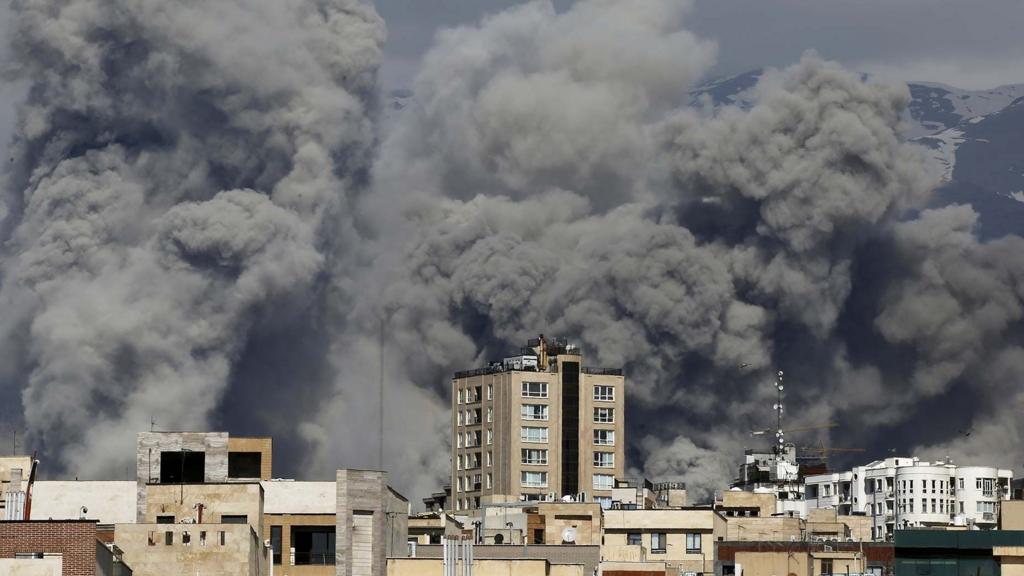
Decapitation of Iran's Leadership
The conflict erupted with a series of precision airstrikes across Iran, culminating in the confirmed deaths of its two most powerful figures. US President Donald Trump announced the killing of Ayatollah Ali Khamenei, 86, in a strike on his Tehran residence, calling it "Operation Epic Fury" and declaring the aim to "eliminate the regime’s leadership." Iranian state media confirmed Khamenei’s death, describing him as a "martyr" and plunging the nation into 40 days of mourning.
In a separate but coordinated strike, Mahmoud Ahmadinejad, the hardline former president and a member of the Expediency Discernment Council, was killed at his home in Tehran’s Narmak district. His death removes a polarizing but influential figure from Iran’s political landscape.
Interim Leadership and a Nation in Turmoil
With Khamenei gone, Iran activated emergency constitutional provisions, forming a temporary leadership council to manage the transition. The council is composed of:
- President Masoud Pezehkian
- Judiciary Chief Gholamhossein Mohseni Ejei
- Senior cleric Ayatollah Alireza Arafi
Arafi, a hardline theologian and member of the Guardian Council, has been named the jurist leader of the council, effectively serving as the interim Supreme Leader until the Assembly of Experts can convene to elect a permanent successor. The process is expected to be fraught with tension, as mass protests and mourning erupted in Tehran’s Enghelab Square, while other areas saw celebrations, reflecting deep societal fractures.
Iran’s Retaliation: A Regional Firestorm
Iran responded with a massive barrage of missiles and drones under “Operation True Promise-4,” targeting Israel, US military bases, and civilian infrastructure across the Gulf. The strikes hit:
- Israel: Missiles struck Beit Shemesh, killing 9 and injuring 27, and Tel Aviv, killing 1. Sirens wailed across the country as the Iron Dome worked to intercept dozens of incoming projectiles.
- Gulf States: Attacks targeted airports and luxury hotels in Dubai, Doha, and Manama, with fires reported at Dubai International and Zayed International Airport. US bases in Qatar, Kuwait, Bahrain, and the UAE were also hit, though damage appears limited.
- Iraq and Jordan: Drones and missiles targeted US facilities in Erbil and al-Tanf.
Qatar and Kuwait condemned the strikes as violations of sovereignty, while flight cancellations stranded thousands at major hubs like Dubai and Doha.
The USS Abraham Lincoln: A Claimed Strike and Fierce Denial
In a dramatic escalation, Iran’s Islamic Revolutionary Guard Corps (IRGC) claimed it had struck the USS Abraham Lincoln with four ballistic missiles in the Gulf. The IRGC declared, “The land and sea will increasingly become the graveyard of the terrorist aggressors.”
However, US Central Command (CENTCOM) immediately dismissed the claim as a “lie,” stating the missiles “didn’t even come close” and that the carrier continues to launch aircraft in support of operations. The conflicting reports underscore the fog of war and the high stakes of naval warfare in the region.
A Region on the Brink
The Middle East now faces its most volatile moment in decades. With Iran’s leadership decapitated, a new interim regime vowing revenge, and the US and Israel conducting sustained strikes, the risk of a wider regional war is palpable. Global oil prices have surged, international flights are grounded, and diplomatic channels are strained.
As night falls on March 1, 2026, the world watches with bated breath, knowing that the next few hours could determine the course of history in the Middle East.
Photo: BBC