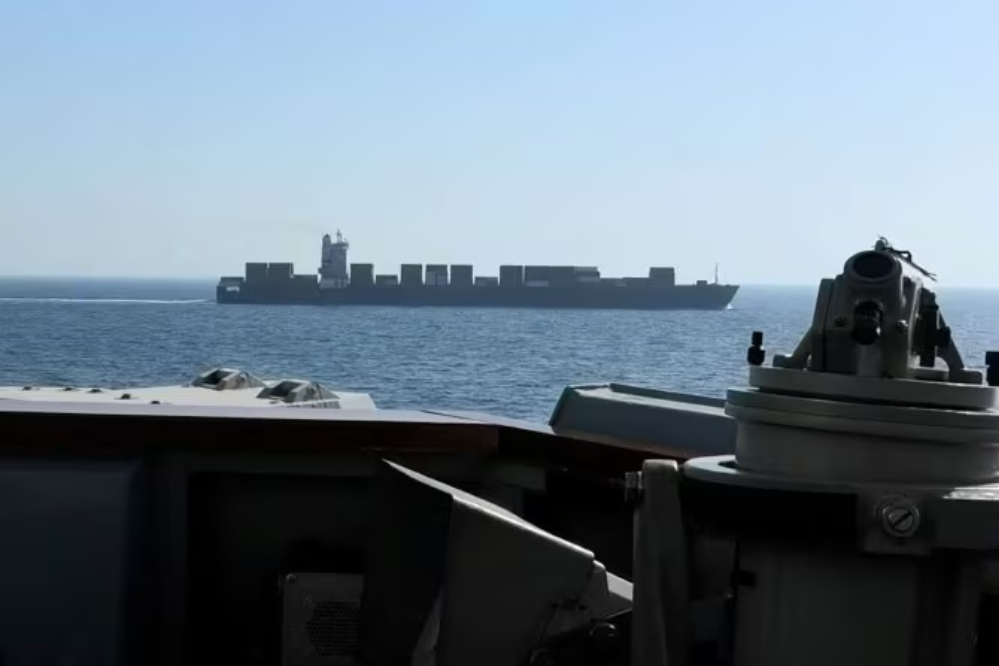
According to an analysis published by Nour News, the United States under the administration of Donald Trump has, in this phase, doubled down on a strategy combining political, military, and media pressure — a pattern designed to alter the adversary's calculations through pre-emptive action and the imposition of operational costs. The announced strike on the tanker Tosca by CENTCOM is assessed within this framework.
Washington–Tel Aviv Operational Alignment
The analysis highlights a growing convergence between U.S. policy and the Israeli government of Prime Minister Benjamin Netanyahu, which it describes as playing an increasingly prominent role in shaping the current atmosphere of tension. This alignment is said to be visible across naval, intelligence, and regional pressure domains, and has resulted in a higher degree of operational coordination between the two governments.
The Nour News analysis argues that this synergy is deliberately designed to create multi-layered pressure that narrows the decision-making space of the opposing party. At the same time, it warns that such convergence carries a heightened risk of miscalculation, as the increasing number of active actors raises the probability of unpredictable reactions. Should the trend continue, the outlet warns, any limited incident could rapidly escalate into a multi-tiered crisis that exceeds the capacity of regional actors to contain.
Heavy U.S. Air Movements Raise Alarms
A notable component flagged in the analysis is a marked increase in heavy strategic airlift operations by the U.S. military in the region. These movements, the outlet says, are typically associated with the rapid deployment of support forces, key logistics operators, air defense systems, and the rotation of fatigued or long-deployed operational teams — all indicators of an effort to sustain operational continuity under conditions of heightened pressure.
Iran's declared response — a policy of measured retaliation and phased management of its replies — is characterized by the outlet as an attempt to maintain a balance between deterrence and the prevention of sudden conflict escalation, producing what it describes as a "classic active mutual deterrence" dynamic.
The Strait of Hormuz: A Strategic Chokepoint
Central to the analysis is the Strait of Hormuz, described as one of the world's most sensitive energy corridors. Any disruption to this waterway, the outlet notes, would have direct consequences for global energy markets and geopolitical equations worldwide. Control over — or the threat to — this chokepoint is therefore not merely a military instrument, but also an economic and political one, giving any action in the strait a resonance that extends far beyond the region and draws reactions from major global powers.
The outlet further argues that the security of this route has become one of the principal components of crisis management in the current standoff, and that any escalation there would elevate the crisis from a regional to an international level.
A Fragile Ceasefire and an Uncertain Future
The existing ceasefire, according to the analysis, functions less as a durable agreement and more as a tactical pause in an ongoing conflict — one that has provided both sides with an opportunity to regroup forces and redefine objectives, without resolving the underlying tensions that produced the confrontation in the first place.
Continued limited operations during this period, the outlet warns, could swiftly destabilize this fragile equilibrium and push the trajectory toward a new round of hostilities. In such an environment, any field action carries the potential to become the trigger for a fresh phase of crisis.
Ultimately, the analysis concludes, the trajectory of this standoff will depend on all parties' ability to simultaneously manage military pressure, field operations, and logistical support — including rapid air movements of forces and equipment. In this volatile calculus, it asserts, even the smallest miscalculation could generate costs that exceed the control of any of the principal actors involved.
Photo: Nournews