School Massacres Expose Turkey's Deepening Social Crisis as Conservative Education System Faces Reckoning
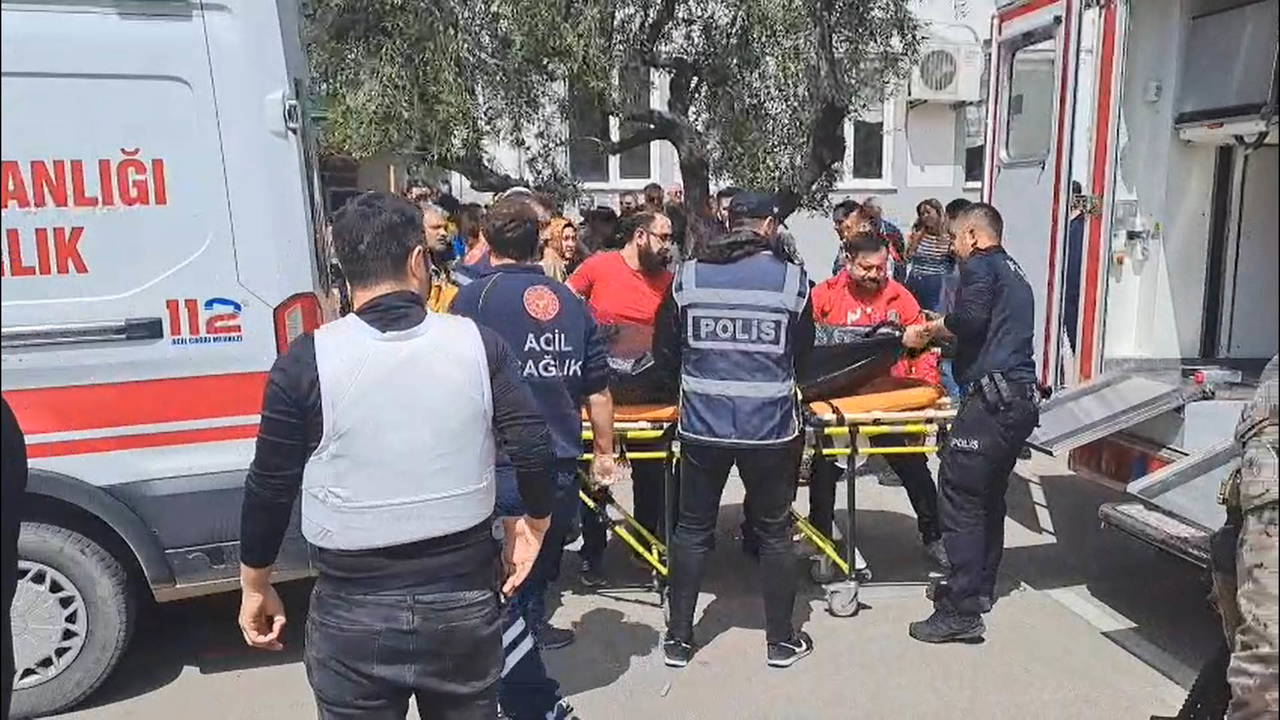
A 14-year-old student opened fire at his own school in the southern Turkish city of Kahramanmaraş on April 15, killing nine people — eight students and one teacher — and wounding 13 others, six of them critically, in one of the deadliest school attacks in the country's history.
The gunman, identified as eighth-grade student İsa Aras Mersinli, arrived at the school carrying five firearms and seven ammunition magazines concealed in his backpack. He died during the attack; authorities are investigating whether his death was a suicide or an accidental self-inflicted wound. Interior Minister Mustafa Çiftçi, who travelled to the city alongside the Justice, National Education and Health ministers, confirmed the death toll and the critical condition of three of the wounded.
Provincial Governor Mükerrem Ünlüer confirmed that the boy's father, identified only by his initials U.M., is a former police intelligence officer — a detail that investigators believe explains how the teenager accessed such a significant arsenal. The father has been taken into custody, and Justice Minister Akın Gürlek announced the launch of a comprehensive investigation. Schools in Kahramanmaraş suspended classes for two days in the aftermath.
A Disturbing New Pattern
The Kahramanmaraş massacre came just one day after a strikingly similar incident in Siverek, Şanlıurfa province, where a gunman named Ömer Ket stormed a high school on April 14, opened fire indiscriminately with a hunting rifle, wounded 16 people, and then killed himself. Ket had reportedly been previously expelled from the school.
Particularly alarming in the Siverek case is the claim that the school principal had reported Ket to police after he made explicit threats on social media — and that police detained him the day before the attack, only to release him, enabling the carnage that followed.
While violence against teachers by parents and, increasingly, by students themselves has long been a problem in Turkey — mirroring a crisis that has also afflicted healthcare workers — mass, indiscriminate school shootings of this kind were, until very recently, almost exclusively associated with the United States. These two attacks in as many days signal that Turkish society may now be confronting an entirely new and deeply troubling form of violence.
The Roots of a Crisis: Education, Ideology, and Abandonment
Analysts and educators have long warned that Turkey's school shooting crisis cannot be divorced from the structural failures of its education system — failures that stretch back decades. The military coup of September 12, 1980 marked a turning point: the junta deliberately weaponised religion and nationalist conservatism as a bulwark against leftist movements, embedding a rigid, ideology-laden curriculum into schools that prioritised obedience and doctrinal conformity over critical thinking, civic literacy, and democratic values.
That legacy was deepened rather than reversed under subsequent governments, culminating in sweeping curriculum changes over the past two decades that have progressively rolled back secular, civic education in favour of religious instruction and nationalist narratives. The result is a generation of young people who have been systematically deprived of meaningful education in civic rights, responsibilities, and democratic participation — leaving them ill-equipped to navigate an already turbulent social landscape.
Into this ideological vacuum pour the compounding pressures of urban poverty, mass youth unemployment, and a deepening sense of hopelessness about the future. When those pressures collide with the glorification of guns, violence, and gang culture that saturates Turkish television dramas and social media, the mixture becomes dangerously combustible.
Legislation Alone Cannot Solve This
Calls for harsher criminal penalties in the wake of such attacks are predictable — and almost certainly insufficient. The threat these attacks represent is fundamentally social, not merely criminal. Children bringing arsenals to school, former police officers leaving military-grade weapons accessible to teenagers, and authorities releasing credibly-flagged suspects the day before an attack all point to systemic failures that no single law can fix.
What is needed is a thorough re-examination of an education model that, for more than four decades, has produced citizens estranged from basic civic knowledge and participation; serious investment in social services, mental health support, and youth economic opportunity; and genuine accountability for security failures that allow tragedies to unfold even when warnings are clearly sounded.
Until Turkey is willing to confront the ideological and socioeconomic roots of this crisis — rather than reaching reflexively for punitive quick fixes — the spectre of the school massacre, once a distant American nightmare, risks becoming a recurring Turkish reality.
Photo: YetkinReport