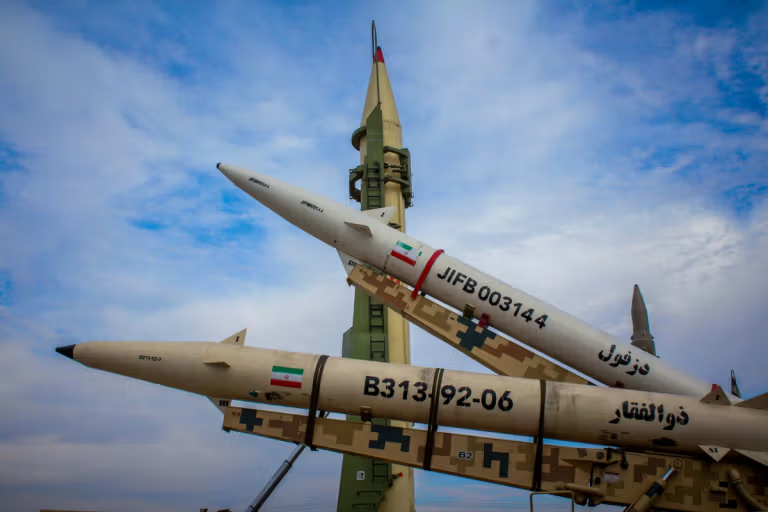
Bahrain, in the wake of previous Iranian attacks and threats of continued missile and drone strikes, has placed all its units on the highest state of alert, warning that the risk of a new assault by the Islamic Republic has not been fully eliminated.
In a new statement, Bahrain’s General Command of the Defence Force announced that all military units are now at the “highest level of readiness and defensive alert,” a move that follows the wave of tensions triggered by recent Iranian missile and drone strikes on Bahraini territory. According to the Iran International, the decision comes amid warnings from Bahraini officials and regional analysts that the possibility of renewed Iranian attacks on military and infrastructure targets, especially around Manama and key energy and security installations, remains serious.
During the 2026 war, Iran used a mix of missiles and drones to hit Bahrain several times, and according to official estimates, dozens of missiles and hundreds of ballistic and loitering munitions were either intercepted en route or struck targets inside the country. These attacks, in addition to damaging residential, commercial, and infrastructure sites in Manama and industrial areas, also affected oil and energy facilities, forcing the Bahraini government and the national oil company to declare operational emergencies and even “force majeure” in some sectors.
One of Iran’s main objectives in these strikes has been the substantial American and allied military presence in Bahrain, particularly the headquarters of the US Fifth Fleet in Juffair. In parallel with missile and drone attacks, repeated security alerts from the US Embassy in Manama about risks in certain areas and high‑rise buildings have further heightened fear and uncertainty among citizens and foreign residents. Domestically, Bahraini authorities have also reported arresting several individuals on charges of spying and providing intelligence to the Islamic Revolutionary Guard Corps, allegedly helping improve the precision of targeting inside Bahrain.
Bahrain’s elevated state of military readiness is part of a broader Gulf concern over Iran’s regional posture; in recent days, the United Arab Emirates has also publicly stated that it is at the “highest level of preparedness and vigilance” against any potential threat. At the same time, the deployment and movement of Western naval groups in the Red Sea and the Persian Gulf – including France’s aircraft carrier Charles de Gaulle – indicate that extra‑regional powers are also bracing for a possible escalation with Iran. In this environment, Bahrain effectively sits on the front line of any potential confrontation between the Islamic Republic and the United States and its regional and Western partners, making the kingdom a likely primary battlefield should Tehran decide to open a new front.
Photo: Source