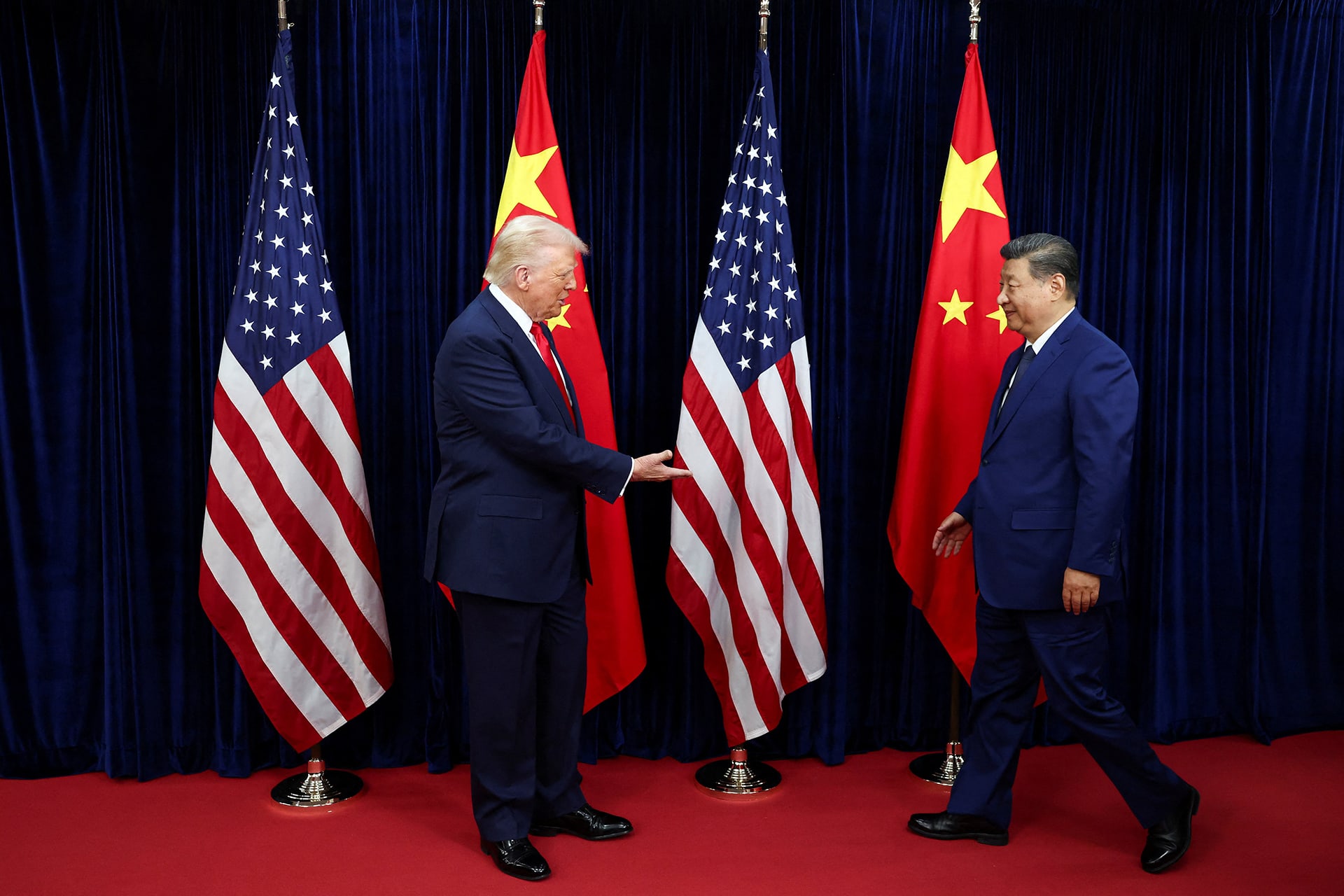
The summit was originally scheduled for March but was postponed following U.S. and Israeli strikes on Iran. It now takes place against a backdrop of soaring energy prices caused by the Strait of Hormuz blockade, an uneasy U.S.-China trade détente, and deepening geopolitical fault lines over Taiwan and artificial intelligence.
Beijing's Strategic Advantage
Xi enters the summit having successfully fended off Trump's aggressive tariff escalation — which pushed duties past 140 percent — by wielding China's near-monopoly over rare earth minerals and magnets. When Beijing threatened to restrict those supply flows in April and October 2025, Washington backed down rather than risk escalation. The result, CFR's Doshi writes, is an uneasy détente that favors China.
On the economic agenda, Beijing is expected to offer symbolic gestures — purchases of Boeing aircraft, American soybeans, and headline investment pledges — while continuing to consolidate its technological and industrial base. CFR senior fellow Heidi Crebo-Rediker warns that U.S. dependence on Chinese-controlled critical mineral supply chains has deepened sharply, particularly given the rapid expenditure of advanced weapons systems in the Middle East and Ukraine.
Taiwan and AI in the Balance
Taiwan looms large over the talks. Xi is expected to press Trump for a formal shift in U.S. declaratory policy — seeking an explicit statement opposing Taiwan independence — and to limit future arms sales to Taipei. CFR fellow David Sacks cautions that any U.S. concession on Taiwan would "fuel Taiwanese distrust of the United States" and undermine the island's ongoing defense investments at a critical moment.
On artificial intelligence, CFR's McGuire recommends that Trump pursue "maximum pressure" by tightening export controls while engaging in a narrowly defined AI safety dialogue, arguing that genuine compliance from Beijing is only achievable if the U.S. lead in AI is significantly expanded.
Significance for the Middle East Crisis
The summit carries particular weight for the ongoing conflict in the Middle East. The U.S.-led military campaign against Iran and the resulting Strait of Hormuz blockade have disrupted global energy markets and placed both Washington and Beijing under severe economic pressure. China, as Iran's largest crude oil buyer, has been directly affected by the blockade — yet has also built strategic buffers through stockpiled reserves and accelerated electrification. CFR's David Hart notes that Xi could use the summit to help broker the reopening of the strait, wielding China's acknowledged leverage over Tehran — leverage that Trump arguably needs more than Xi. The summit therefore offers a rare diplomatic opening to ease the Gulf crisis, though any deal will almost certainly come at a price Washington may find uncomfortable: further concessions to Beijing on trade, Taiwan, or technology. The longer the Strait of Hormuz remains closed, experts warn, the more entrenched China's long-term geopolitical position becomes — and the narrower Washington's room to manoeuvre.
Photo: The source