From Diyarbakır to the Pitch, From the Pitch to Millions: Why Has Amedspor Become a Symbol for Kurds?
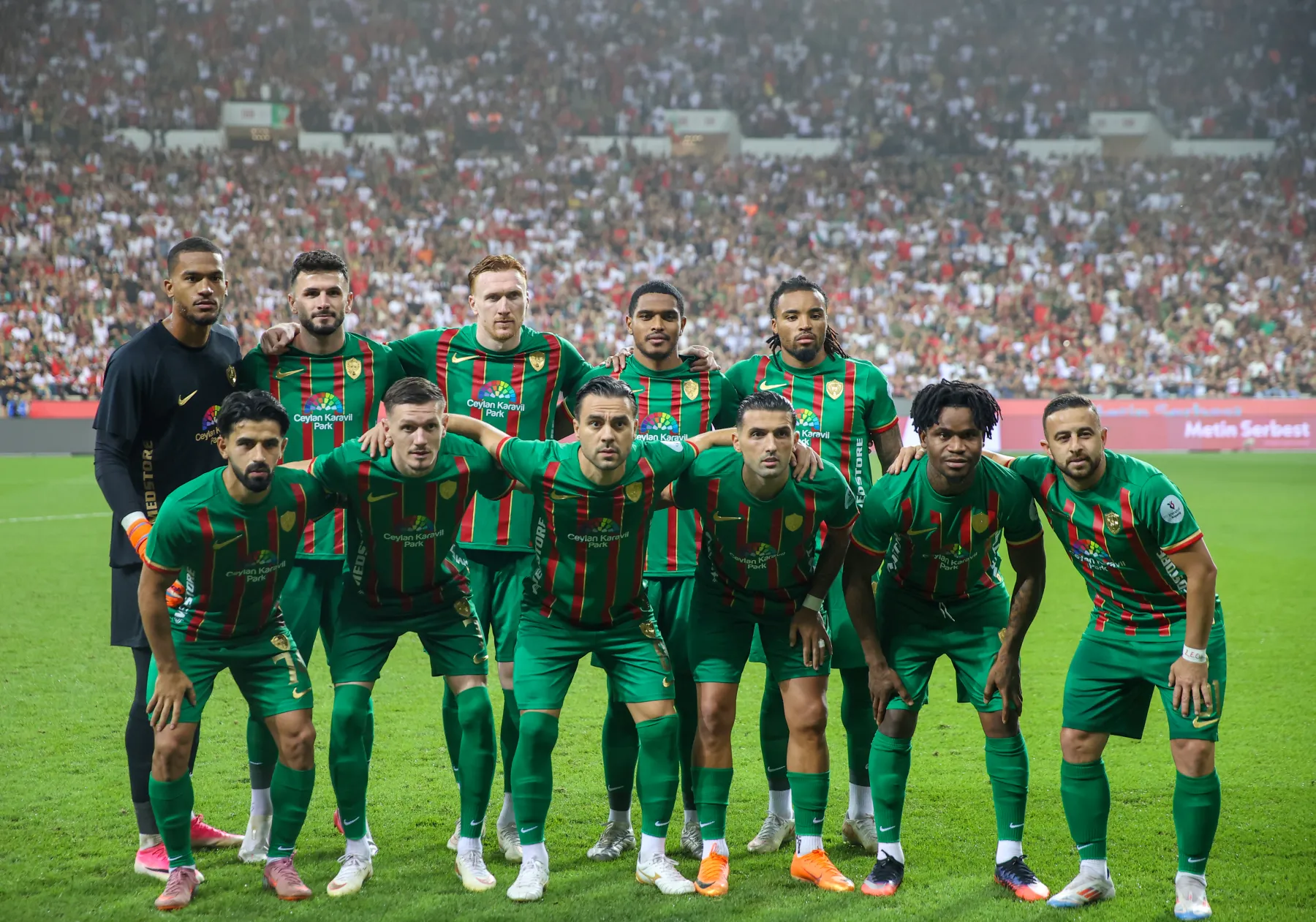
The team’s success has created a shared sense of excitement and belonging among Kurds with differing views, while also providing common ground — at least through football — for groups that had long remained distant from one another.
By Namık Durukan
Amedspor, who defeated Beşiktaş 3–2 in Diyarbakır in the sixth week of the Trendyol Süper Lig to move top of the table with 13 points, became one of the most talked-about teams of the week not only because of the three points they secured, but also because of the social atmosphere that has developed around the club.
The scenes created by thousands of supporters filling Diyarbakır Stadium, the events before and after the match, and the assessments that followed once again demonstrated that Amedspor carries a significance in the city and among Kurds that extends far beyond football.
A 3–2 Victory Takes Amedspor to the Top
Playing in front of 33,000 supporters in Diyarbakır, Amedspor made a fast start against Beşiktaş. Gift Orban put the green-and-red side ahead in the 13th minute, before Dia Saba doubled the advantage in the 22nd.
Beşiktaş reduced the deficit through Dusan Vlahovic in the 55th minute, but Amedspor restored their two-goal advantage four minutes later when Furkan Soyalp scored with a chipped finish.
Amedspor were reduced to ten men after Amadou Cisse was shown a red card in the 84th minute. Despite Orkun Kökçü converting a penalty in stoppage time, the home side held on for a 3–2 victory. The result took Amedspor to 13 points and put the Diyarbakır club at the top of the league on goal difference.
A €27 Million Answer to €270 Million Beşiktaş
Another striking aspect of the match was the economic disparity between the two teams. According to calculations cited in the original article, Beşiktaş had a squad valued at approximately €270 million, while Amedspor took to the field with a squad worth around €27 million.
Despite that disparity, Amedspor defeated their opponents through their organisation and competitive strength.
The measures taken by head coach Besnik Hasi against Beşiktaş’s attacking threat, Amedspor’s defensive organisation and their rapid counterattacks were cited among the decisive factors behind the victory. Orban, Saba and Furkan Soyalp were effective going forward, while goalkeeper Alban Lafont played an important role with a series of saves, particularly in the closing stages.
The result also demonstrated that comparisons based on squad quality and financial power do not always translate directly onto the pitch.
One Story Before the Match, Another Afterwards
Amedspor’s victory also brought pre-match commentary back into focus. Some sports commentators who had predicted that Amedspor would suffer a heavy defeat changed their emphasis following the 3–2 result, instead highlighting the Diyarbakır side’s performance, Hasi’s tactical choices and the atmosphere in the stands.
The morale and momentum Beşiktaş had gained from their victory over Marseille proved insufficient against Amedspor, with Hasi’s tactical approach helping to neutralise their opponents.
The atmosphere inside Diyarbakır Stadium attracted particular attention. Some commentators compared the stands to Liverpool’s famous Kop, while another assessment suggested that Amedspor were effectively defending with the support of their fans.
One post-match comment described the result as “a victory as pure and deserved as a mother’s milk.”
A week of discussion that had begun with predictions of a heavy Amedspor defeat therefore ended with a very different picture on the league table. The sudden change of tone among commentators who had previously given Amedspor little chance or visibility in the league was particularly striking.
Beşiktaş Coach: Amedspor Were Truly Magnificent
Beşiktaş head coach Vincenzo Italiano praised Amedspor after the match.
“I really want to congratulate Amedspor,” the Italian coach said. “I saw a team that made an extremely good start to the match. The way they started was truly magnificent and tremendous.”
Italiano said Amedspor had made life extremely difficult for his team.
“We started the match very badly and reacted poorly in the first half. No matter how much we wanted it and fought, it wasn’t enough. Amedspor really made things very difficult for us.”
He also predicted that other teams travelling to Diyarbakır would face similar difficulties: “I think every team that comes here will struggle.”
Wils: Our Players Showed Tremendous Character
Amedspor assistant coach Stef Wils emphasised his players’ fighting spirit after the match.
“We started the first half with very high energy. We created big opportunities and put our opponents under considerable pressure. By the 32nd minute, we had managed to go 2–0 ahead,” Wils said.
Although the team was unable to maintain the same level in the second half, Wils said his players remained mentally strong.
“Our players showed tremendous character and courage. They were mentally very strong and fought until the very end.”
Wils noted that Amedspor were top with 13 points and said their objective now was to maintain the same trajectory.
Nahit Eren’s Strong Criticism of the Referee
Comments by Amedspor president Nahit Eren after the match triggered another debate extending beyond the purely sporting dimension.
Eren criticised the 14 minutes of stoppage time and several refereeing decisions.
“Today we became leaders, but we are not at ease,” he said. “We will not accept this kind of management, this kind of refereeing. You cannot overshadow the colour Amedspor has brought to this league.”
Eren also said the club wanted to establish itself permanently in the Süper Lig and challenge near the top of the table with a squad assembled on a modest budget.
His insistence that refereeing decisions should not overshadow the league also suggested that Amedspor’s presence in the Süper Lig will generate discussion not only about its sporting achievements but also about the club’s broader position.
Diyarbakır Experienced Much More Than a Match Day
The impact of Amedspor’s match against Beşiktaş could be felt in Diyarbakır days before kick-off. Events were organised, tickets quickly sold out, and supporters began making their way towards the stadium from the early hours of match day.
The arrival of Beşiktaş supporter group Çarşı in Diyarbakır also produced scenes marked by messages of mutual solidarity. Çarşı members visited the grave of university student Rojin Kabaiş, who died in Van, and made a statement there — another development that took the occasion beyond the boundaries of sport.
Inside the stadium, Amedspor supporter groups Barikat, Direniş, Azadi and UltrAmed led chants throughout the 90 minutes.
Chants included “Who are we? We are Kurds,” “Resist, Diyarbakır, resist,” “Amed, my city” and “They should not think we are dead,” while Bella Ciao also echoed around the stands.
A giant human-figure choreography bearing the Kurdish message Em hatın — “We have arrived” — was another symbol demonstrating that, for those in the stands, the occasion was about more than a sporting event.
Why Does Amedspor Mean More Than Football?
For years, observers have argued that the social interest surrounding Amedspor cannot be explained by footballing success alone.
Political uncertainty in Syria’s Rojava region, disputes between the Kurdistan Region of Iraq and Baghdad, developments in Iran, and expectations generated by the process surrounding the Kurdish question in Turkey have all contributed to discussions over the spaces in which Kurds express themselves.
Against this background, Amedspor’s promotion to the Süper Lig — and now its rise to the top of the table — has acquired symbolic significance for its supporters beyond sporting success.
The prominence of Kurdish-language chants, symbols associated with Kurdish identity and references to Diyarbakır at Amedspor matches transforms the football stands into a space for expressions of identity and belonging.
There is therefore an argument that interpreting the interest in Amedspor solely through the lens of support for “a football team” would be incomplete. The historical controversies the club has faced over its name and identity are also regarded as factors strengthening this symbolic significance.
The Answer From the Stands to “Kî ne em?”
One of the strongest expressions of this identity narrative surrounding Amedspor can be found in the stands.
The question “Kî ne em?” — “Who are we?” — has become more than a football chant among Amedspor supporters. It has evolved into a symbol of the relationship between the team and its fans.
Over the years, Amedspor has repeatedly been associated with debates over its name, identity and representation. For sections of its support, this has transformed the team from a purely sporting institution into part of a broader collective memory.
The scenes at Diyarbakır Stadium are therefore interpreted through expressions of identity in the stands as much as through Amedspor’s performance on the pitch.
What Does “Amedspor Is the Hope of the Kurds” Mean?
Within the discourse surrounding Amedspor, the club is described as a shared space of belonging and morale for Kurds living across different geographical regions.
Yet this meaning should not simply be attributed to the club itself. Rather, it needs to be understood through the symbolic value that supporters and followers have attached to Amedspor.
Given the political developments, security problems and uncertainties experienced by Kurds in different countries in recent years, football appears to provide a comparatively broad space for people to come together outside everyday political disputes.
Amedspor has become one of the most visible examples of such a space in Turkey.
For that reason, the 3–2 victory over Beşiktaş meant more for Amedspor than three points and first place in the league. It once again demonstrated the strength of the relationship between football, urban identity, supporter culture and social belonging in Diyarbakır.
A New Debate Begins
Amedspor have reached the top of the table after only six weeks of the season. There is still a long way to go.
Yet the picture that emerged from the Beşiktaş victory means the Diyarbakır club can no longer be regarded simply as a newcomer to the Süper Lig. It is increasingly being seen as a team capable of influencing the league’s competitive balance.
More importantly, Amedspor’s sporting success and the expressions of identity and belonging in the stands have become visible simultaneously.
On one side stands a modestly financed team sitting top of the league with 13 points. On the other is a large supporter base whose relationship with that team cannot be understood through football alone.
For this reason, the Beşiktaş match in Diyarbakır is unlikely to be remembered merely as another fixture in Amedspor’s season.
The 3–2 scoreline placed the club at the top of the table, while the scenes in the stands reopened discussion about Amedspor’s symbolic significance for Kurds and for Diyarbakır.
The Team Bringing Estranged Kurds Together in the Same Stands
Explaining Amedspor’s significance for Kurds solely through the slogans heard in the stands would also be insufficient.
Scenes witnessed in Diyarbakır before and after the Beşiktaş match showed that the team has developed into common ground capable of bringing different sections of society together around the same excitement.
Before the match, elderly women wearing traditional Kurdish clothing were seen praying. Imams, known as melle in Kurdish society, recited the Qur’an in mosques and open spaces — images demonstrating that the encounter was not regarded merely as a football match.
On match night, images widely shared on social media showed Kurds living not only in Turkey but also in Iran, Iraq, Syria and other parts of the world following the game on television and joining in celebrations after Amedspor’s victory.
The celebrations in Diyarbakır were equally striking. From the elderly to the young, from women to children, people from different sections of society came together in streets, marketplaces and public spaces to dance the halay, illustrating the extent of Amedspor’s social resonance in the city.
These scenes reinforced assessments that Amedspor has become one of the spaces through which Kurds express identity, belonging and their aspirations.
For some sections of society, football pitches and stands provide common emotional ground distinct from arenas where political debates are conducted directly.
Different Kurdish Groups United by the Same Excitement
Some political analysts who watched the match in Diyarbakır also argued that Amedspor has created a new and effective space for Kurdish self-expression.
Another notable feature of the club is its ability to facilitate common ground between people holding different political views and belonging to different organisations and social groups.
Kurdish groups that have become distant from one another for various reasons, or have struggled to meet on common ground in the past, can find themselves in the same stands, watching the same screens and participating in the same street celebrations when Amedspor is involved.
In this sense, Amedspor’s impact extends well beyond sporting success.
The team’s achievements create a shared sense of excitement and belonging among Kurds with different views, while also providing an opportunity for groups that have long remained apart to share, at least through football, the same emotion.
A Shared Identity Extending Beyond the Football Pitch
The picture that emerged following Amedspor’s victory over Beşiktaş is therefore not being interpreted merely as the celebrations that follow a Süper Lig match.
Taken together, the chants in the stands, Kurdish expressions, prayers, halay dances and celebrations in different cities suggest that Amedspor has developed into an important social meeting point.
The ability of a football team to bring together in shared celebration groups that have grown distant from one another for different political and social reasons further strengthens Amedspor’s symbolic significance for Kurds.
The scenes that began in Diyarbakır after the Beşiktaş match and spread to celebrations among Kurds in different cities and countries became one of the most visible manifestations of this shared sense of belonging.
TLF Note: This article by Namık Durukan was originally published in Turkish by T24 on 21 September 2026. Out of respect for the work of our fellow journalists and in the interest of making their reporting accessible to a wider international audience, The Levant Files has republished it in English translation. The views, interpretations and conclusions expressed in this article belong to the original author and do not necessarily reflect the editorial position of The Levant Files.
This version is publication-ready. The revised TLF note also makes clear that TLF is republishing a translation rather than claiming authorship, while sounding more natural than “with all respect and understanding to the press workers.”
Photo: AA - T24 (source)